1 year after Paws took over Columbus animal control, how have they done?
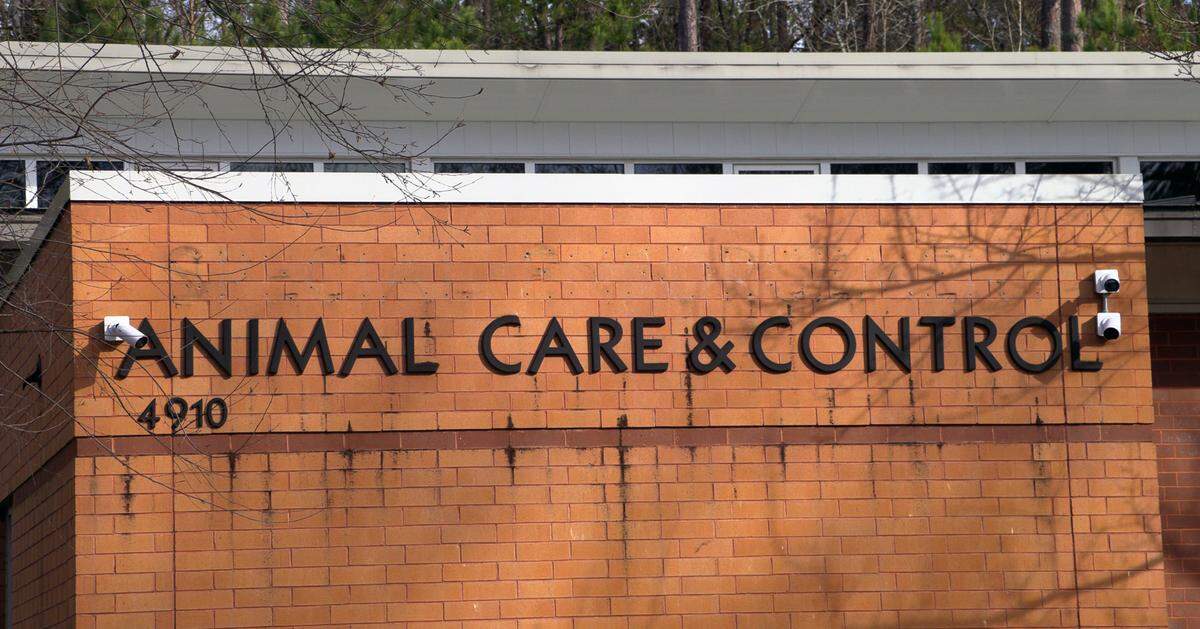
After the first year under contract with the Columbus Consolidated Government, Paws Humane Society is working to sustain its status as a no-kill shelter as it navigates challenges with kennel space, staffing and access to care barriers.
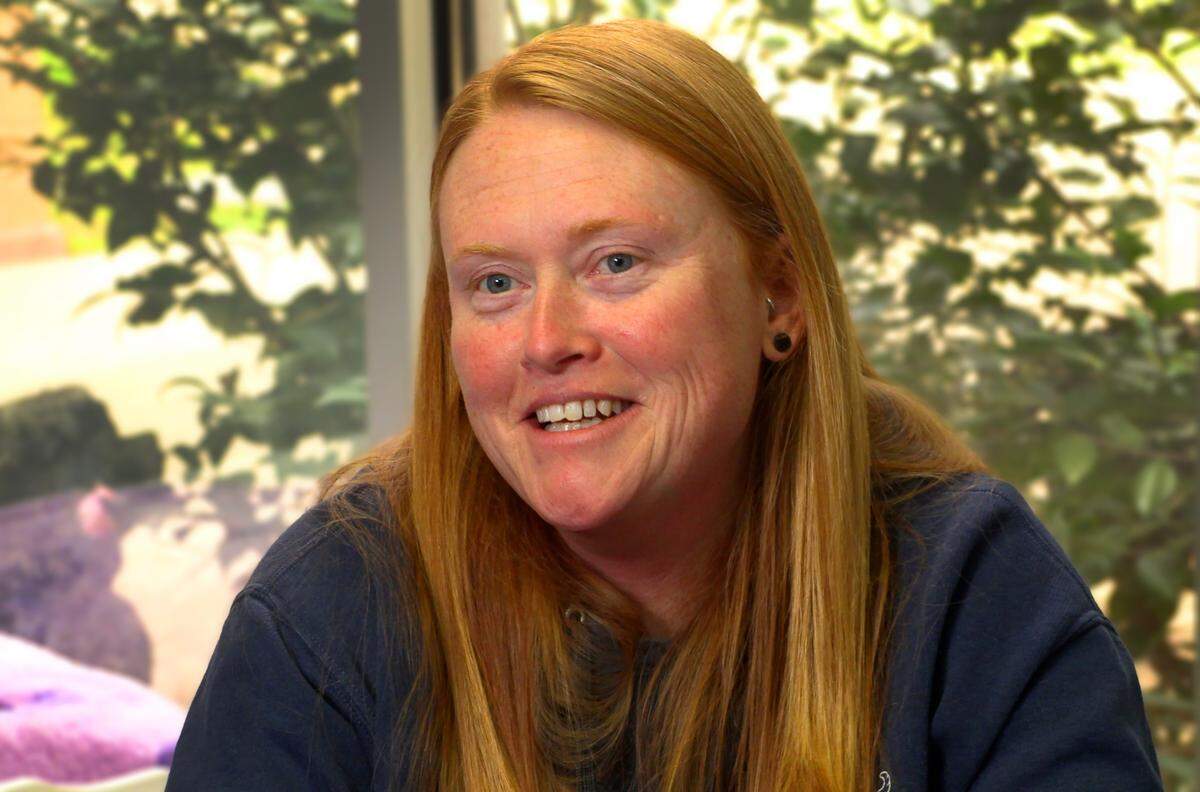
Paws executive director Courtney Pierce and CCG internal auditor Donna McGinnis, in her role as the contract administrator, appeared before the Columbus Council during Tuesday’s meeting to provide an update on the shelter after taking over the city’s animal care and control last year.
Being a no-kill shelter does not mean no euthanasia, Pierce said, but euthanasia is reserved for irremediable suffering or serious, unmanageable safety risks.
Generally, shelters must maintain a save rate over 90% to be considered a no-kill shelter. The save rate after the first quarter of 2025 was 92%, Pierce told the Ledger-Enquirer, and Paws ended 2025 at 90.8%.
“We are working to sustain no-kill as our community has done in the past,” she told the L-E.
2025 Paws Humane Society data
Transparency has been a core belief for Paws, Pierce said in her presentation to the council, and they update data monthly for the public on their website.
Paws also started a Thursday educational series. This helps give the community a better idea of what’s going on at the animal shelter and how they can help, she said.
“That could just be purely educational,” Pierce said. “It could mean a call to action.”
In 2025, Paws had 3,184 positive outcomes for animals in their care, according to data Pierce presented to the council. They had 3,684 intakes during the year.
The organization spayed and neutered over 2,000 community cats and provided 7.783 spay and neuter surgeries in total. They gave over 20,000 vaccines, implanted 2,815 microchips and administered 784 heartworm treatments.
Paws served over 8,000 families in 2025, according to the data, with the call volume for the year reaching 135,965.
“Our No. 1 issue in-house is our call volume,” Pierce said. “We get over 370 calls a day between both buildings. It is very, very difficult for us to get through all those, but we do our best.”
Improvements over the last year
Operationally, the organization has made improvements, Pierce told the council, working to bring more structure, consistency and transparency to the system.
“Historically, animal sheltering often focused on the animals physically in our care,” Pierce said. “And in a more modern system, we have to focus on our community.”
Paws has installed new kennel doors that reduce stress and has tried to create a more welcoming lobby, she said.
HVAC improvements are planned, Pierce said, so the facility is more comfortable and humane for the animals, staff and volunteers.
“We’ve also worked towards sound baffling to reduce the noise level inside the shelter,” she said. “It is absolutely deafening.”
Paws has the sound-baffling material, Pierce said, but they are having trouble finding someone to install it.
Biggest challenges in first year
Capacity was the biggest challenge in the first year, Pierce said.
“That’s not just about the number of kennels physically in the building,” she said.
It’s about intake volume, length of stay, behavioral and medical complexity and staffing limitations, Pierce said.
When the capacity is strained, every part of the system feels that, she said.
“We’ve been navigating that reality this first year while still maintaining standards,” Pierce said.
The Department of Agriculture visted Paws multiple times in 2025, she said.
“I have to say that we’ve been visited more times this year than any other time that I can remember in 23 years of doing this,” Pierce said. “They were really on top of it.”
The organization had minor corrections related to issues with washing machines, she said, so they were backed up on laundry.
Other than a few comments, she said, Paws passed those inspections.
Another challenge has been the number of stray animals, Pierce said.
“I know that is the biggest issue we hear from members of our community,” she said. “They’re right to care about that. We care about that too. But I do want to be candid in saying that the problem did not start a year ago.”
This has been an ongoing systemic problem that can’t be fixed immediately, she said. It’s the result of long-term issues, unaltered animals, barriers to care, inconsistent access to services, housing instability and limited resources to reach people before animals end up in crisis.
A study from the University of Florida estimated the United States was facing a deficit of 2.7 million spay and neuter surgeries because of a disruption caused by the COVID-19 pandemic.
“One can reasonably assume that, of those 2.7 million, they also had offspring that contributed to a further deficit,” Pierce said.
This reversed progress in controlling the animal population, she said.
The solution isn’t to pick up more animals, Pierce said, but to reduce the flow of animals coming to the shelter.
“The No. 1 focus on that is going to be spay and neuter efforts, education, access to care and emphasizing the importance of microchips,” she said. “That helps us avoid impound altogether, and we can just take them straight home.”
Internal auditor’s report on Paws
McGinnis, who is the contract administrator, reported Paws addressed in a timely manner challenges arising from the transition.
With her contact information being provided to the public, McGinnis also received a heavy call volume in the early days of the transition, she said. People were reporting stray animals and dangerous animals, McGinnis said.
She worked with Pierce and the animal service advisory board to communicate and improve operations. This helped get the animal control officers out on the streets, McGinnis said.
“The call volume has improved,” McGinnis said. “Initially, it was very heavy, but that’s community service.”
The animal shelter had some turnover of employees at the start of the contract and wasn’t fully staffed for a period, but the organization now has an “outstanding team,” McGinnis said.
Citizen donations have also helped pay for some of the building’s upgrades, she said.
Work is also being done to digitize records that were in boxes and in a secured trailer behind the Muscogee County Jail, McGinnis said.
After they are digitized, it will be easier to access adoption records, incident records and personnel records, she said.
“We’ve also seen that the division has passed numerous (Department of Agriculture) visits,” McGinnis said.
Compliance reporting is updated, she said, and the staff isn’t told when McGinnis will arrive at the facility.
“No one has a week’s notice of when I’m coming in,” McGinnis said. “They don’t run the vacuum 20 minutes before I arrive.”
This creates more transparency, she said.
“I go in there sometimes, and you see a packed house more often than you’d like,” McGinnis said. “There are going to be some challenges along the way, but I think we’re slaying it. I think we’re going to hold on to that no-kill status.”