
Georgia GOP makes Sanford Bishop’s district a little more Republican. Here’s what changed
U.S. Rep. Sanford Bishop’s territory is still blue.
But the Southwest Georgia district he’s represented for nearly 30 years is a little bit more Republican after GOP lawmakers finished redrawing the state’s congressional map earlier this week.
The map — approved by the state legislature Monday and awaiting Gov. Brian Kemp’s signature — had to give Bishop more than 92,000 new residents. The district was the most underpopulated in the state, according to the 2020 U.S. Census. Bound by the Alabama and Florida borders, the district could only move north and east.
Among the changes, the 2nd Congressional District picks up more of Columbus and stretches into northern Houston County, grabbing the growing city of Warner Robins.
Early drafts from state Senate Republicans made the 2nd even more friendly to the GOP, but those changes did not make the final map. Still, 45% of the district’s residents are Republican-leaning voters, and the proportion of Black voters will fall below 50%, according to demographic and mapping data maintained by online app Dave’s Redistricting.
Republican officials in the district see an opportunity to chip away at Bishop’s nearly three-decade hold on the southwest corner of the state.
Democrats say the new map minimizes the voting power of people of color statewide. Only five of the 14 districts are minority-majority. Republicans could have kept the 2nd a Black-majority district but chose not to.
Bishop told McClatchy News that he plans to run for reelection under the new boundaries in 2022.
What changes in the district?
The newly drawn 2nd Congressional District would remain a minority-majority district, but its Black, voting-age population would fall from 51% to 49%. Democratic-leaning voters make up a little over 53% of the new district, an approximately two-point drop from the current map.
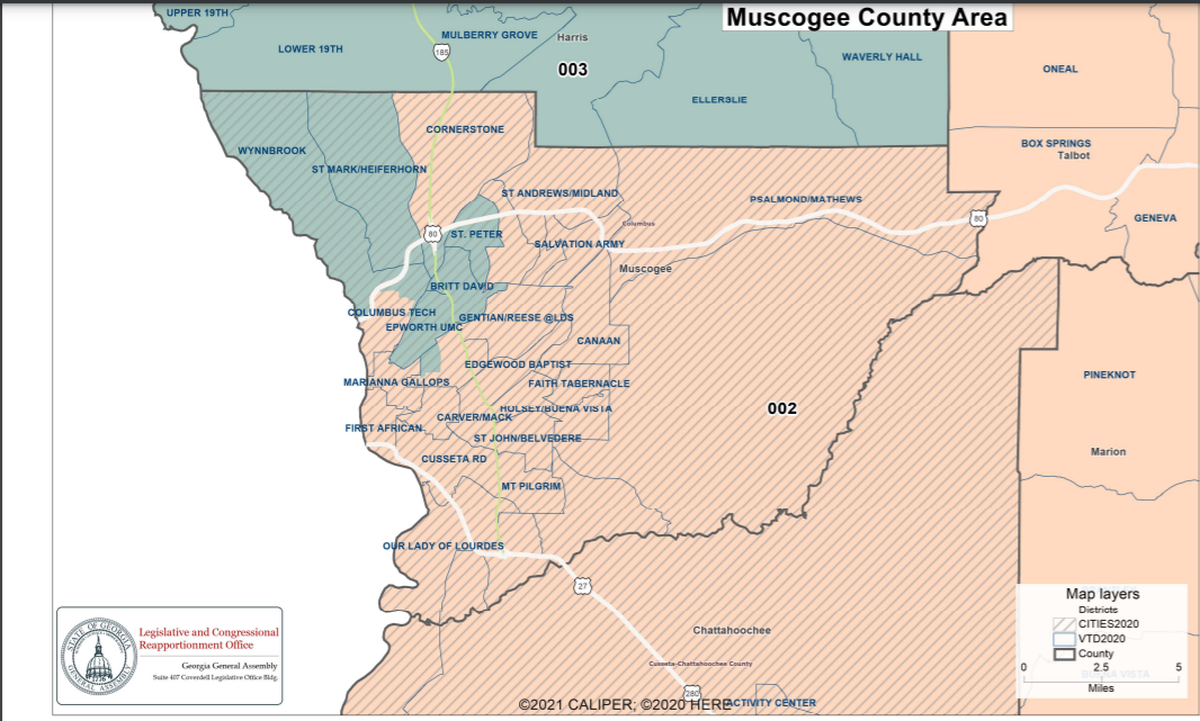
In Columbus, Bishop and Republican Drew Ferguson, who represents the 3rd Congressional District, swap some territory.
Bishop ultimately gains more of the county, including areas around Lakebottom Park and Columbus High School. He gains more of the north as well, leaving Ferguson to the northwest corner. However, Ferguson gains land near the Aludyne Foundry around J.R. Allen Parkway and Veterans Parkway.
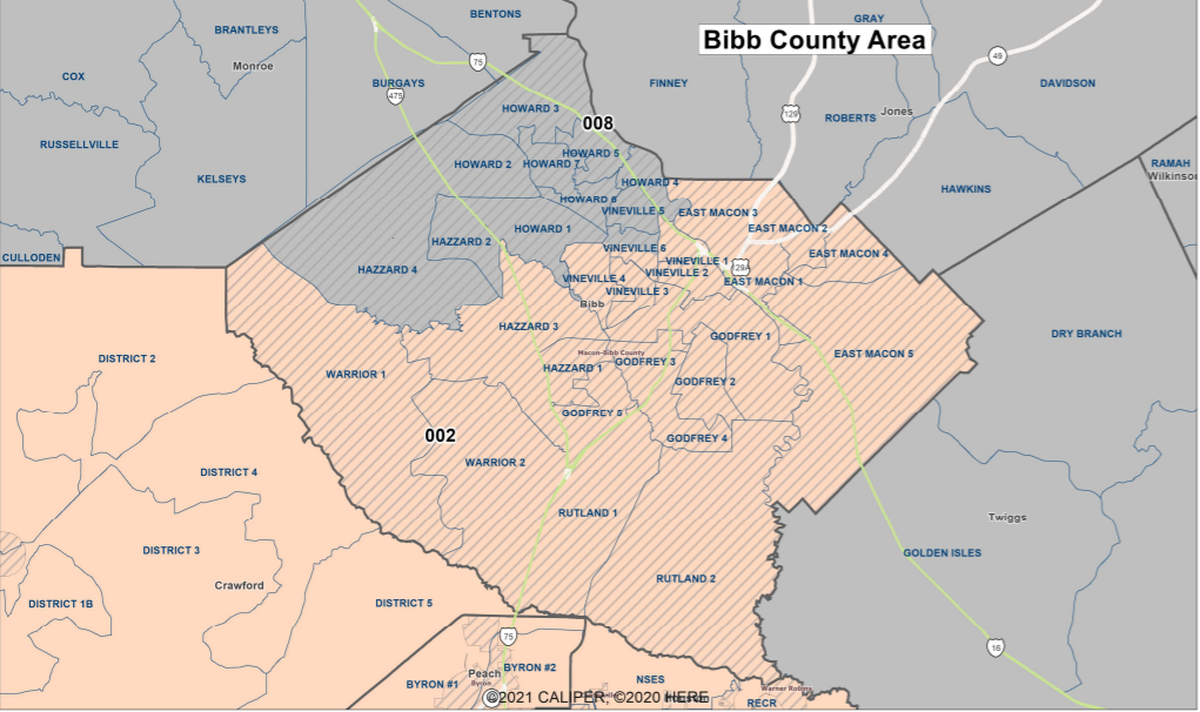
Near Macon, the border between the 2nd and U.S. Rep. Austin Scott’s (R-Tifton) 8th Congressional District changes. While most of Bibb County remains in the 2nd, the 8th now pushes south of Thomaston Road in the northwest corner of the county. The 2nd gains areas around Vineville and Ingleside
The 2nd loses Crisp County but gains Thomas County on the Florida border.
What are Democrats and Republicans saying about the new maps?
During a stop in Columbus Tuesday, Bishop said the legislature did a “fairly good job” in making sure voters in middle and southwest Georgia have a district that represents the area’s demographics.
The district includes Albany, most of Columbus and Macon, and the rural areas in between. Fort Benning, Robins Air Force Base and Albany’s Marine Corps base all fall within the new boundaries. The map, Bishop said, plays to his strengths — military affairs and agriculture.
Bishop currently serves on the Committee on Agriculture as well as the Military Construction, Veterans Affairs, and Related Agencies subcommittee.
“I think the people of the 2nd Congressional District know me,” he said. “I’ve represented them now for almost 30 years in good times and in bad times.
“They know who has delivered for them,” he added.

The comments come after the National Republican Congressional Committee added Bishop to its list of targets earlier this month for the 2022 midterm elections.
Brandon Phillips, the chairman for the 2nd Congressional District’s Republican Party, told the Ledger-Enquirer that he’s pleased that the new map is “much more competitive than before.”
“Many who would normally sit on the sidelines with the old, much bluer map are now calling, asking to be involved in a campaign effort to unseat a congressman who has drifted out of touch with South Georgians on both social and economic issues,” he said.
The new congressional map is projected to flip a metro-Atlanta district for the GOP, giving Republicans nine of the state’s 14 seats.
Scott Hogan, Executive Director of the Democratic Party of Georgia, said in a statement that the new congressional map doesn’t reflect the Georgia of today.
“Georgia is becoming more diverse and more evenly divided politically, but Republicans’ map disproportionately advantages one political party and diminishes the political power of people of color,” he said. “For months, Georgia Republicans have been hellbent on suppressing the will of Georgia voters, and the GOP map passed along party lines will silence Georgians’ voices even more.”
This story was originally published November 27, 2021 at 8:00 AM.