
Columbus has one of biggest wage gaps between rich and poor in GA. Here’s why
Columbus is Georgia’s second-largest city, but the gap between its highest and lowest earners is among the widest in the state. According to Neilsberg Research, Columbus ranks 11th out of 13 for median incomes in Georgia cities with populations exceeding 50,000.
What is a wealth gap?
A wealth gap measures the distance between what the highest and lowest earners make. It’s not just about income; it’s about assets, debt and the ability to build generational stability.
Columbus State University’s Butler Center’s economic report indicates noticeable income inequality in Columbus, with certain segments holding a substantially larger share of income than others.
Key drivers for Columbus:
- Low wages concentrated in low-skill sectors: 23% of the local workforce is heavily concentrated in retail, accommodation and food services.
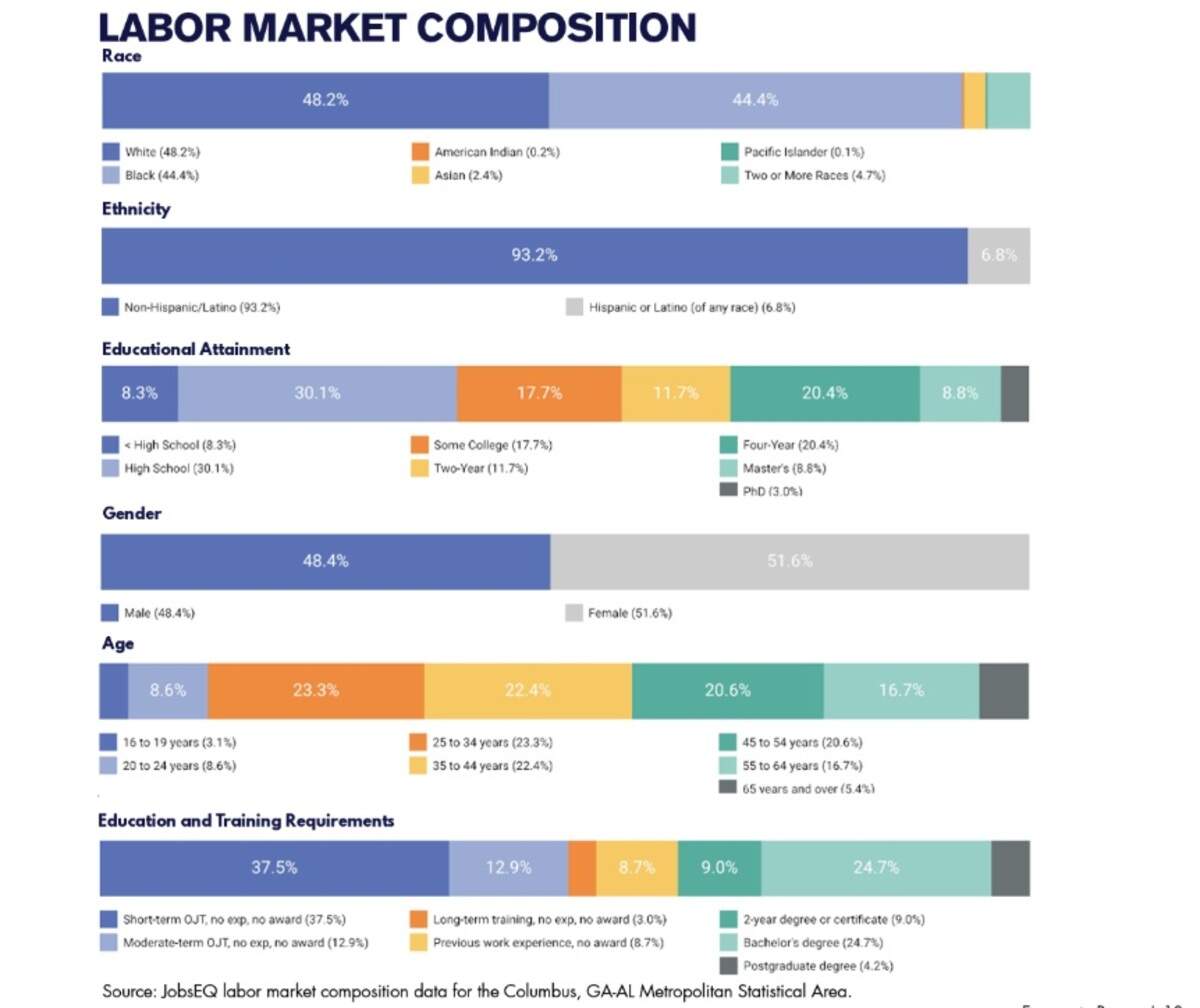
- Limits to pathways to higher-wage employment: 24.7% of Columbus jobs require a bachelor’s degree, and just 4.7% require a postgraduate degree.
- Racial income disparities. White households have a median income of roughly $69,372, while Black households (the largest demographic at 46% of residents) have a median income of approximately $43,583.
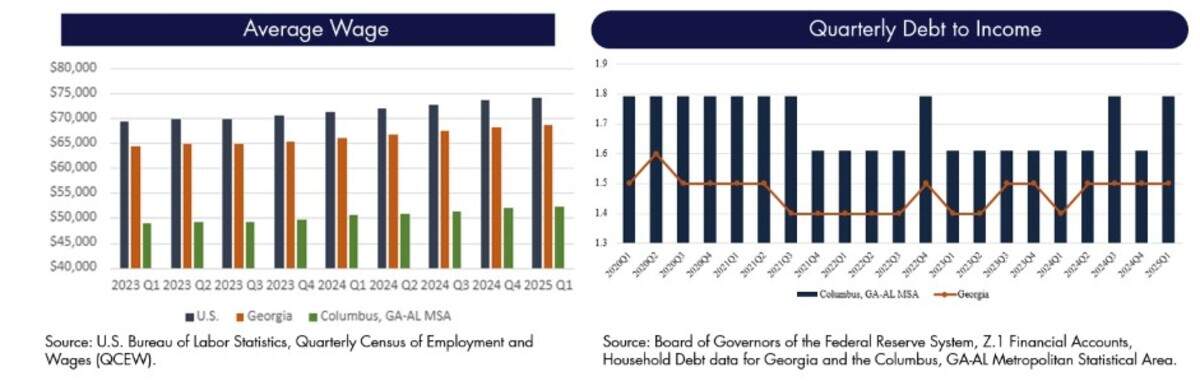
- High debt-to-income ratio: In the first quarter of 2023, it rose to 179%, well above Georgia’s 150%.
Why is it so bad in Columbus?
Columbus’ structural economy, anchored by Fort Benning and healthcare, provides stability for some but leaves lower-wage workers behind. In their economic report, The Butler Center at CSU identifies the pattern as reflecting “greater financial strain and a more stressed consumer environment.”
Contributing factors:
- Local wage averages: Columbus wages reached $52,188, which is well below the state average of $68,575 and the national average of $71,181.
- Measurable geographic differences: The northside-southside divide is measurable, with higher retail sales and average transaction values on the north side. Consumers on the south side make more frequent store visits but spend less per trip.
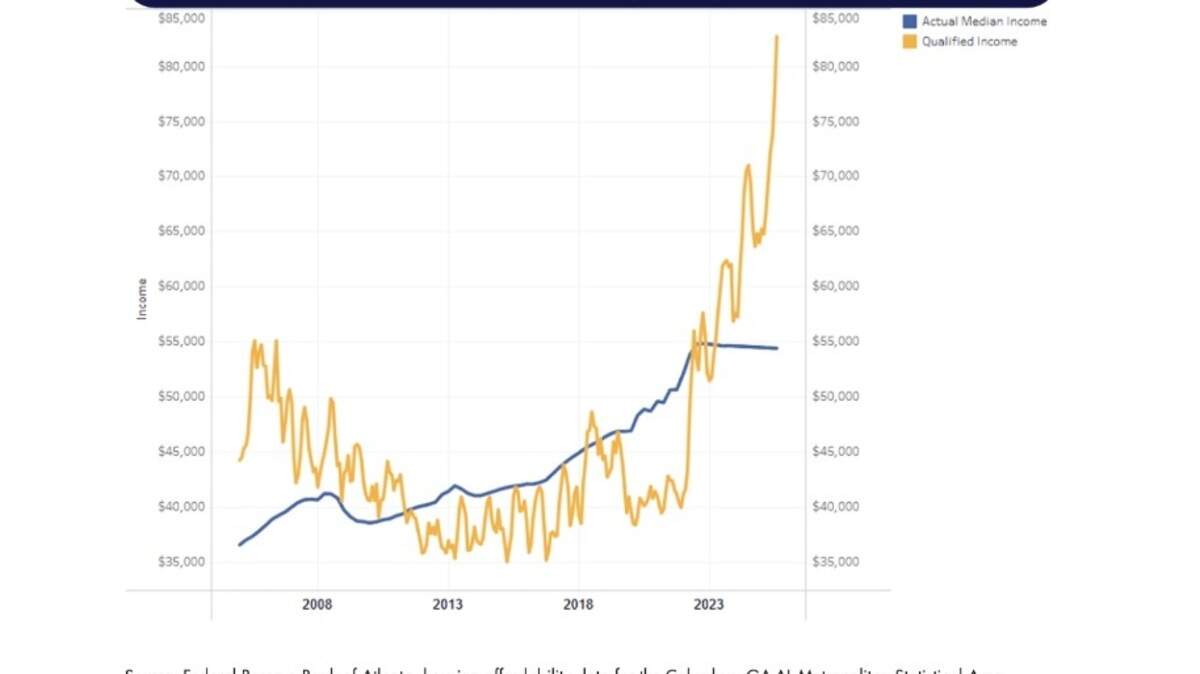
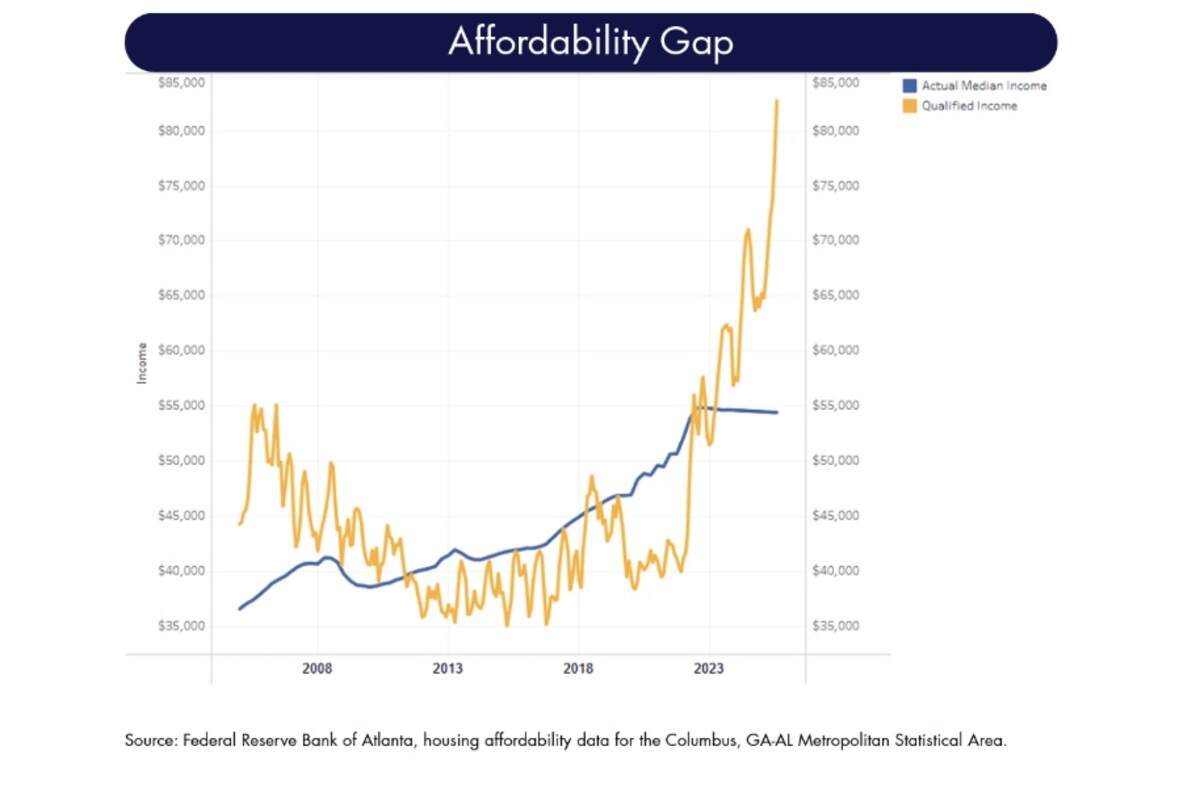
- Housing costs make it worse: The median home price hit $267,750 while median household income has stagnated at $54,382 for three years. Columbus’ homeownership rate is at roughly 52%, well below the 65% national average.
What can Columbus do?
The Butler Center’s recommendations align closely with what neighboring cities are doing.
- Expand manufacturing. This could be a meaningful pathway to higher-quality jobs if the city prioritizes it.
- Strengthen workforce-to-education pipelines. There are major gaps at the bachelor’s and master’s degree levels, particularly in business, finance, data science and healthcare management.
- Create an Affordable Housing Fund. Macon, Atlanta and Savannah have a replicable model, however, Columbus does not have one..
- Target south Columbus. Reduce neighborhood-level disparities through targeted business investment, workforce development and quality-of-life improvements.
- Address the racial income gap. Black residents make up 46% of the city and earn roughly 63 cents for every dollar of white household income.
Although Columbus is making infrastructure investments, like last year’s airport upgrade, the VECTR Center and the new judicial center under construction, new buildings and better transportation options won’t close the wealth gap like higher wages, homeownership and education can.
Do you have ideas about Columbus wealth inequalities? Email me at srose@ledger-enquirer.com or find me on social media.
This story was originally published March 6, 2026 at 6:00 AM.