
Here’s how to keep GA carpenter bees off your deck without harming them so they can pollinate
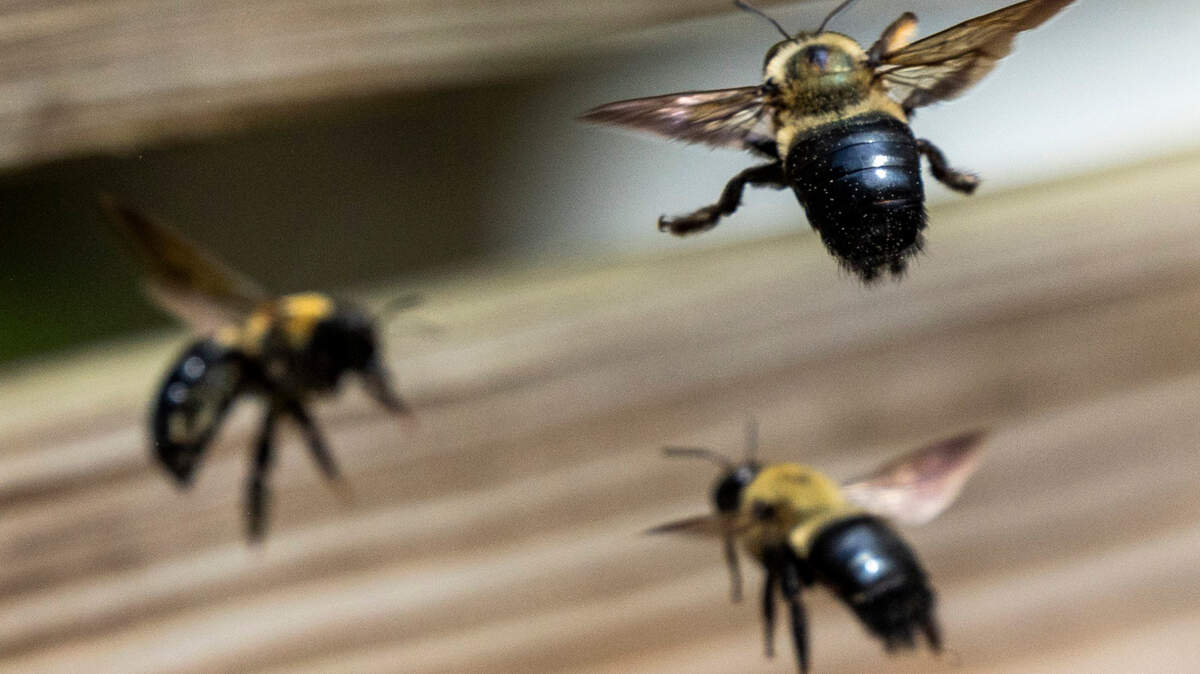
Deck days are officially here, but that also means you’re going to have share the space with the hungriest of all the bugs: carpenter bees. They’ll soon drill those tiny holes into outdoor wood surfaces, but there’s hope to save both your deck and the bees.
Despite the common belief that these wood-loving bees eat the wood, they’re actually just boring into it.
The bees create tunnels in the wood and often return to the same spots year after year, potentially extending tunnels up to several feet.
Carpenter bees versus other species
Carpenter bees are indeed different from their cousins, the honeybee and bumblebee. They are the only bee with an affinity for wood, but there are some other key differences as well.
- Nesting: They create individual nests and do not live in colonies like bumblebees or honey bees.
- Size: They are generally larger than other bees, measuring between .75 to 1 inch long.
- Stinging: Female carpenter bees will sting if provoked. The male of the species can’t sting but can often appear aggressive when approached.
- Pollination: They play an important role in fertilizing plants, much like the bumblebee.
They’re drawn to wood
These industrious little creatures bore into the wood to create their nests for laying eggs and raising the babies. They prefer untreated wood that’s at least 2 inches thick, and they will coat everything in a layer of sawdust.
There are some practical reasons they do this:
- Soft, untreated wood is an ideal habitat because it is easier to bore than harder variations like oak or maple.
- Reuse of the wood saves the female’s energy from having to rebuild year after year.
- Tunnels in the wood serve as shelter from predators and harsh weather, and will house the bee babies while they mature.
- Nest chambers inside the tunnels function as storage for pollen and nectar to feed the larvae.
Carpenter bees are very destructive
While these bees are great pollinators, if left unchecked they can cause significant damage to wooden structures on your property.
- Holes bored can be a half an inch or bigger and the tunnels can reach up to 10 feet long.
- Over time, they can weaken the integrity of your wooden structures like decks, stairs or awnings.
- Their excrement can stain wood, ceilings and walls, which can be difficult and expensive to remove.
- Woodpeckers are attracted to the carpenter bee larvae causing further damage to the wood as they drill to get to the food inside.
- Water can enter the tunnels causing the wood to rot and crumble.
Strategies for controlling an infestation
These bees may seem like a real nuisance, but play a vital role in the environmental balance. They are essential pollinators, they are key contributors to the food web and they help decompose rotting wood, which recycles nutrients into the soil.
They are gentle little creatures, so take a softer approach when trying to protect your property:
Prevention is key
- Paint or stain wood surfaces regularly
- Opt for harder woods instead of pine or cedar
- Apply wood preservatives like Boracare
- Use pressure treated lumber
Start with natural remedies first
- Create a mixture of eucalyptus oil and water as a natural repellent
- Use a solution of rubbing alcohol, apple cider vinegar and essential oils
- Apply garlic powder directly into bee holes
Physically remove them without harm
- Vacuum bees out of shallow nests
- Seal existing holes with steel wool and caulk after bees have emerged
- Install carpenter bee traps near affected areas (The Georgia Gardener has a helpful tutorial to build your own)
- As a last resort, you can try chemical treatments
Chemical treatment should be a last resort
- Apply insecticidal dust directly into entrance holes
- Use aerosol foam insecticides to expand and fill nests
- Spray insecticidal solutions into and around nesting sites
Do you have any ideas about how to control them without exterminating them? Email me all the tips, tricks and hacks at srose@ledger-enquirer.com or find me on social media.