
Ticks are sending more people to the hospital than ever in GA. Here’s what to do

Tick bites have not sent more people to the emergency room by this time of the year since 2017, and the Centers for Disease Control and Prevention reports this year could be the worst yet. Likely due to warmer winters and larger numbers of mice and deer, being outdoors could be more dangerous this season.
Georgia is home to several tick species, and based on the Georgia Department of Health’s five-year totals over 323 tick-borne illnesses were reported from 2020-2024, not including illnesses not directly mentioned in the report.
This means safety and precaution are more important than ever this season. .
What ticks to watch for in Georgia
Georgia is in the height of tick season, and the University of Georgia Integrated Pest Management categorizes ticks as “one of the most important groups of arthropods in Georgia because of their disease-transmitting capabilities.”
With the threat at the highest of the year, here’s what you need to know.
These tick species are most commonly associated with humans
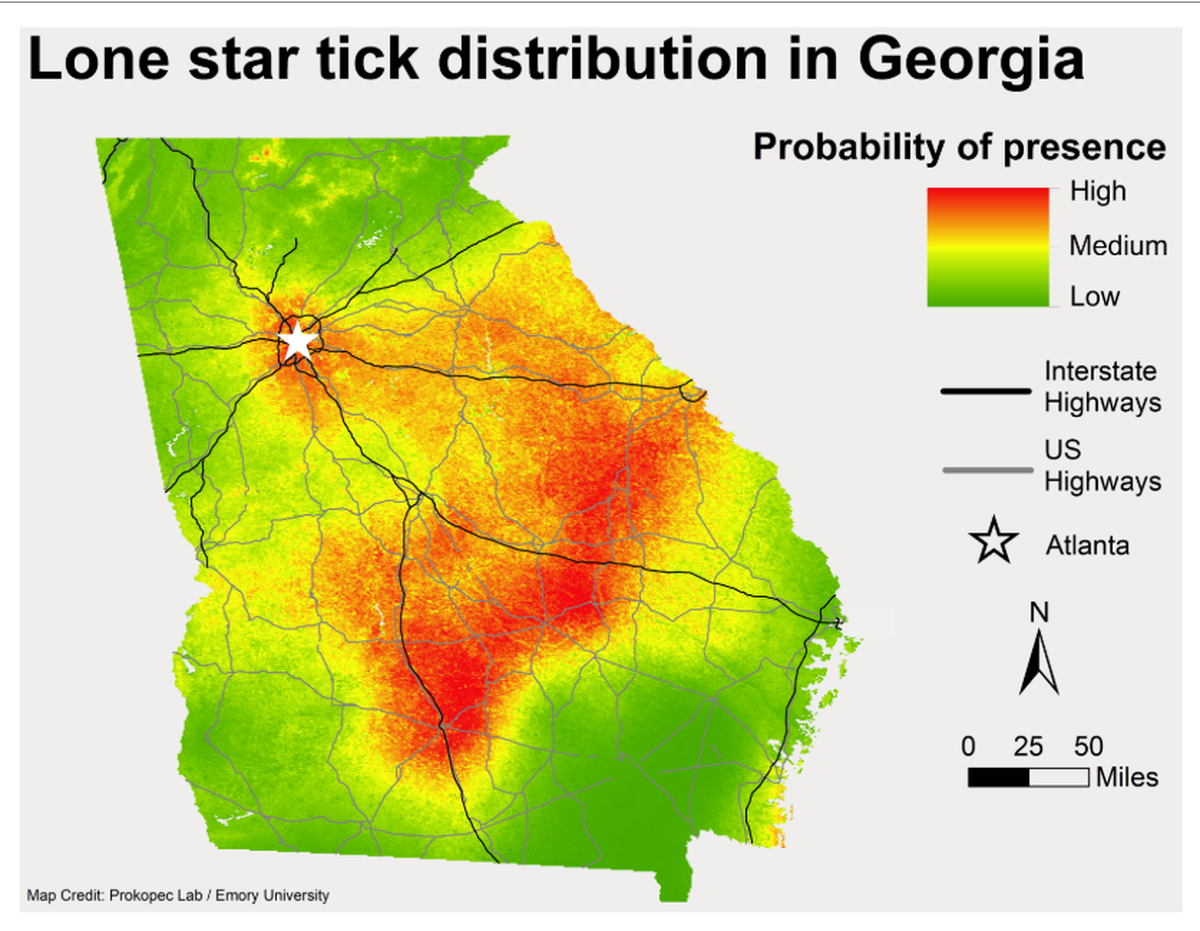
- Lone Star
- American dog
- Black-legged tick
Reported tick-borne diseases
- Spotted Fever Rickettsiosis (including Rocky Mountain Spotted Fever)
- Lyme disease
- Ehrlichiosis
- Anaplasmosis
Emerging diseases monitored by DPH
- Babesiosis
- Powassan virus
- Heartland virus
- Bourbon virus
Alpha-Gal Syndrome can be contracted from the Lone Star tick bite, can make you allergic to red meat and symptoms include hives, rash, nausea and difficulty breathing.
How to protect against tick bites
The easiest and best way to fight the tick problem is to be aware and be prepared.
Prevention
- Wear long pants and sleeves.
- Tuck in clothes so there is no exposed skin.
- Use a repellent with DEET on skin.
- Use permethrin-based repellent on clothing.
- Check yourself for ticks at least twice a day when you’ve been outside.
- Check pets.
If you find a tick:
Removing an attached tick within 24 hours can help prevent Lyme disease transmission. Speed matters. Each stage of the lifecycle must include a blood meal and then will drop off the host and begin laying eggs.
You don’t want that to happen.
To remove a tick:
- Use clean, fine-tipped tweezers.
- Grasp the tick as close to the skin’s surface as possible.
- Pull upward with steady, even pressure.
- Don’t twist or jerk the tick, as this can cause mouthparts to break off.
After removing the tick:
- Clean the bite area with rubbing alcohol or soap and water.
- Do not use petroleum jelly, nail polish remover or a lit match.
When to see a doctor
If you start experiencing symptoms after finding a tick, seek medical attention promptly. Early diagnosis and treatment can help prevent complications.
Symptoms to watch:
- Fever
- Rash
- Fatigue
- Muscle aches
- Flu-like symptoms.
Georgia also offers a free service to help identify ticks: Georgia residents can submit photos and a brief description online through the Georgia Tick ID Program at no charge.
Be safe out there.
This story was originally published May 19, 2026 at 6:00 AM.