
Charlie knew a secret
"When you sail for Ithaca, ask that your way be long, full of adventure, and full of instruction so that you can reach the island you are old, rich with all you have gained on the way, not expecting Ithaca to give you wealth."
-- C.P. Cavafy
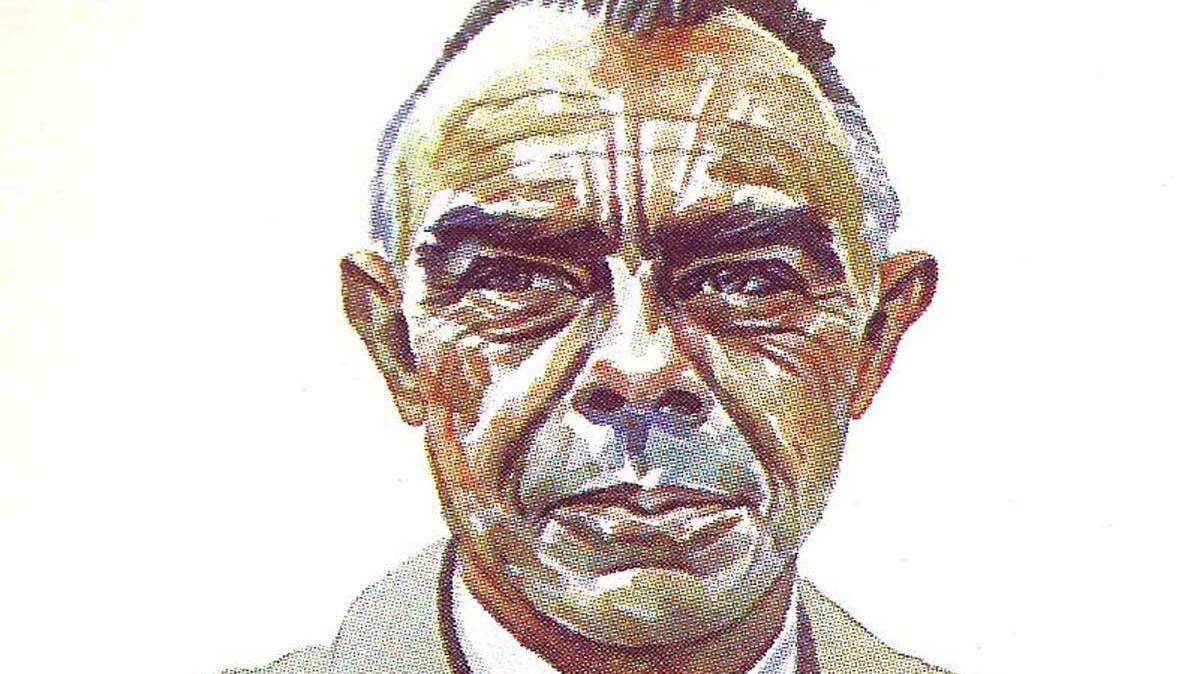
I wanted to write about my late, great friend, Charles Black, not because he was a remarkable reporter, or a unique human being, or a rare philosopher, but because when he died in 1982 at the age of 59, he had not written down for us all that he should have.
Charlie left us a lot, in his articles and his conversations which ranged across the scale from the Middle East to Southeast Asia to petty crime in Columbus, Ga.
He was best known for his five years as a reporter of the Vietnam War for the Columbus Enquirer, which was surely the smallest newspaper in the U.S. to have its own special reporter in Vietnam. It was a happy coincidence for the Enquirer -- and for the nation -- that the reporter happened to be Charlie Black.
Actually, the idea of Black going to Vietnam evolved from a circulation scheme that he and the editor hatched up to increase the sales of the Enquirer, which at that time was having to catch up with the Ledger, long the dominant newspaper in the Columbus area.
Fort Benning was beginning to fill up with soldiers again in late 1963 and early 1964, and coverage of their activities was important. Charlie reported the formation of the Air Cavalry Division at Benning, and then went with the division on maneuvers in North Carolina.
The next logical step seemed to be that he would go with the unit when it went on to Vietnam, and that's how Charlie ended up covering what became a much bigger story than when he first went there in 1964.
Black, the small city reporter who went there to cover the men of the Air Cav, turned out to be one of the few American journalists who understood what was really happening in Vietnam.
In fact, my most vivid and enduring impression of Charlie Black is that he was always trying to make some sense out of the illogical world that never quite accepted him, because Charlie insisted on his own terms for acceptance.
The newspaper business, in which he labored for most of his adult years, always found Charlie something of a puzzle. He was out of a job when he happened through Columbus in 1963 and hired on as the oldest reporter on the Enquirer staff at that time.
But that put him in the right place at the right time to fulfill the mission that set him apart from thousands of other journalists who found their niches and filled them quietly and unobtrusively for years.
No one else told the story of the American soldier and the U.S. mission in Vietnam as well as Charlie did, and that mission desperately needed a friendly observer.
Because Charlie Black was in Vietnam, sent primarily to report on the soldiers from Fort Benning, the entire nation got a better account of what was happening.
My main association with Charlie was in those years of his journalistic prominence. As editor of the Enquirer, I traveled with him on many speaking engagements throughout the Chattahoochee Valley.
Without notes or rehearsal, Charlie could talk for more than an hour on the tactics, the politics and other aspects of Southeast Asia, and it was a different speech each time. He was invited to the National War College; he was a friend of generals as well as privates. During that period, he was truly a celebrity.
The most valuable lesson I learned from Charlie was in our occasional encounters during his last 10 years when the sound of his trumpets had faded, when he no longer consorted with congressmen and presidents. At times he was merely unemployed, or a clerk at a whiskey store, then the editor of a small daily newspaper, which I believe was a calling he long relished and dearly enjoyed, and the Valley Times-News and Charlie were both better for his having passed that way.
And in this time he was also critically ill, even told by doctors in 1978 that he had only a few months to live. He beat that rap, only to suffer an automobile accident which left him crippled for months, and to an extent for the two remaining years of his life.
Also in those years, a divorce separated him from one wife and his two daughters, but led him to find a new love that brightened his journey along the darkling plains of his later years.
The lesson he taught me was one of courage and grace, because I never detected a change in Charlie himself, despite the change in his circumstances. That mischievous smile still came quickly, the eager questions, the torrent of answers.
Charlie's spirit never wavered, in the face of tribulation so fierce that even his own determined efforts to make life work and to understand its mystery must have been severely shaken.
I wish Charlie could have written a definitive column on how he faced adversity. That was a valuable secret he seemed to possess that most of us need to know.
And something else that Charlie knew perhaps better than anyone else was the truth that history seems determined to distort. He knew that American soldiers didn't lose the Vietnam war.
It was the most reported war in history, but even today the misrepresentations continue and the legends grow, so deeply rooted and virulent that when a memorial to Vietnam veterans was finally dedicated its presence and its "message" were debated and demeaned, and no one even seriously challenges the flat assertion that "America lost the Vietnam War."
I wish Charlie Black had written the book that would've put that question in perspective. History and the nation are the losers because he did not.
Vietnam is a tragic land today, not because American troops went there to fight, but because the mission was not completed. While the U.S. troops were there, the North Vietnamese were beaten back. Then in 1975, nearly three years after U.S. troops left, the war suddenly turned in the North's favor, and South Vietnam was defeated.
Charlie Black told us the truth of the American soldiers' bravery and success in Vietnam, both of which were considerable. That was a great contribution to journalism in his correspondent years, and his articles may yet serve to balance the scales when the historians begin wading through the vast body of facts, fiction and distortions that bedevil our national psyche even today.
I'm proud to have been an editor who helped Charlie Black become a Vietnam reporter, but I'm even prouder to have known Charlie Black, the cheerful philosopher who always looked for answers no matter how harsh the questions have become.
Millard Grimes, editor of the Columbus Enquirer from 1961-69 and founder of the Phenix Citizen. is author of "The Last Linotype: The Story of Georgia and Its Newspapers Since World War II."
This story was originally published February 27, 2016 at 12:00 AM with the headline "Charlie knew a secret ."