
Words written long ago bring a flood of memories and moments of reflection
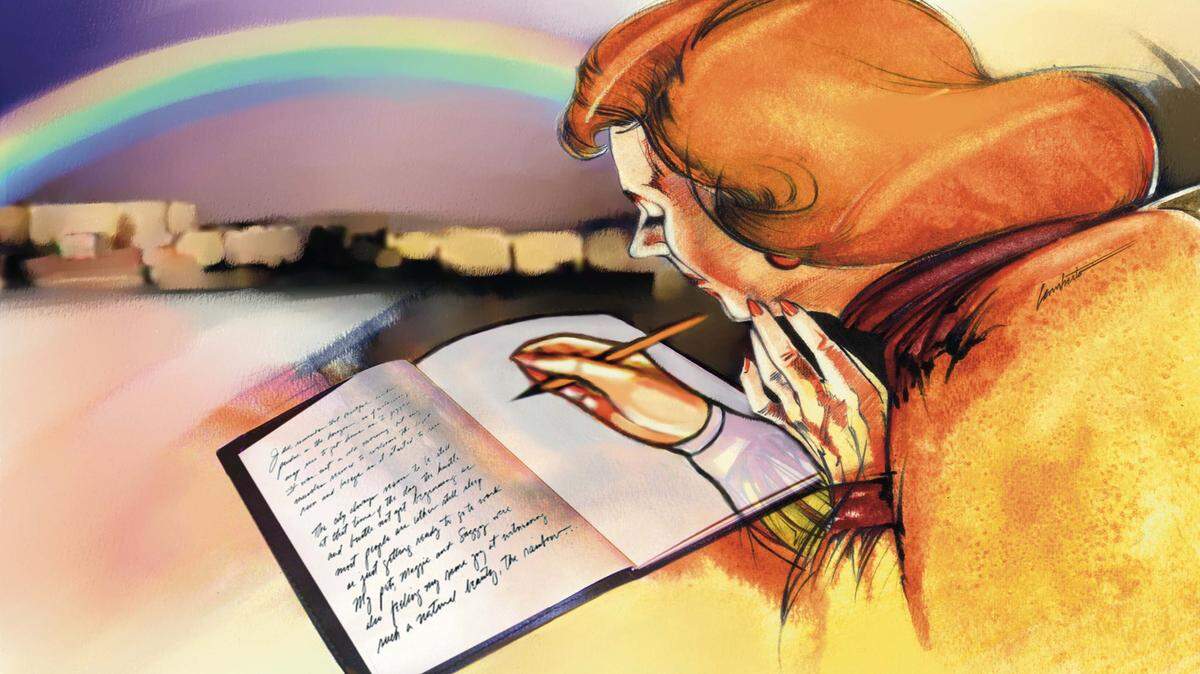
In years past, I kept a journal. Sometimes the effort lapsed, but then I’d start again. I often thought it was a pointless exercise, something important people did, but not an average person like me. Much of my life was ordinary, and therefore most of my journal entries were, I thought, inconsequential. But I’d persist, intermittently, secure in the knowledge that I could always destroy the record so nobody else could see it as a useless affectation.
Different notebooks, now stuck away somewhere, have held my musings, but one has sat on a shelf in plain sight among other books for a long time, there only because it was a well-made, durable book, unlike most of the ones I’d used. I knew it was there, knew its pages were all filled, and had no reason to do anything with it. Then yesterday I took it down and began reading. The entries ran for 14 years, with the last one made in 1985. As I read, I was glad I had bothered to write this routine stuff, and if you’ve never kept a journal, I recommend you consider it.
I read that our first baby would arrive in two months. She did. Later entries would note her birthdays, the arrival of her brother, and the development of the two babies into important, independent members of the family. No long discussions about them, just a few sentences now and then, enough to stir memories, written in between accounts of family visits, orders to new posts and an amazing number of Army-ordered trips all over the country and to other parts of the world. I recorded my excitement as I awaited the arrival of my wife and children in Washington, my having had to fulfill my new assignment there several weeks before they could join me. And my wife’s relief at arriving there after a drive from Georgia that included two blown-out tires and a speeding ticket. I commented from time to time on world events, like the Watergate disaster. Nothing new there, but an immediacy to the words written as the events were occurring, the outcome not yet known, that brought it all back to life. I wrote, as the process occurred, of presidential elections, the pardoning of former President Nixon, the threat of recession and the effects of increasing gas prices. Events of greater or lesser importance, but the backdrop of life, seen now from a distance.
My tendency to judge people too quickly was obvious as I read through the notebook. In one case, I wrote harshly about the newly assigned general under whom I worked. I described him as an obstacle, given to taking too much time on everything and to pontificating at length on matters when I needed to be working. As it turned out, I soon came to view him as one of the finest officers I had ever served under, deserving of my fullest respect. We remained friends and stayed in touch long after we were both retired.
I was not always wrong in these judgments. During an earlier period, I had written of a newly assigned senior commander that I didn’t trust him. Though he was pleasant and cordial, I thought he was slippery and willing to cut corners. Sure enough, as time passed, he gave me further reason to hold onto my initial rough evaluation of him. Looking back after all these years, I see no reason to change my opinion.
My comments on my superiors, and others, were not routinely derogatory. The notebook contains numerous examples of senior officers for whom I recorded glowing praise. Not because they would ever read the words, but because I was trying to write the truth. There are far more favorable entries than unfavorable ones when describing people I knew, whether seniors, subordinates, or relatives. And, yes, I find that I did comment on some of my relatives. (I may burn the notebook if I know when I’m about to clock out.)
I recommend keeping a journal. Those seemingly insignificant events may be worth more than you think when, years later, someone reads them. If that someone is you, you may learn new things about yourself.