
Once the storm has passed, the real story arrives - and it is often missed
It was Monday, Sept. 10, and Florence already had my attention. Much of social media was already populated with remembrances of 9/11, calling Sept. 10 the last day we would know as normal. It was a fitting juxtaposition for the forecast. Despite the storm still being almost a week away, the National Hurricane Center had an amazingly tight cone that projected the direction of Florence. The southeast corner of North Carolina was in the bulls-eye. A few days of normal for them were left.
For most, it’s just another news story or weather event. For me and my family, this one is personal. My mother was born in Richlands, a tiny town on the outskirts of Jacksonville, N.C., and Camp Lejeune. Our relatives are scattered along the coastal counties from Wilmington to New Bern.
Last week was all about the anticipation of the storm. For those in harm’s way, there are decisions to be made. How should property be secured, and when and where to evacuate are chief among them. It’s easy for those of us not in an evacuation zone to make these decisions. It’s much harder still for those to decide to leave. For some, it’s even a question of how. For the elderly, the evacuation can often be more dangerous than staying put.
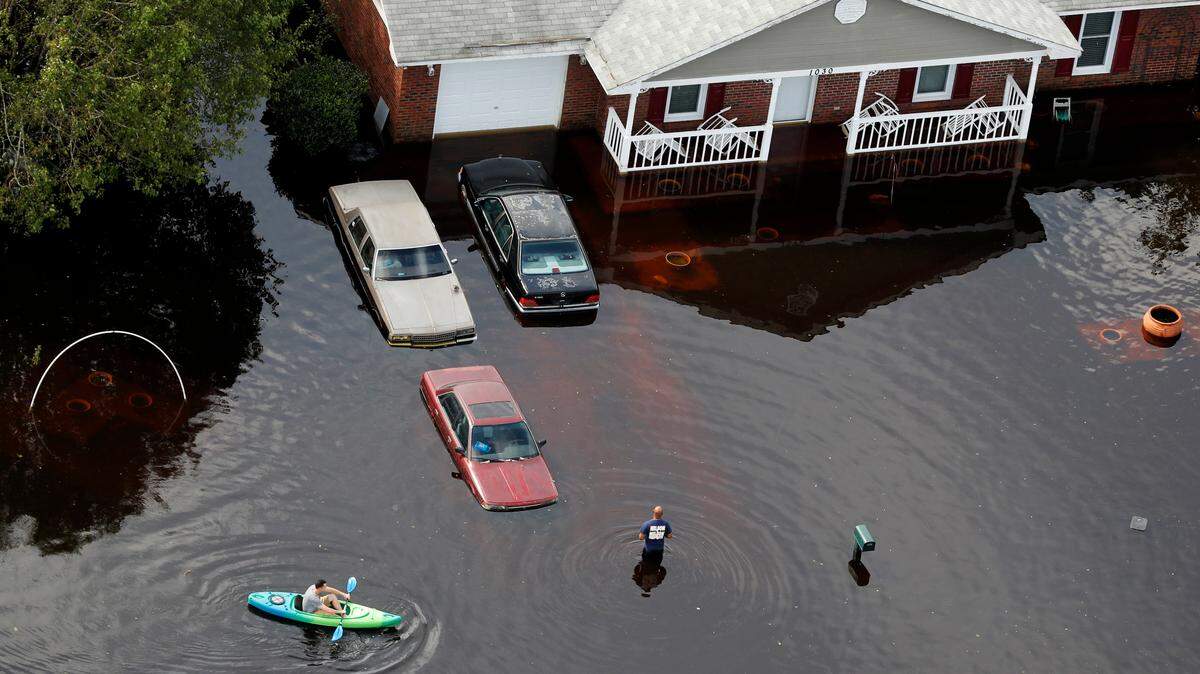
The problem is exacerbated by some members of the media who over hype the storm. For too many, it’s performance art. This was a storm that didn’t need the hype. It was a category 3 or 4 for much of its travels across the Atlantic. Thankfully, it slowed on its approach and the wind speed diminished before coming ashore. The damage, for much of the area due to flooding, will certainly still be catastrophic.
But still, the reporter for The Weather Channel needs to be singled out for his theatrics of pretending to be almost blown down by the wind when others casually strolled behind him during his live shot. There’s a lesson here between the hype of what’s about to happen and covering the actual news once it has occurred.
When Hurricane Andrew hit south Florida in 1992, the reporters left almost as soon as the clouds broke. They had covered the immediate impact. They missed the story. There was devastation for miles inland. It went well beyond the standard pictures of twisted metal and boats run aground that have become cliche for storm coverage. This, however, is the public’s attention span for such news. Anticipation can be hyped. Real and complex problems that can’t be solved in a 90-second hit on the 6 p.m. news quickly become dull, regardless of the struggle the problems represent.
As this is a campaign year, and this usually a political column, a certain parallel can be made. Our media enjoys covering campaigns much like hurricanes. An era of soundbite and click bait journalism has left us with journalists that will spend two or more years covering the horse race of a campaign, without ever scratching below the surface of policy differences or actual governance issues between candidates.
When the election is over, there’s brief coverage of the coronation, then many turn their attention to the next election. If only the attention of the journalists – and the public – could be inverted to spend a few weeks on campaigns and the balance of the years in between on the routine functions and decisions made in governance.
North Carolina will require a lot of work. So will implementing the policies on which the candidates are currently campaigning.