
Savannanh port’s growth impacting all of Georgia and much of US
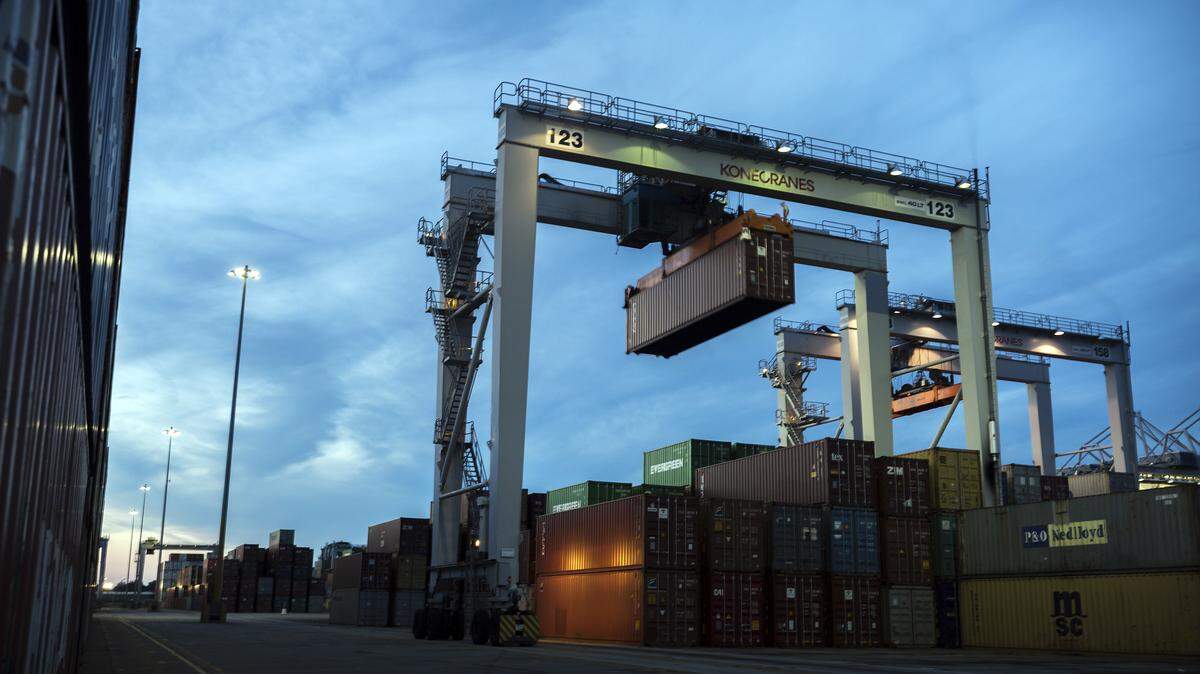
Last week, the Georgia Ports Authority held its annual State of the Ports briefing in Savannah. It’s an annual banquet that fills the Savannah International Trade and Convention Center to capacity with the state’s elected officials and business leaders. The program is similar each year and can usually be subtitled “broken record.” Georgia’s ports have become so accustomed to record-breaking growth that the feats required to sustain the pace have begun to look routine.
The metrics usually used to describe the growth are those of volume and space. For container traffic — the shipping containers that come in on ships and leave the port on a truck or train — the unit of measurement is TEUs. That stands for “twenty-foot equivalent unit.”
Last year the port saw a record 4.2 million TEUs through its gates. That’s an 8.4 percent increase over the prior year, and continuing a pace of growth in or above the 7 percent annual growth rate. While 7 percent doesn’t sound extreme, this is the rate that compounds into double every decade. Because major infrastructure projects often require a long planning horizon and additional time to permit and construct, it’s important to understand the scale of numbers we’re talking about here and the impact on Georgia’s economy and infrastructure
The current capacity of the Port of Savannah is 5.5 Million TEUs. At a 7 percent annual growth rate, the Port would hit this capacity in just four year.
This brings us to this year’s headline. The Port of Savannah will be embarking on yet another 10-year plan to reinvest $2.5 billion into the facilities to increase capacity to eight million TEUs.
The plan brings to focus the key measurement that has been the success of the port. While the dollars generated come from volume and the capital invested is in both space and equipment, the value to the port’s customers is time.
Much of the focus on the expansion has been on the dredging of the harbor to accommodate larger ships. That represents increased efficiency as more TEUs can be turned per ship docking. The port also continues to reinvest in rail capacity, giving the port the ability to get containers on to trains quicker. The establishment of “inland ports” with improved direct rail service further gets goods from the ship to the consumer faster.
A similar focus has been placed on the alignment and capacity of the gates used by trucks, increasing the efficiency of ingress and egress. Trucks now have options for direct access to either Interstate 16 or Interstate 95 to get them on their way faster.
While Georgia customers of the port will benefit from the faster operations, the port is indeed one of national significance. The Port of Savannah currently handles 8.5 percent of all of America’s containerized cargo and accounts for 10 percent of all exports. Trade in Savannah is a two-way street.
To continue the growth, the goal is to cut the time of goods from ship to customer again, making Savannah the preferred port for customers in Chicago, St. Louis, Cincinnati. Every hour that can be cut along the way opens up Savannah as a port to more customers further inland.
Charlie Harper is the publisher of GeorgiaPol.com and the Executive Director of PolicyBEST, which focuses on Georgia policy issues of Business Climate, Education, Science & Medicine, and Transportation.