GA has the most bacteria-ridden meat. Here are foods to avoid
Most Georgia shoppers take for granted the safety of the food they buy, but you may want to pay extra attention the next time you buy meat.
According to results from TraceOne, a company specializing in product lifecycle management, Georgia now ranks dead last in the nation for retail meat safety.
Georgia tops the list for the highest risk for bacterial contamination in chicken, ground turkey and ground beef, with neighboring states Tennessee and South Carolina following closely.
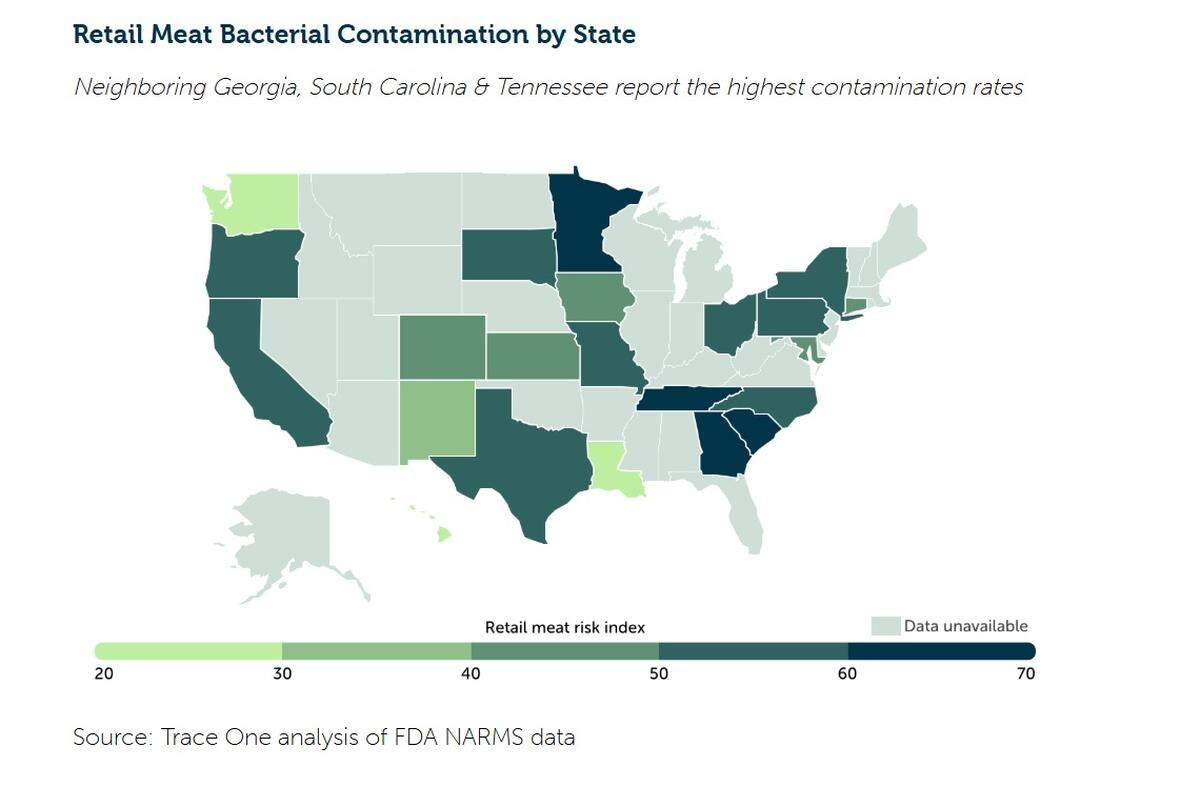
What is the data about contaminated meat in Georgia?
According to the U.S. Centers for Disease Control and Prevention (CDC), an estimated 48 million people in the United States get sick from foodborne illnesses each year, especially Salmonella, Campylobacter, E. coli and Enterococcus.
Although over 33% of all retail meat in the U.S. tested positive for at least one type of potentially harmful bacteria, Georgia has the highest contamination risk index.
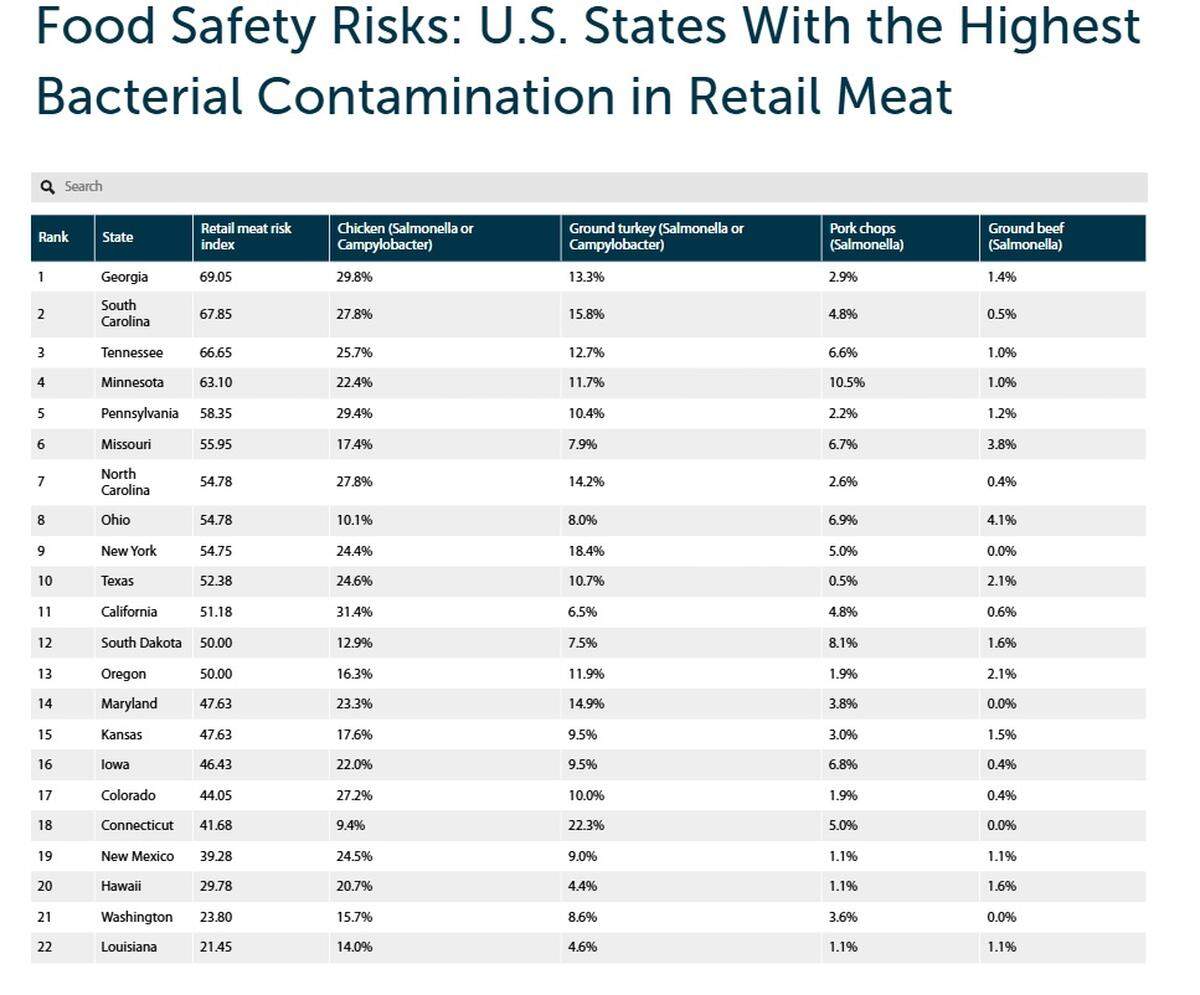
A new analysis using data from the FDA’s National Antimicrobial Resistance Monitoring System (NARMS) examined contaminations in chicken, ground turkey, ground beef and pork chops, specifically.
The results reveal:
29.8% of chicken samples tested positive for Salmonella or Campylobacter.
13.3% of ground turkey samples and 1.4% of ground beef samples also showed contamination.
How does chicken, beef and turkey become contaminated?
Since chicken and ground turkey are the most consumed meats in the country, says, United States Department of Agriculture (USDA) they are also the most likely to carry bacteria that can cause foodborne illness.
The main reasons for contamination in Georgia are:
Georgia is one of the nation’s largest poultry producers, which increases the odds of contamination events, especially when processing lines run at high speeds to meet demand.
The environment of poultry processing makes it easier for bacteria like Salmonella and Campylobacter to spread between birds and onto meat surfaces.
The avian influenza (HPAI) outbreaks disrupt normal operations and can stress biosecurity protocols.
Trade disputes and foreign import bans have highlighted concerns about contamination.
Ground meat is especially susceptible because grinding mixes surface bacteria throughout the product.
Should Georgia consumers worry?
Oversight of food and consumable products is a shared responsibility between the US FDA and USDA., but recent budget cuts should make shoppers a little more vigilant.
Salmonella and Campylobacter are leading causes of foodborne illness, causing symptoms like diarrhea, fever, and abdominal cramps, and some bacteria can be resistant to antibiotics.
What can you do to prevent contamination in your kitchen?
The Georgia Department of Public Health recommends:
Use a food thermometer to cook all poultry (including chicken and turkey) to an internal temperature of 165°F, and ground meats (beef, pork, lamb, veal) to 160°F.
Avoid rinsing raw meat or poultry in the sink.
Use separate cutting boards and knives for raw meat and for ready-to-eat foods.
Immediately clean and sanitize all utensils, cutting boards and surfaces.
Store raw meat and poultry below cooked or ready-to-eat foods in the refrigerator.
Wash hands with soap and water before and after handling raw meat.
Refrigerate (at 40°F) or freeze (at 0°F) meat and poultry within two hours (or one hour if above 90°F).
Place raw poultry in plastic bags at the store.
Don’t leave cooked or raw meat out at room temperature for more than two hours (one hour if it’s hot outside).
Use a dishwasher or a sanitizing solution (like one tablespoon of bleach per quart of water) for cutting boards, utensils and surfaces.
As food safety organizations and public health officials do their best to regulate the state’s risk factors, stay aware of your food routines and take all the necessary precautions.
For more information on food safety and recalls, visit the Georgia Department of Public Health or the USDA Food Safety and Inspection Service.
What are your concerns as a Georgia shopper? What would you like to read? Email me at srose@ledger-enquirer.com or find me on social media.
This story was originally published July 8, 2025 at 4:17 PM.