What happens during an eviction in Columbus? We took an inside look.
Deputy Keith Cooper began executing evictions this year after the marshal’s office merged with the Muscogee County Sheriff’s Office. Despite only doing this duty for a few months, he has plenty of stories to tell about his experiences.
Working on the eviction team can be unpredictable.
He’s had cases where a resident didn’t inform their partner that they were behind on rent, so it was a shock when a deputy knocked on the door. Cooper has seen heartbreaking cases, some that felt like the tenants were taking advantage, and others involving mental illness.
Cooper experiences the eviction alongside the renter, in what can be one of the lowest moments of their life and it’s his job to enforce it.
He said he’s aware many people feel that deputies just show up to a home and move tenants’ belongings out on the street. However, there is a process that begins when tenants get behind on rent or violate their lease in some way, Cooper said. Sometimes landlords are out of money, and eviction is the only option.
“Some people haven’t paid rent since last March,” Cooper said. “So, you’re talking about tens of thousands of dollars that they can’t recover.”
Housing insecurity in Columbus is a long-time problem exacerbated by financial stresses from the coronavirus pandemic.
The sheriff’s office has executed over 700 evictions this year, and local advocates expect the number to rise with the end of the Centers of Disease Control and Prevention eviction moratorium on July 31.
It’s been a year like no other when servicing evictions, said Cooper, and almost every person evicted has a story about how the pandemic has changed their life.
Making a deal
Cooper keeps a photograph of his two daughters pinned to the ceiling of his patrol car. He listens to motivational speeches as he drives from one eviction to the next.
He knows his job is dangerous. There have been times, when thinking about his girls, he has considered changing professions. He wants to be here, alive, to raise them. But for now, he has a job to do.
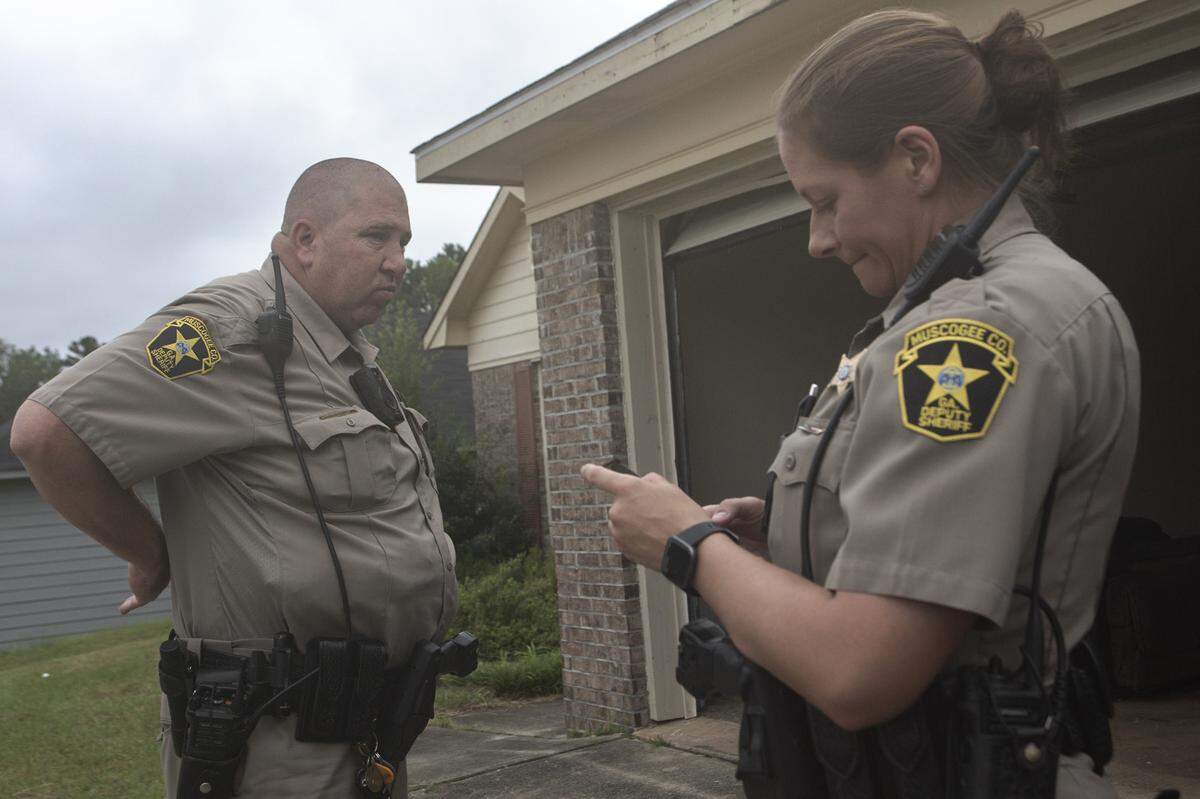
On a Wednesday in mid-July, Cooper pulls up to the first eviction at a small, red-brick apartment buildingand meets with another deputy at the residence. The two men stand next to a patrol car as his co-worker updates him about what has been taking place that morning between the tenant and the landlord.
This eviction is being put on hold because the tenant and landlord came to an agreement. She owed two months’ rent and gave the property manager partial payment, promising to take the rest of the rent to the landlord’s office by the end of the day.
Since the landlord gave permission to the property manager to take the payment, the deputies place the eviction on hold. As long as the tenant fulfills her side of the agreement, she is allowed to stay in the residence. Otherwise, the landlord can reschedule the eviction.
The deputies are pleased everything went smoothly. This tenant had young children living with her, and evictions that involve kids are harder, Cooper said.
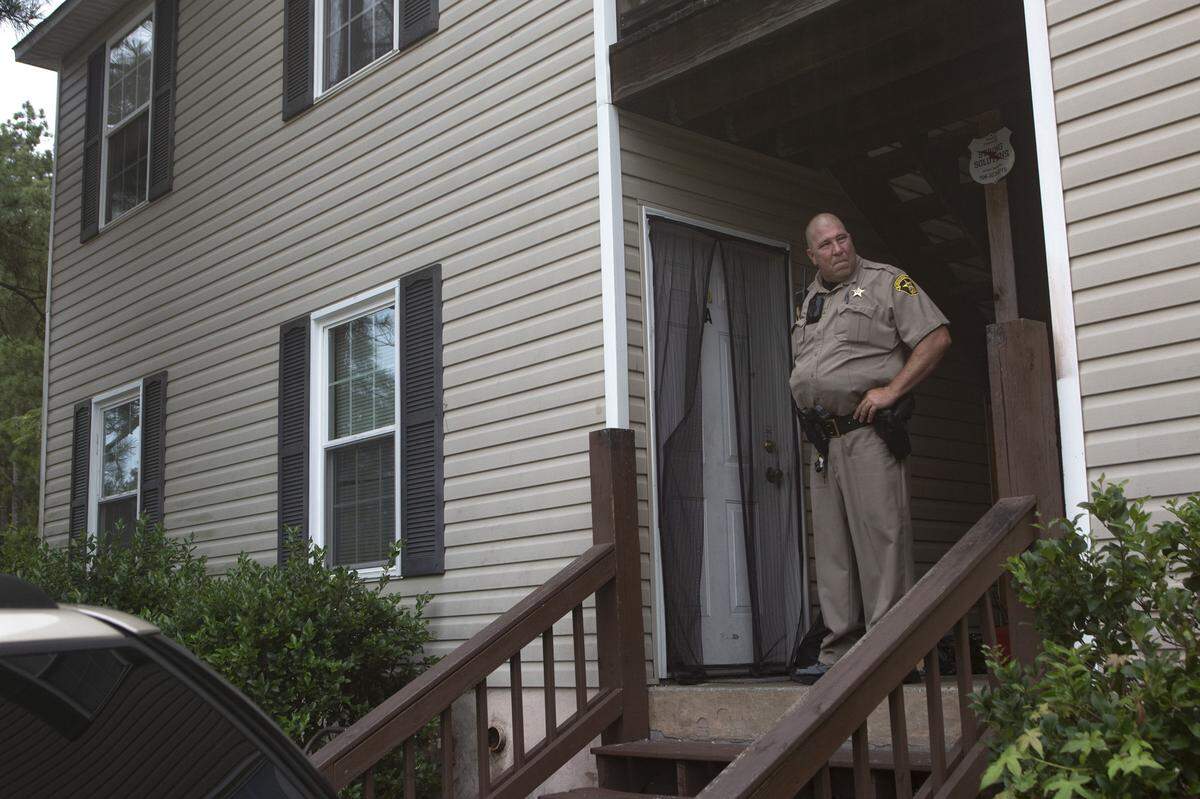
“You have compassion for people in general,” Cooper said. “Seeing somebody put out of their house is tough.”
‘Easier when people aren’t here’
In the patrol car, Cooper types the address of the next eviction into his phone.
His GPS routes him to Greystone at Columbus Park apartments. It’s the first eviction at the high-end apartment complex in three years, according to a staff person on the scene.
Cooper explains deputies see evictions in all areas of the city, in many types of homes and apartments, across all neighborhoods and socioeconomic classes.
Deputies Hilary Rager and David Podger meet Cooper at the door of the second-floor apartment. Guns drawn, the trio clears the two-bedroom apartment before allowing the complex’s management team to enter. Podger and Rager recall an instance when a person died by suicide as deputies arrived to execute an eviction.
“You have to walk in with (the tenant), watch them as they’re grabbing stuff and make sure they don’t grab a gun or something,” Rager said. “A lot times people aren’t just dangerous to us, they’re dangerous to themselves.”
At Greystone, the tenant had clearly left the apartment before the eviction team arrived. Most of the furniture was taken out of the two-bedroom apartment, but what was left behind showed the remnants of the family that lived there.
Toys left in the smaller bedroom. Tiny shoes sit in the closet. Food abandoned in the kitchen cabinets.
A white board with a carefully-drawn fitness plan was found in the master bedroom. Two toothbrushes sat ready at the bathroom sink, the bathtub lined with shampoo bottles and personal hygiene products.
One of the deputies tells the management team to make sure any alcohol bottles aren’t placed on the curb, so kids in the community can’t stumble upon them.
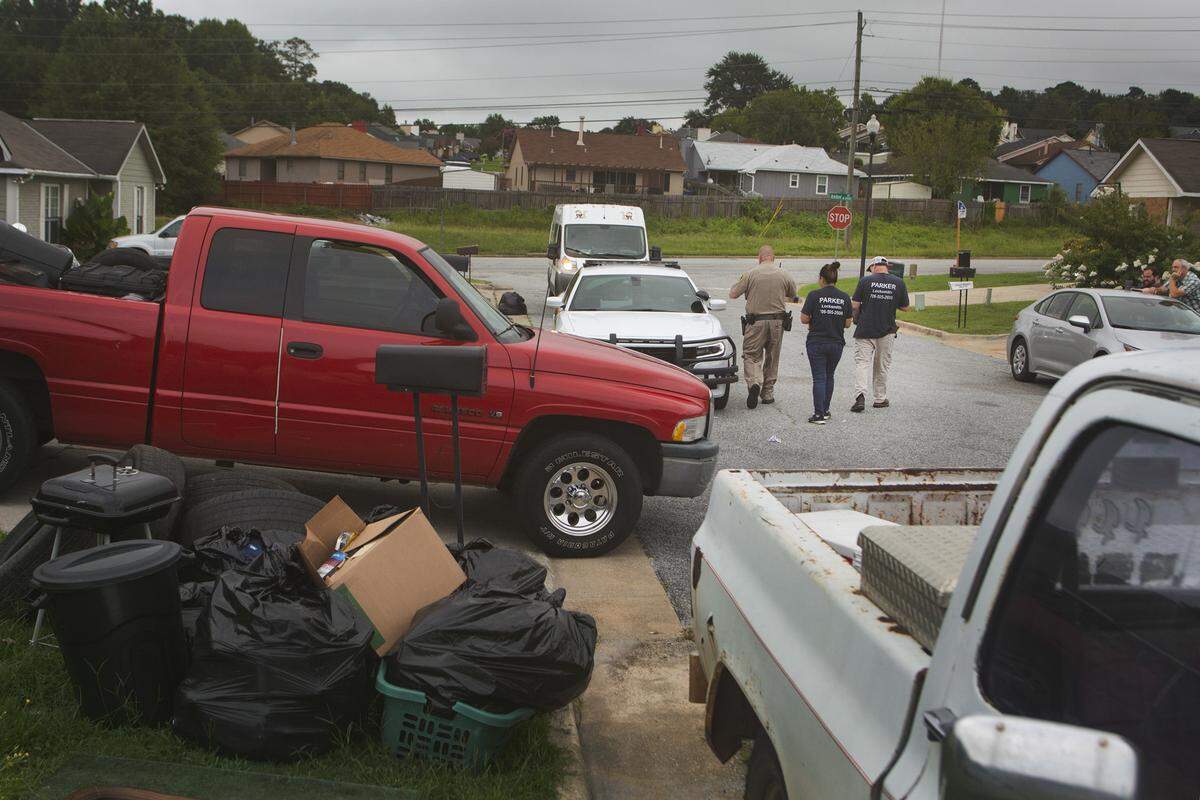
For more than a hour, the property’s management team collects belongings into thick, black garbage bags. One person cleaning said they want to donate the food left behind.
The trash bags and remaining furniture begin to pile up on the curb, protected from pilfering only until the deputies leave the scene. After that, the tenants could retrieve their belongings or any passerby could take off with a item.
“It’s always easier when people aren’t here because then you just have stuff to deal with and not people,” Rager said. “Because it’s hard for people. You’re already down on your luck, and you’re having problems. Then somebody shows up to get the rest of your stuff out.”
As the management team worked, the deputies stood together reminiscing about some of the stranger evictions they’ve executed: hoarders, people hiding under piles of clothes and homes with dozens of guns.
One common experience among the deputies is dealing with tenants who believed they were protected from eviction because of the CDC moratorium.
In order to take advantage of the eviction moratorium by the CDC, tenants must provide their landlord with a written declaration stating they qualify as a covered person under the order and that losing their housing would leave them homeless or living in close quarters with others.
This action would allow the court to put their eviction on hold until the end of the moratorium on July 31.
“I had one yesterday with a woman who was pretty riled up,” Rager said. “She was saying that the city put a CDC hold on the house. That’s not how that works, you have to file for it.”

It’s understandable that tenants get emotional sometimes, she said. It’s human nature.
Tensions escalate
A week after executing the eviction at Greystone, Rager was at another apartment building off Bunker Hill Road.
This time the tenants were home.
Taylor M. and her family lived in the apartment, and the lease was in her mother’s name. When the pandemic began, her mother lost her job and not long after, the property was sold to another company, according to Taylor.
“Nobody got any eviction papers — no nothing,” Taylor said. “The only way my mama knew she had eviction papers was that she called down to the sheriff’s office.”
She said they received a notice that said they had seven days to respond, but the flyer didn’t explicitly say “eviction.”
Once a landlord goes to court to file an eviction, sheriff’s deputies serve tenants with a dispossessory action that explains to tenants that they have seven days to respond to their landlord or an eviction will be scheduled.
Tenants who receive one of these actions should go to the clerk’s office on the eighth floor of the Government Center to respond, according to Molly Sutter, an attorney at Georgia Legal Services. Advocates in Columbus have said more education about evictions and the resources available to those who are facing them is desperately needed.
It’s too late to stop an eviction after that seven day window, Sutter said.
Taylor’s apartment would be cleared regardless of the family’s confusion.
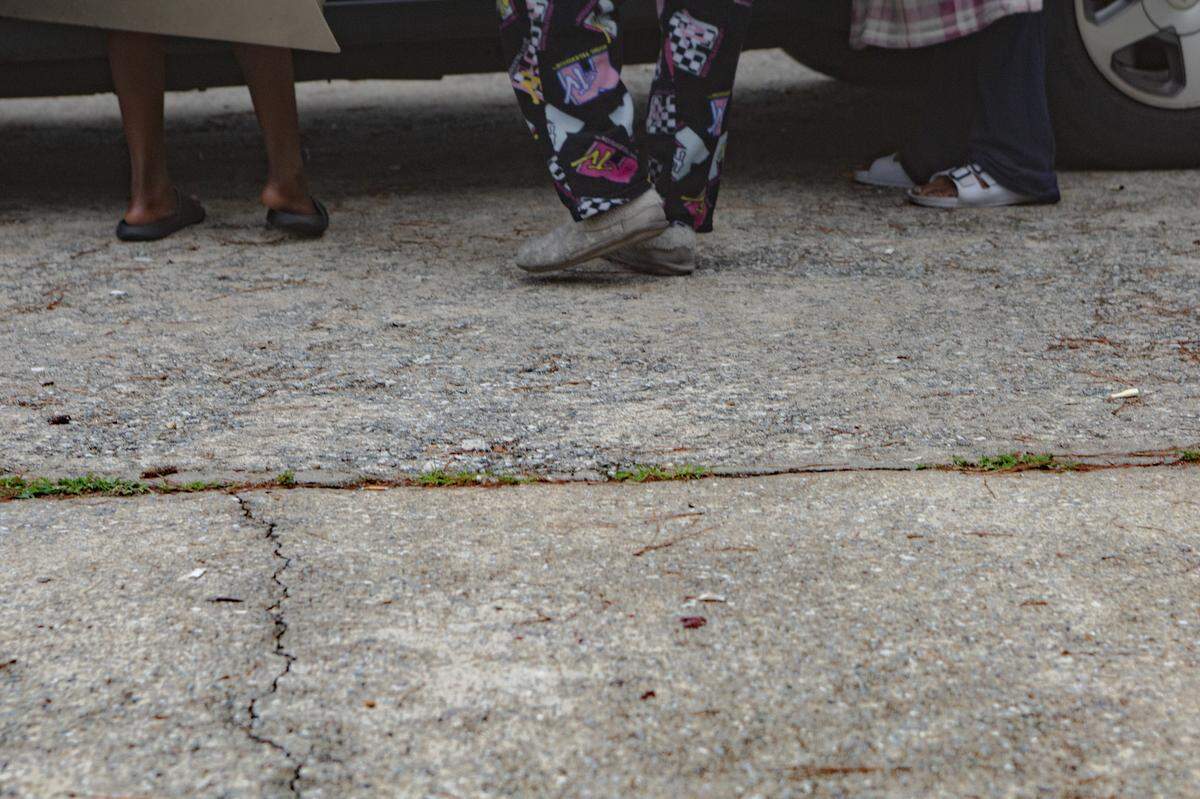
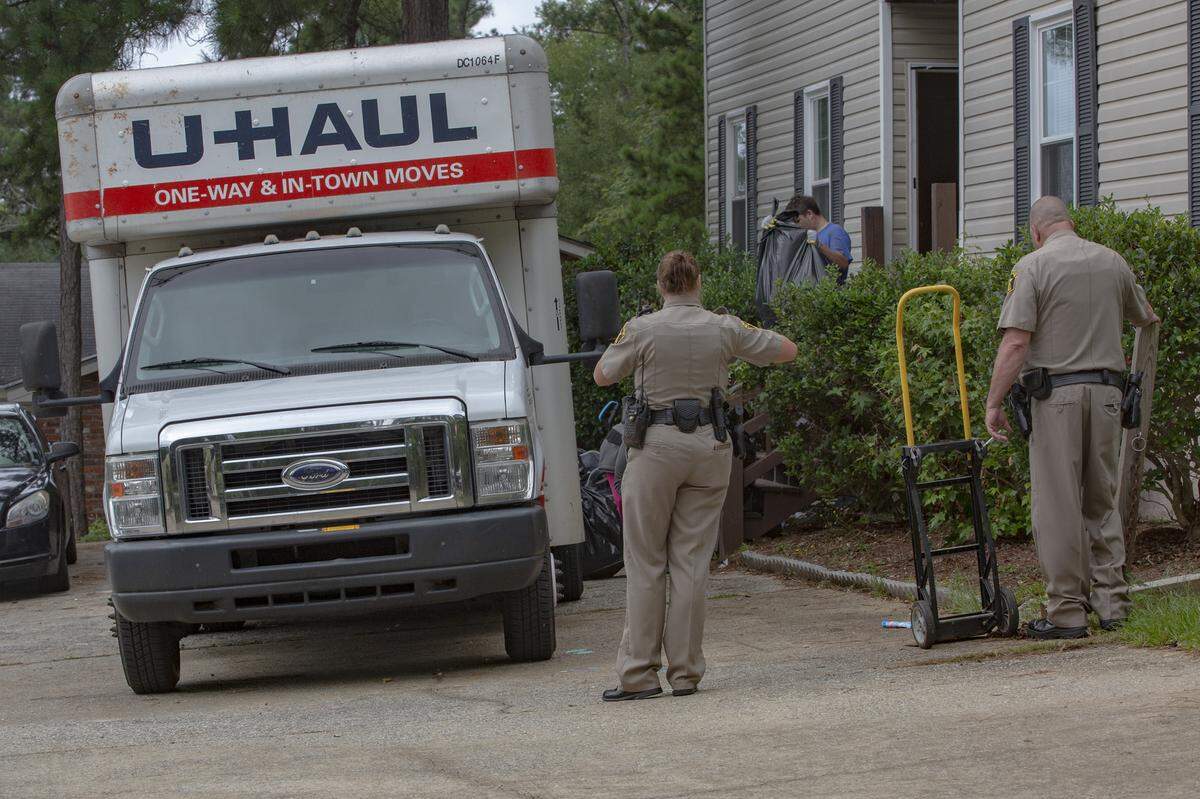
Movers were hired by the property owner and tensions quickly escalated as they began filling a parking space with everything that had once been in the home. The tenants voiced concerns that trash was being mixed in with the personal items and wanted more time to go through the bags.
The movers, on their fifth eviction of the day, were focused on moving as quickly as possible. Back-and-forth conversations eventually erupted into a yelling match between one of the movers and two of the residents that were moving things out.
The deputies step in, ordering the residents involved in the verbal altercation to leave the property. The scene wasn’t unexpected, according to Rager, but stands as a testament to how quickly these stressful situations can devolve.
The tenants feel powerless, the movers are trying to do their jobs and the deputies have to stand as mediators.
Onto the next evictions
After a day of going from one home to another executing evictions, Cooper pulled up to the Southside Court apartments. These homes were the opposite of the nice, well-manicured apartments at Greystone.
The grass was overgrown. Some of the sidewalks were missing in places. Wasps and other pests made their presence known in the July heat. Tenants stared at the patrol car as it drove by.
Cooper parked and pulled out a stack of dispossessory affidavits. He goes through each one, filling out his part of the paperwork before placing them in envelopes. All the affidavits will be going to tenants in this complex. Others on the eviction team each have their own stack of dispossessory actions to serve around the city.
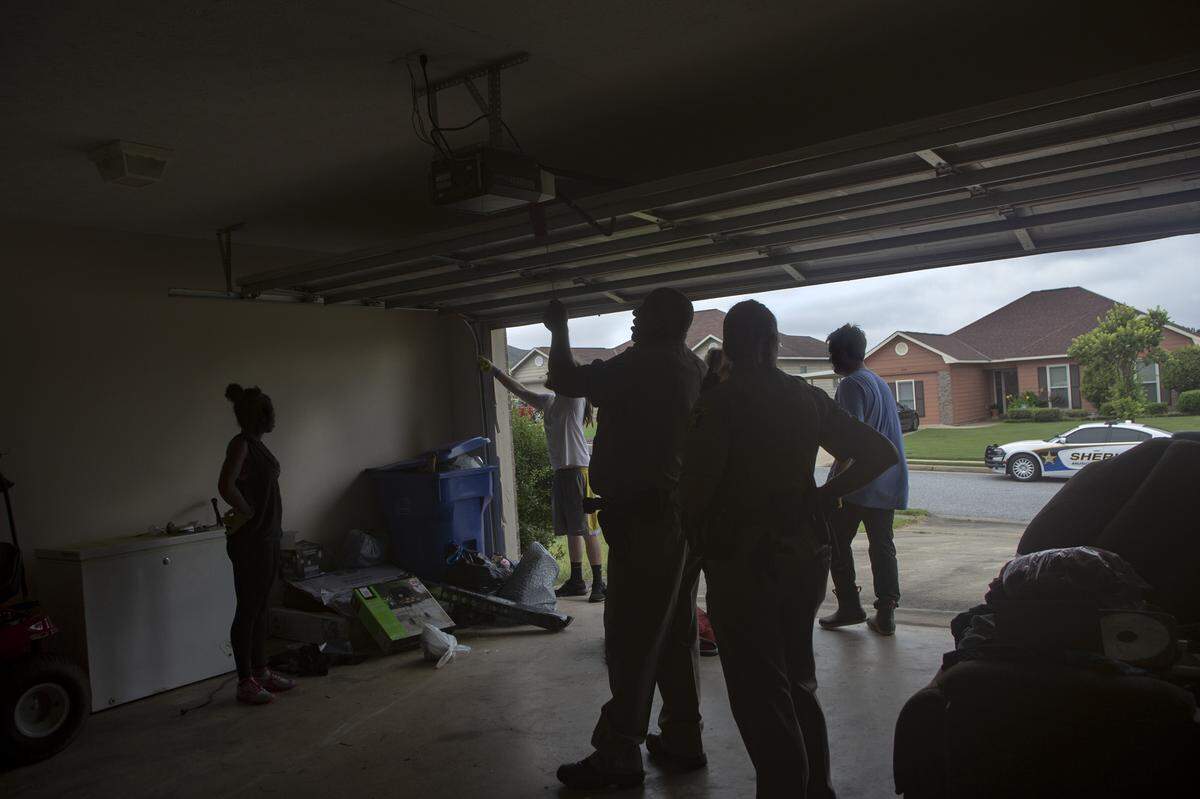
After finishing the affidavits, Cooper begins to serve tenants.
He knocks on each door and waits for a moment before attaching the envelope. He doesn’t expect an answer. Most people are gone or otherwise do not open the door.
“Out of the nine (dispossessory actions) that I have, maybe two people will come to the door,” Cooper said.
At one home, a teenager answers the knock and accepts the envelope. Another woman answers and is upset about repairs that haven’t been done in the unit. Cooper can’t do anything but listen to her concerns and serve the dispossessory action.
When that’s done, he gets back in his patrol car and heads to the nearest post office where he mails a second copy of the affidavits to each of the tenants he served. By leaving the actions at their door and mailing them, tenants will have officially been served.
He gets back in his car. His business with evictions is done for the day.
This story was originally published July 31, 2021 at 8:00 AM.