Hurricane forecast this summer is as intense as last year. Is Columbus prepared?
AI-generated summary reviewed by our newsroom.
- NOAA predicts 13–19 named storms in 2025, matching 2024's active hurricane season.
- Despite NOAA and FEMA cuts, federal leaders assure continued storm readiness and response.
Last year was one the most destructive and costliest hurricane seasons in the U.S., with 230 deaths and over $500 billion in damage and economic loss.
Georgia was not spared – 37 deaths were in Georgia and $6.46 billion in damage occurred in the Peach State. These mainly came from two storms: Tropical Storm Debby and Hurricane Helene.
This year is supposed to be just as active as last year in the Atlantic basin, according to the director of the National Weather Service, Ken Graham.
“We will be in an above average season once again,” Graham said at the 2025 Atlantic Hurricane Season Outlook news briefing in Jefferson Parish, Louisiana, on Thursday.
The National Oceanic and Atmospheric Administration is predicting between 13 and 19 named storms for the 2025 season, which officially begins June 1 and runs until Nov. 30.
Last year, NOAA forecasted between 17 and 25 named storms. Eighteen ended up actualizing.
“We were right on the money (last year),” Laura Grimm, NOAA Administrator said at the news conference. “In 2024 inland flooding was one of the most destructive forces. Rainfall totals near 30 inches from Hurricane Helene were hundreds of miles from the coast.”
Could any hurricanes hit Columbus in 2025?
Graham said this year, NOAA is adding “inland watches and warnings” outside of the forecast cone. Graham emphasized that the cone is a cone of error.
“Cones are where we expect the storm to be two-thirds of the time, so the other one-third it’s outside of that,” he said.
Columbus was in the original track for Hurricane Helene just 12 hours before the storm hit the Big Bend, but the storm changed direction at the last minute because of a storm in the Mississippi Valley that shifted it east.
The yearly hurricane forecast does not specify where landing will occur, but just gives an idea of how busy the season will be.
Should a hurricane bring severe rain, wind or other events like tornadoes, Columbus Emergency Management Director Chance Corbett says Columbus is well prepared.
“Severe weather and tornadoes are our biggest vulnerability in our most recent hazard mitigation plan,” Corbett said. “Flooding is on our list too, just further down the list than tornadoes. Our river handles water very well. Low lying areas around Columbus is where there might be some concern.”
Corbett said EMS has a new mobile command vehicle that operates just the same as their emergency management center, and his team is constantly training personnel with the most up-to-date data systems possible.
“The city has invested a lot into emergency management programs,” he said. “We have a state of the art emergency center in fact it’s one of the most progressive emergency management stations in the state.”
Columbus is also set up to receive evacuees, Corbett said.
“We prepare for evacuees coming from the east coast or the Gulf and work closely with the Red Cross.”
DOGE cuts to NOAA, changes to FEMA
Two months ago, the Department of Government Efficiency cut over 1,000 employees from the 10,290-person National Oceanic agency.
When pressed by media, Grimm said communicating forecasts is the agency’s “top priority,” and there is enough staffing to do that well.
“Weather prediction, modeling and protecting human lives and property is our top priority,” she said. “We are fully staffed at the hurricane center and definitely ready to go.”
Graham was also peppered with the same question of staff changes affecting hurricane forecasts.
“The answer is no,” Graham said. “Our HAFS (Hurricane Analysis and Forecast System) model is the best we’ve ever had.”
The Federal Emergency Management Agency, which helps communities with money and personnel resources after significant disasters strike, has had firings of high-level staff and millions in budget cuts this month.
Cynthia Lee-Sheng, the president of Jefferson Parish, Louisiana, said she is glad that a discussion about FEMA’s efficacy is happening on a national level.
“Those of us working in the field of disaster recovery know that at every level we can do better,” she said in the press briefing. “I’m glad to see there is healthy debate going on about what FEMA should look like, where resources should go. I think we’re all looking at making a quicker response.”
Worried about hurricanes? Prepare now, experts say
Both Corbett and Graham said knowing the particular threat in a residence’s neighborhood is the best way to stay prepared this season.
“Check your insurance, there are deadlines associated with flood insurance,” Graham said. “Look around your house are there trees that could fall. What can you do to mitigate that?”
Corbett’s message is to always be prepared by having an evacuation plan.
“Every category five storm (of which there were five last year) that has ever hit this country was a tropical storm three days prior,” Graham said. “The big ones that his this country are fast and develop quickly.”
One of the reasons they are developing so quickly or able to rapidly intensify is from warmer ocean temperatures.
Rapid intensification is defined as a tropical storm that increases by 35 mph in 24 hours or less.
“The warmer ocean temperature is really consistent with us being in a more active season,” he said. “We are in an active era of hurricane activity.”
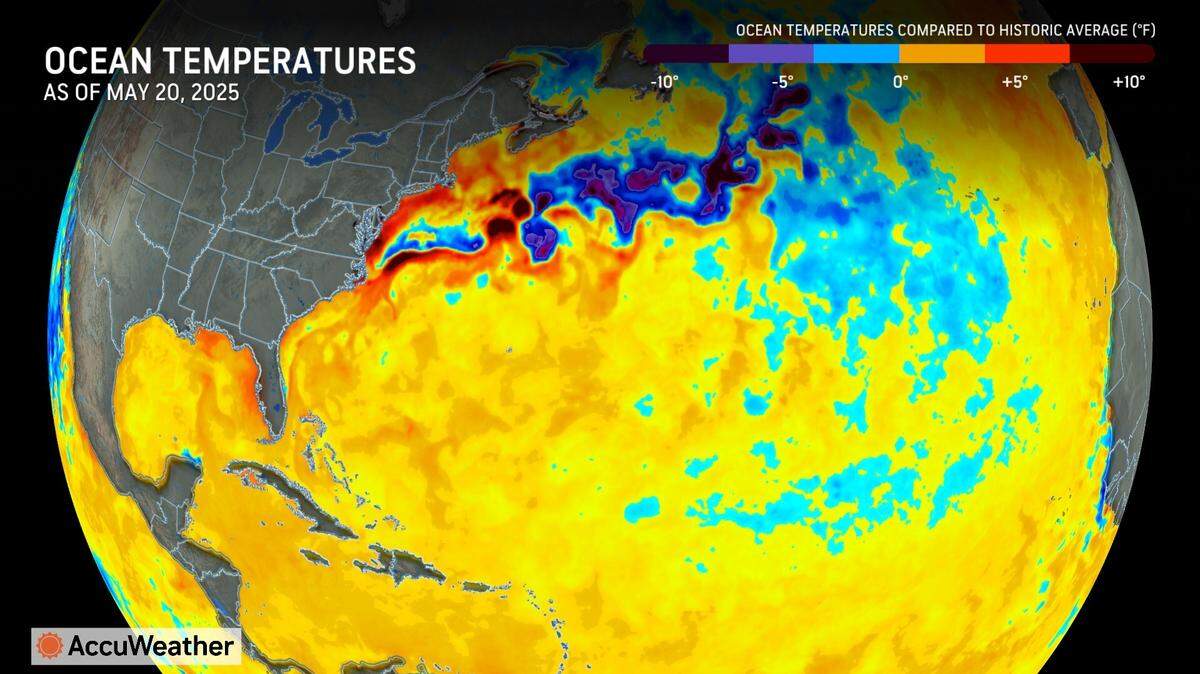
The water temperature across the Atlantic are already above average for this time of year, according to AccuWeather.
“The sea-surface and Ocean Heat Content across the Atlantic are forecast to be well-above average,” Meteorologist at Accuweather, Alex DaSilva said in a statement.
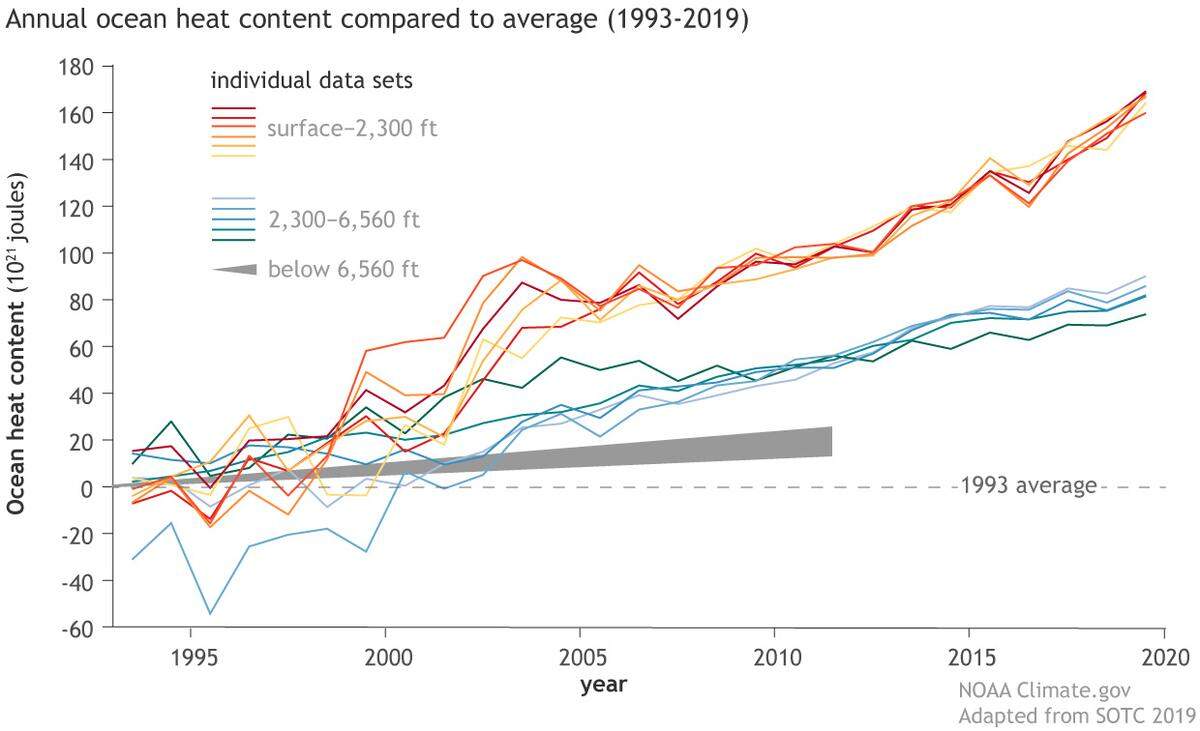
Ocean Heat Content measures how deep the warm water extends, which NOAA found has increased significantly since 1993.