Biggest power request in U.S. history? Is the GA PSC rushing a monumental energy vote?
AI-generated summary reviewed by our newsroom.
- PSC staff reversed, endorsing a last‑minute stipulation and triggering protests.
- Advocates warn capital and fuel costs could swell to $50–60 billion for ratepayers.
- Georgia Power seeks certification for 10 GW buildout, driven mainly by data centers.
In two days, five people will decide on the fate of the largest power company request in the history of the United States, according to former Georgia Public Service Commissioner Robert Baker.
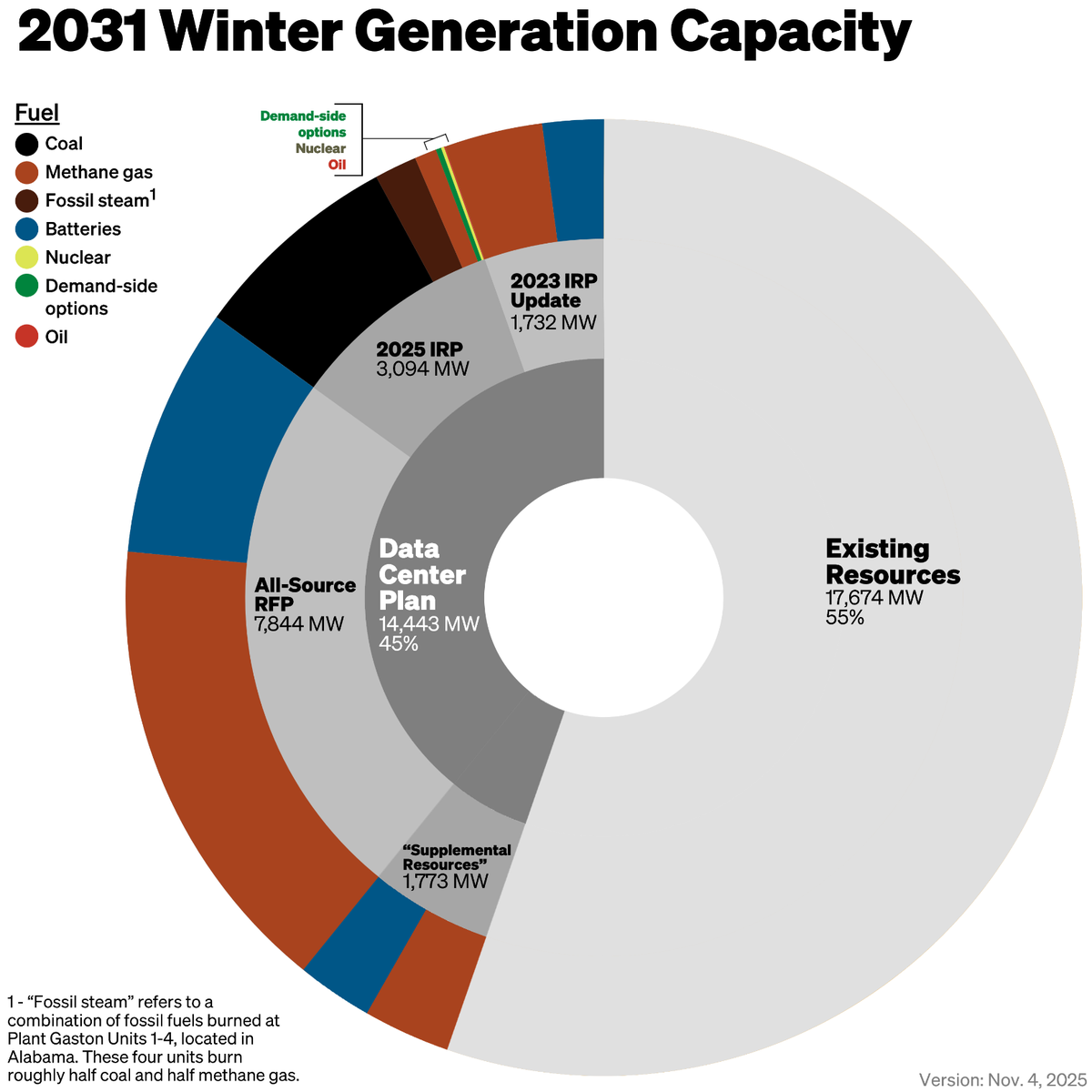
Georgia Power has asked the Georgia Public Service Commission to let it build out and generate an additional 10 gigawatts of energy in the coming years – roughly the amount of power needed to power all of New York City, according to data from New York City’s electric provider, Con Edison. This is to cover energy needs between 2028 and 2031. In September, Georgia Power shared that 90% of the needs are coming from data centers.
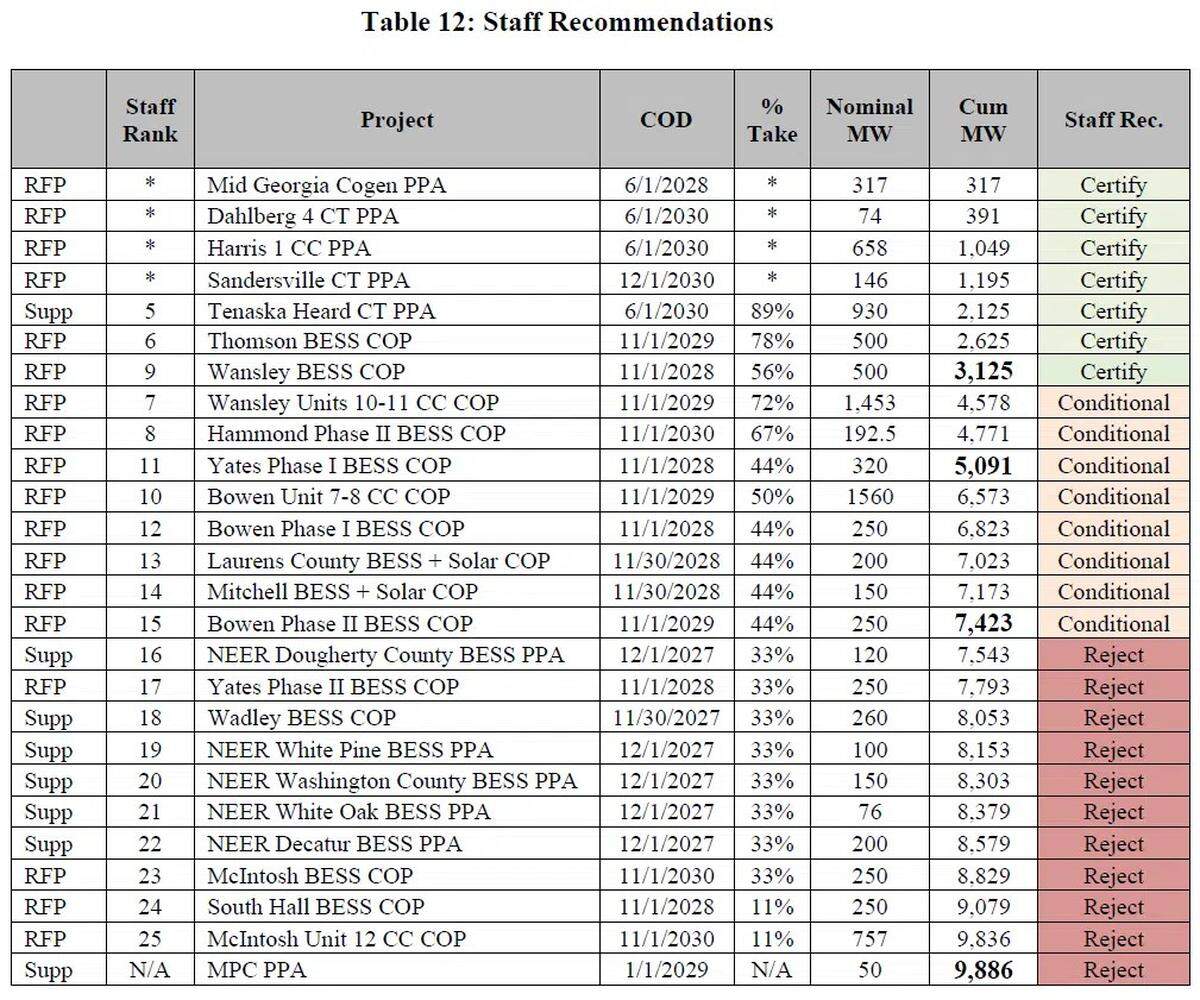
Since that request was made July 30, commissioners have heard testimony and public comment about the power company’s pitch. They’ve also been given input from the PSC staff, a group that the commissioners rely on for expertise prior to addressing power plans. The PSC staff urged the commission only to approve about one-third of Georgia Power’s request because they feared Georgia Power was overestimating its need, which could end with customers paying $20 more on their monthly power bills.
Just two weeks ago, the price tag for the build out was estimated around $20 billion dollars, according to Georgia Power and PSC staff testimony. The power would come from battery storage and three methane gas plants, a total of five combustion cycle “units.”
On Friday, in a dramatic turn of events, the PSC staff changed course, directing the commissioners to approve and certify a last-minute agreement between Georgia Power and the staff, which left little time for the public, commissioners and lawyers to absorb this new stipulation. That agreement was announced by Georgia Power just before the final round of hearings on this major power plan.
Conservation advocates are concerned about how costly this plan could become.
“($20 billion) is the starting price tag. It could go up to as much as $50 to $60 billion once fuel costs are included and other long-term costs are factored in,” said Brionte McCorkle, director of Georgia Conservation Voters. “That burden lands on families. Better options exist. We know that solar paired with battery storage can deliver reliable around-the-clock power, without fuel costs, without pollution, without draining water from Georgia’s rivers, and without exposing families to decades of volatile gas prices.”
The new deal, which the PSC staff calls “protective” for Georgia Power customers, saves customers $8.50 per month from the revenue generated by the data centers starting in 2028. But the estimated capital cost in the new deal rose when including all the power plans, rather than just the original one-third that the staff suggested.
“That is just an estimate,” former Commissioner Robert Baker said in a press conference on Monday. “It’s always, always lowballed in the beginning and that could increase to more than 50 to 60 to billion dollars when you add in financing, fuel, and other expenditures.”
A quick and blunt public reaction
Despite only having minutes to absorb the new stipulation, the commissioners were met with public outcry for nearly two hours by 45 public witnesses from Georgia Tech, the University of Georgia, Emory University, and residents from Valdosta, Athens, and DeKalb County. The majority of speakers in the most recent public hearings opposed this decision. There was also a group who protested as the hearing began, who were escorted out.
“The last-minute stipulated agreements negotiated behind closed doors, excluding the very interveners who speak and represent public health, climate stability, and economic fairness, is not just deeply disappointing; it is a profound breach of public trust,” Kiran Kapileshwari, a student at Georgia Tech, said. “A deal of this magnitude reached out of public view on the very morning of this hearing is the opposite of transparency.
“It is the opposite of good governance and it signals to millions of Georgians that their voices are secondary to private negotiations that they were never allowed to witness.”
When asked why the stipulation was agreed before the hearing and whether it was in the interest of Georgians, PSC Executive Director Reese McAlistor told the Ledger-Enquirer the timing allowed intervenors to ask questions about it on the record, and all parties were all subject to cross-examination.
“Negotiations can happen at any time and it was released as soon as they came to an agreement,’ McAlistor said in an email. “The hearing was to explain staff’s testimony. What would be the benefit of waiting to release it?”
A physician and epidemiologist spoke to the commission during the public comment period and told them the latest agreement is a gift to Georgia Power and its parent company, Southern Company.
“This is a gift to Georgia Power and to the Southern Company and their shareholders,” Eric Mintz said. “It is also a gift to the very richest corporations who trade in data, cryptocurrencies, and artificial intelligence. For Georgians, it’s just one more heavy burden to bear, a crushing and chronic financial burden, even larger than that of plant Vogtle.”
Baker pointed to a prior Georgia Power endeavor that ended with high costs for Georgians. In 2012, the carbon-free nuclear plant Vogtle units 3 and 4 were originally expected to cost $6.1 billion, but the final cost to ratepayers was over $15 billion, driving up rates by 25%, Baker explained in a press conference Monday morning.
A few public comments were in favor of the latest agreement.
“I urge you to support Georgia Power’s capacity request,” said Valencia Williamson, the president and CEO of Clayton County Chamber of Commerce. “My role is to speak on the behalf of employers. The employers who must operate every day in a no fail environment and who depend on reliability, resilient, and affordable power to keep Georgia’s economic engine moving. Clayton County and the South Metro region are experiencing unprecedented growth from commercial investment, new housing, new industrial activity, all happening at levels my community hasn’t seen in decades.”
What’s the rush?
In two weeks, newly elected commissioners Peter Hubbard and Alicia Johnson will assume their positions on the PSC. Last month, experts and lawyers called for this certification request to be delayed from Dec. 19 to the new year, arguing that the two new officials will represent the voices of 1.5 million Georgians who voted in the November election.
The commission denied this request, saying the request came too late – three months after scheduling was set in August.
Steven Smith, director for the Southern Alliance for Clean Energy, said in a press call Monday morning that this is uncharted territory and there is no reason to vote on the request Friday.
“Normally, if you’re in uncharted territory, you would slow down,” Smith said. “Particularly if you don’t know the twists and turns of what’s going to happen, slow down. But what we’re seeing is that Georgia Power and the commission are actually speeding up. They’re rushing to get to a decision, a monumental decision before the end of this year. There’s nothing magic about the 19th, and we don’t believe that this decision needs to be rushed forward.”
Who pays the mortgage if the tenant moves out?
The cost to generate this new power through five gas units will be paid off over 45 years, according to Georgia Power and PSC staff testimony.
Hubbard, who vehemently opposes the last-minute Friday deal, said this agreement is like taking out a mortgage on a guest house.
“Georgia Power is asking you, the ratepayer, to take out a mortgage to build a massive addition to your home for a new roommate, big tech,” he said in a press conference on Monday. “That’s a 45-year mortgage. However, the technology industry changes overnight. Years ago, we weren’t talking about AI. Years from now, computing might be totally different. If we build these plants today and in years, the AI bubble bursts or the data centers move to a cheaper state, then the roommate moves out, but the mortgage doesn’t go away, we’ll be stuck paying for these empty idle power plants until the year 2070.”
But during Friday’s hearing, staff testified that Georgia Power is supposed to pay the costs even if the data center requests don’t materialize.
“Staff now supports the stipulation with George Power which addresses the core concern of protecting ratepayers from speculative load forecasts,” Robert Trokey, PSC electric unit director, testified on Friday. “Under the stipulation, Georgia Power agrees to backstop projected revenues from large load customers for the years ‘29 through ’31. This backstop ensures at least $8.50 per month in downward pressure on residential rates during this period, even if the new load does not materialize as forecasted.”
He also said staff will “closely monitor contract execution,” and the stipulation “strikes a balance between enabling Georgia Power to serve new data centers and safeguarding existing customers from premature or excessive investment.”
PSC Chairman Jason Shaw expressed concern about protection for ratepayers.
“What do you have to say in terms of the protections as a result of the stipulation that you all have agreed to here?”
“Staff’s expectations and our understanding of (Georgia Power’s) position is that the load will materialize or the contracts will be executed over the next 6 to 12 months,” Trokey responded. “Having additional time through 2031 essentially gives us time to monitor that to know what’s going to happen. We do believe that there are actions that can be taken and we have time to react whereas prior to the stipulation we didn’t have um that financial assurance from the company in place.”
Baker took issue with Trokey’s response.
“The PSC may claim rate payers are protected from any potential rate increases from the development of the projects to serve large load customers, but the PSC rules can be changed in 30 days, which would offer no long-term protection to consumers,” he said at a Monday morning press conference.
Why use gas?
Sierra Club attorney Isabella Ariza questioned the staff about their last-minute decision Friday, asking about the cost of gas plants.
“Isn’t it true that (combined cycle power units) have the highest cost?” Ariza asked.
“Yeah, when you are talking about capital cost, sure, but they put (out) a lot of energy too,” Tom Newsome, utility finance director for the PSC, said in response during testimony.
Commissioner Tricia Pridemore interjected and told Ariza that gas has to be relied on because renewable energy sources supported by Ariza’s organization aren’t reliable enough.
Pridemore said solar is only reliable when the sun is out and wind turbines are only reliable when the wind is blowing, and Georgia’s topography doesn’t support that.
“There’s a physics and science portion to this that’s very important, that I hope that the Southern Alliance for Clean Energy recognizes that, and gas peaking plants exist in large part because of your industry that you push here at the commission and at the legislature,” Pridemore said.
Lucy Metz, a senior associate at Synapse Energy Economics, argued batteries, which make up 40% of the request, should be prioritized.
“In contrast (to gas), the 20-30 year lifetime of battery storage resources aligns more closely with typical data center contract length, making battery storage resources lower risk,” Metz said during testimony on Friday. “Battery storage is also more modular and offer shorter construction timelines than combined cycle units.”
How Georgia PSC and Georgia Power got here
While the latest planning document, called an Integrated Resource Plan that forecasts needs for the next decade and beyond, was certified in July, this ask is from an old request following the 2022 IRP.
The power request stems from a 2022 request called an “all-source RFP” that would be a roadmap to power Georgia into 2031. But, since then, data center growth has exploded and the few-hundred megawatt request in 2022 has increased to 7,500 MW. There was also an additional supplemental request that came immediately after the 2025 IRP in July was approved, seeking between 1.5 and 2 GW of additional capacity. In total, 10 GW are requested for certification approval by the PSC on Friday Dec. 19.