
‘An equal dignity’: Changing Fort Benning to Fort Moore shows stark contrast in legacy
Decades before Hal Moore had standing as a remarkable Army commander, in war and peace, he stood against racial prejudice.
At age 23, the native Kentuckian graduating in 1945 from West Point stood up to others in the class who wanted to exclude a Black graduate from their celebration.
“Of course West Point in the ‘40s still was a fairly prejudicial organization, and the first classmen, the seniors in his company, wanted to exclude Ernie Davis, Company C-1, from the graduation activities,” said Moore’s son Steve.
“Dad stood up and said ‘No, if he doesn’t go, I don’t go. I will boycott it.’ And that turned it around. Cadet Davis and his family participated just like everyone else, in the joy of graduating from West Point, even though it was in the middle of World War II. That had to be a scary thing to do.”
Moore would do many scary things in the years to come.
The career soldier Mel Gibson played in the film “We Were Soldiers,” about a fierce 1965 battle in Vietnam, by year’s end will be the namesake for the Army post now called Fort Benning, where parts of the movie were shot.
The change will be more than a name. It will be a stark contrast in history and character, for two men a century apart.
When will it be Fort Moore?
The name change must be finished by Jan. 1, 2024, according to the 2021 Defense Authorization Act, which included a Congressional mandate to eliminate such tributes to leaders of the Confederacy. The fort is named for Henry Lewis Benning, a lawyer, politician, firebrand secessionist and Confederate general.
Soon everything Benning will be Moore, including “real property, buildings, roads and signs, as well as our online footprint, products, web pages and social media,” said garrison commander Col. Colin Mahle.
The current post commander, Maj. Gen. Curtis Buzzard, said it may be “the most culturally significant event of my Army career.”
The initial cost estimate was $5 million, but likely it will be more for a sprawling Army post that began as an infantry training camp along Macon Road, around today’s Cross Country plaza area.
Columbus civic leaders in 1918 campaigned to name the post for Benning to honor a local hero and infantry commander. Before his service to the Confederacy, Benning was on the state Supreme Court, for six years, and had been a solicitor general here.
His 17th Georgia Infantry held a crucial stone bridge at the Battle of Antietam, and captured the Devil’s Den during Gettysburg. They fought in Second Manassas, Fredericksburg, Chickamauga, the Battle of the Wilderness, and the siege of Petersburg, Virginia.
His daughter, Anna Caroline Benning, helped christen the post for her father in ceremonies half a century after the war’s end.
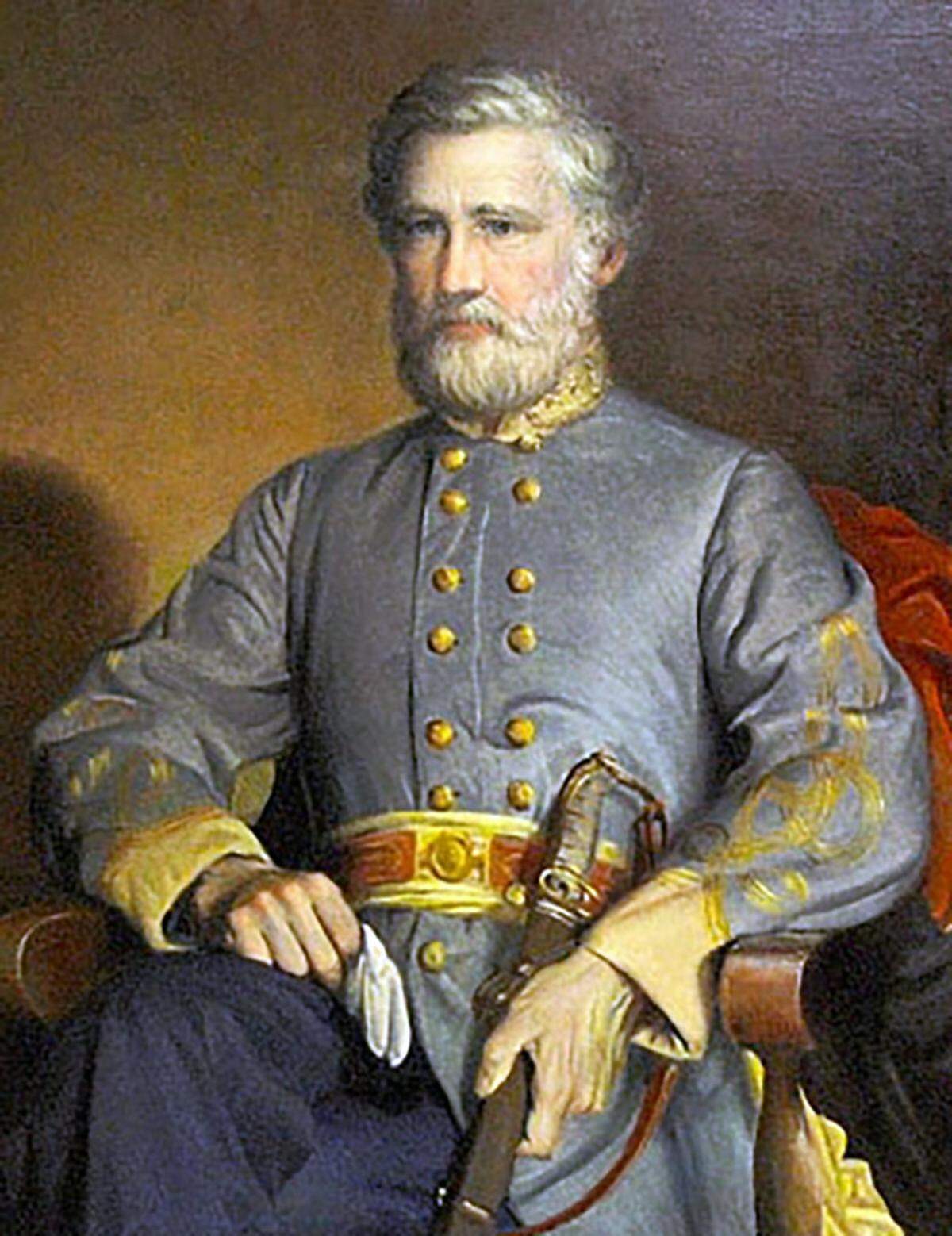
Who was Henry Benning?
Benning survived the bloody battles of the war over slavery, and died in 1875 from a stroke while walking downtown to the courthouse where the Government Center stands now.
His fortune had soared and sunk, in 60 years.
Benning was born April 2, 1814, in Columbia County, outside Augusta, the son of Malinda Meriwether White and Pleasant Moon Benning, who owned 100 slaves and settled in Hamilton, Ga., in 1832. One of 11 children, Benning in 1831 had left home at 16 for University of Georgia predecessor Franklin College, where in 1834 he graduated first in his class.
He was admitted to the bar in Columbus in 1835, and was appointed solicitor general of the judicial circuit in 1837. In 1839 he married Mary Howard Jones, the only daughter of Columbus lawyer, businessman and civic leader Seaborn Jones. Jones was a state senator twice elected to Congress, and built the midtown mansion now called “St. Elmo.”
Benning was not a successful political candidate, but he was an early leader in the secession movement, believing the South could not otherwise preserve slavery, in which much of its wealth was invested.
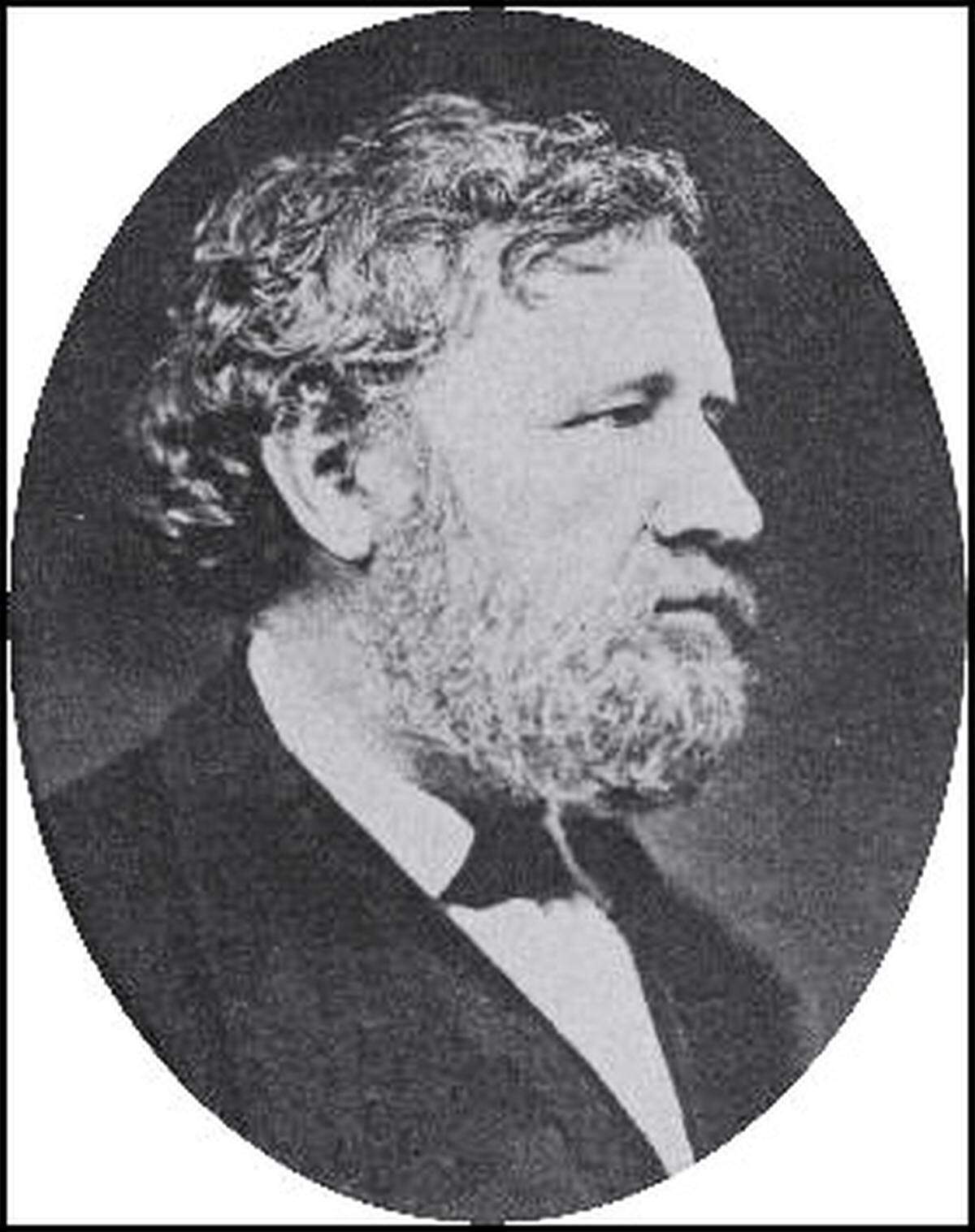
He represented Georgia at an 1850 convention of slaveholding states in Nashville, was elected a local delegate to Georgia’s secession convention in 1861, and represented Georgia at the Virginia Secession Convention.
As a state Supreme Court justice in the 1850s, he wrote in Padleford v. Savannah that the Georgia Supreme Court needn’t abide by U.S. Supreme Court decisions because the two were “coordinate and coequal.”
In 1860, he told the Georgia General Assembly that Abraham Lincoln’s election meant “the abolition of slavery, as soon as the party which elected him shall acquire the power to do the deed.”
During the war, Benning served under iconic Confederate Gen. Robert E. Lee, and he remained until the end. His brigade was there when the Army of Northern Virginia surrendered at Appomattox Court House on April 9, 1865.
He came home to a much diminished fortune, and went back to practicing law. He moved his family in 1868 from the outskirts of town to a home on upper Broadway, where he set off July 10, 1875, for the courthouse square, and died before he got there.
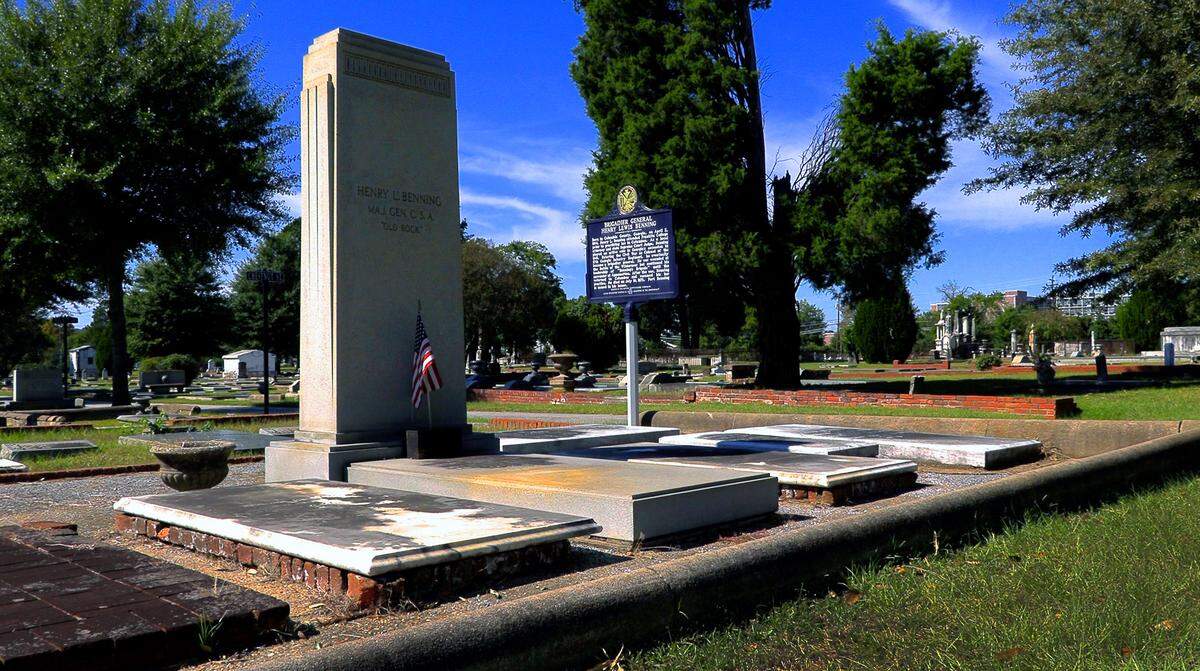
He is buried in Columbus’ Linwood Cemetery.
The Moore legacy
Besides his valor in battle, as evidenced in Korea and in three days of fighting off an overwhelming enemy force in Vietnam’s Ia Drang Valley in November 1965, Hal Moore showed his courage and resilience in sticking to his stance against racial inequities, throughout his career.
His family said it was an element of his faith. A devout Catholic, Moore took to heart this catechism: “Created in the image of the one God and equally endowed with rational souls, all men have the same nature and the same origin. Redeemed by the sacrifice of Christ, all are called to participate in the same divine beatitude: all therefore enjoy an equal dignity.”
In battle, he had a reputation for going “where the fighting is hardest,” and for being personally bold “almost to a fault,” a superior officer wrote of Moore, adding, “His subordinates love him and would follow him anywhere.”
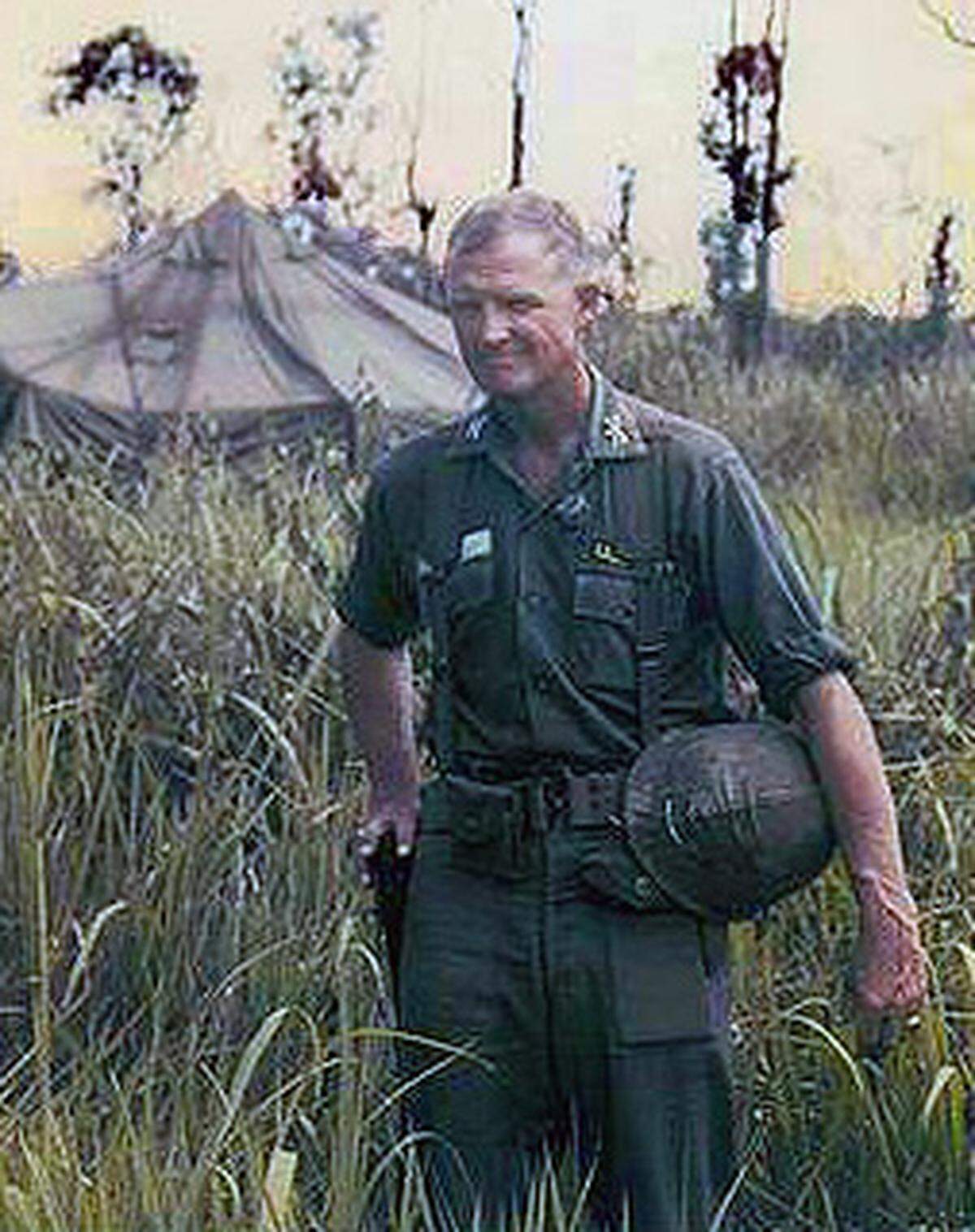
He faced a different kind of conflict while stationed in Korea, after Vietnam. In 1970 Black soldiers in the 7th Infantry Division rebelled, setting fires and wrecking barracks, angered by discriminatory treatment. Their commander was removed, and Moore was sent to resolve the matter.
He removed racist non-commissioned officers and established basic principles for fair treatment, among them, “each person must be respected as an individual, recognizing his aspirations, capabilities, and personal needs,” and “each man must be continually provided fair treatment and equal opportunity within appropriate regulations.”
“He relieved a lot of commanders, a lot of NCOs, because they were prejudiced, and they weren’t allowing people to rise to their natural level of excellence,” said his son Steve. “Dad was all about everybody’s green; no one’s a color.”
While commanding the Army training center at Fort Ord, California, also in the 1970s, Moore again showed his commitment to fair play. His superiors noted his dedication “to the fair and equal treatment of all, regardless of race or creed,” and called him “a total advocate and practitioner of equal opportunities for all.”
Later, as commanding general of U.S. Army Military Personnel Center and as deputy chief of staff for personnel, Moore helped boost minority participation on officer selection boards, senior service colleges and technical specialties. The Army also formally adopted race-relations courses as part of its training.
Moore’s son Greg said his father’s personnel oversight added power to his principles:
“He insisted that every soldier have the ability to rise with self respect ... and he hammered that home throughout his entire career, and especially so when he was chief of staff of personnel over the Army. He could make it stick. So that’s one of his great legacies in the military, no bias, no discrimination, no prejudice.”
A shared tribute
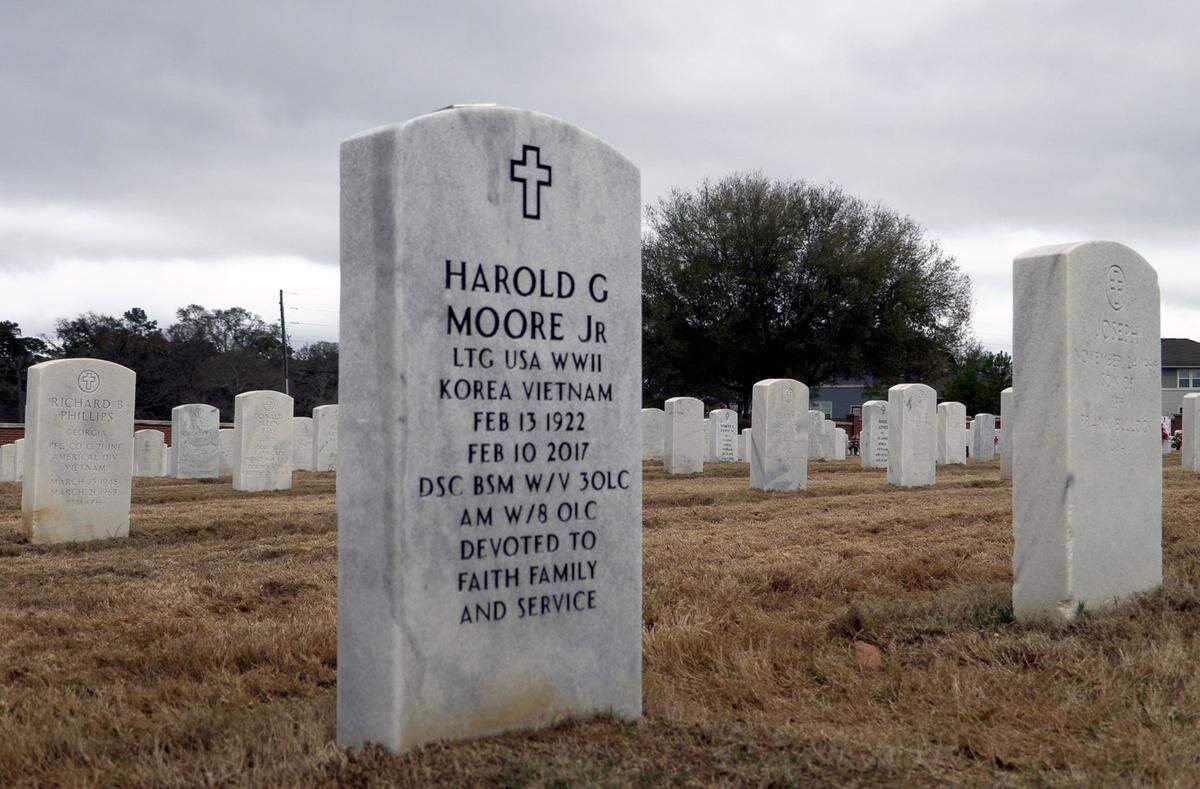
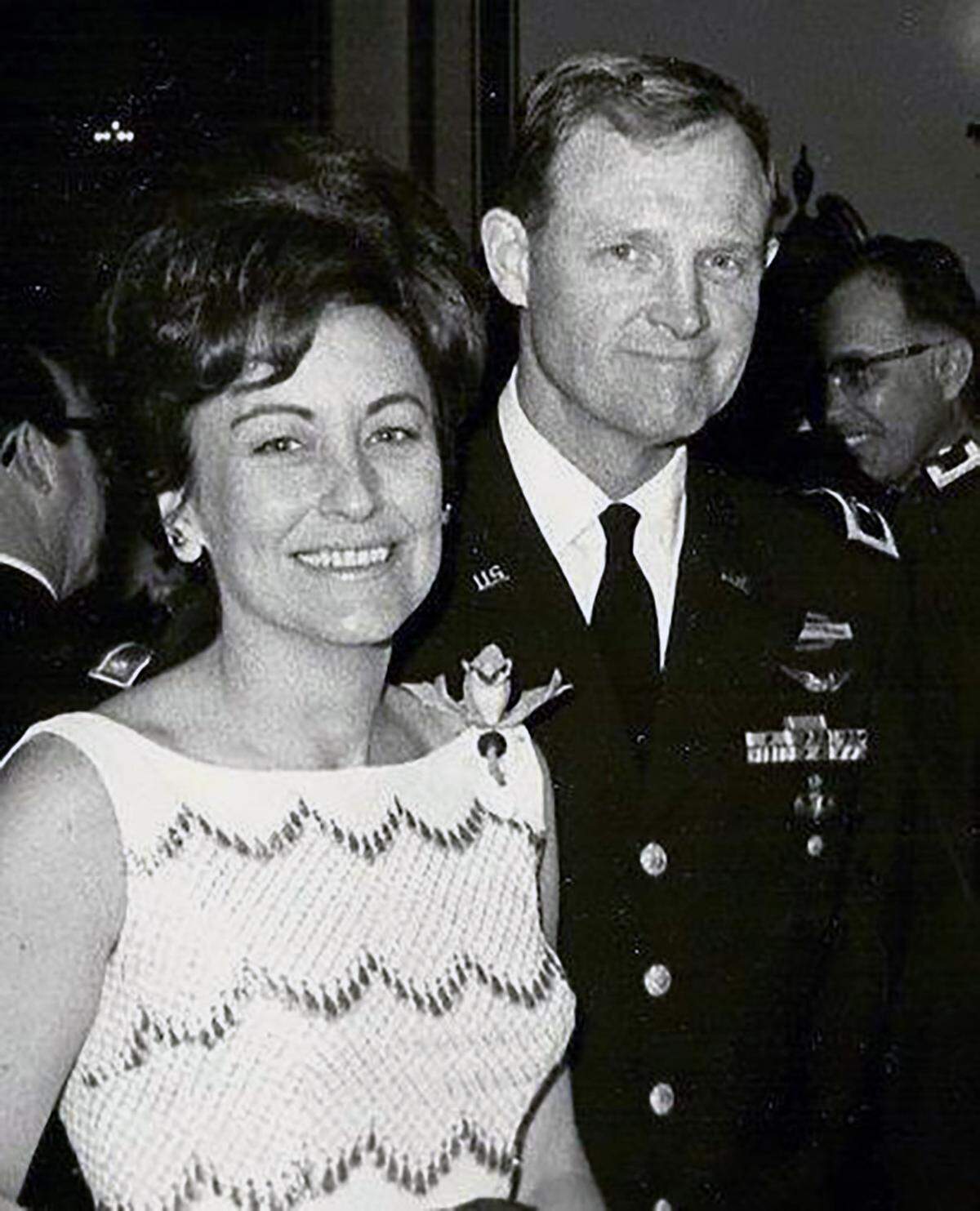
The post is to be named also for Moore’s wife, Julia Compton Moore. They’re buried side by side in the main post cemetery, amid soldiers Moore commanded.
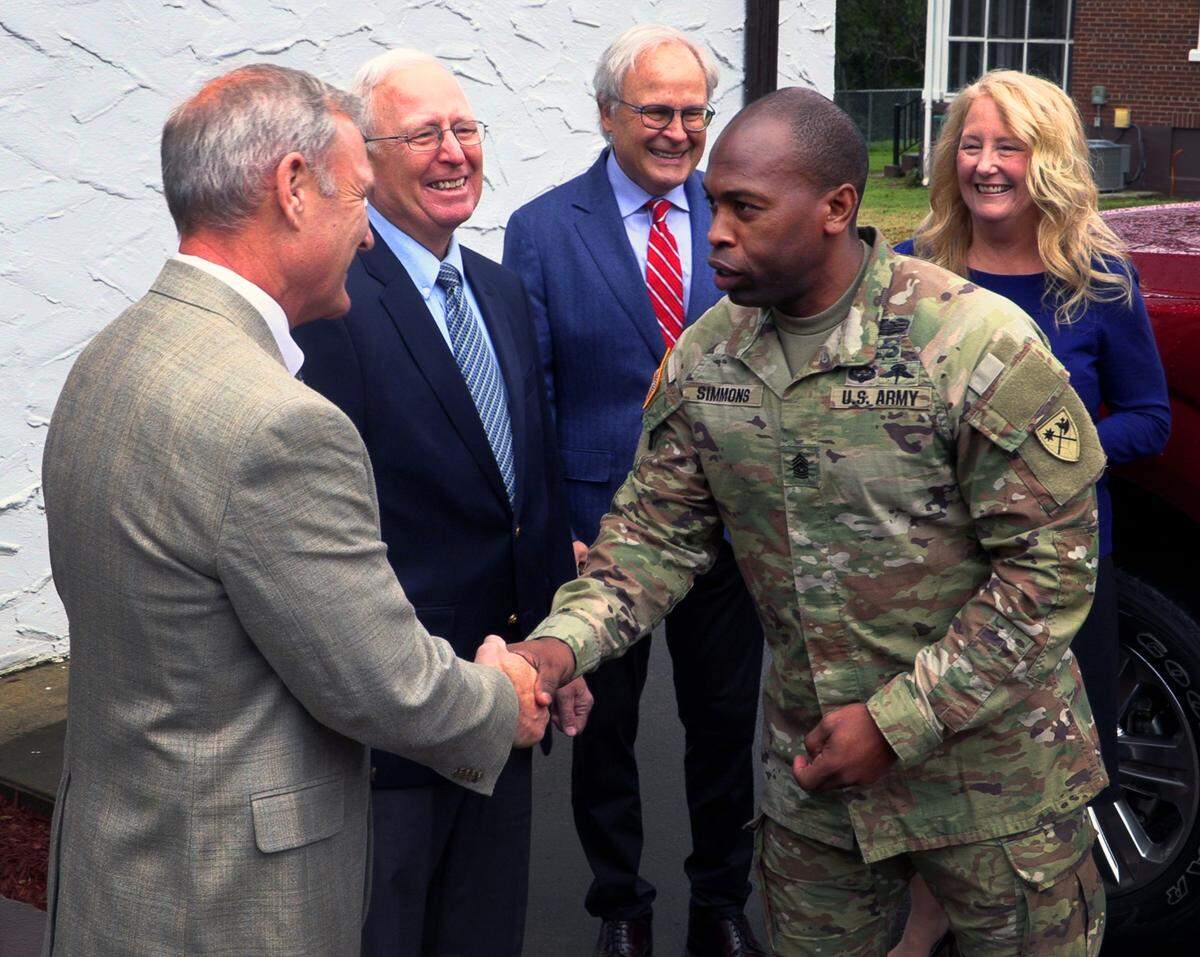
In preparation for the imminent name change, Fort Benning hosted some of their children for tours of the places they knew, some of the sites later used for movie scenes.
Their mother died in 2004, two years after Madeleine Stowe played her in the film, and 13 years before their father passed in 2017.
The daughter of a World War II soldier, Julie Moore devoted her life to the service, first as a Red Cross volunteer and then as an influential commander’s spouse who pushed for changes in policy to treat Army families with due respect.
%20Compton%20Moore.jpg "Moore Julia (Julie) Compton Moore.jpg")
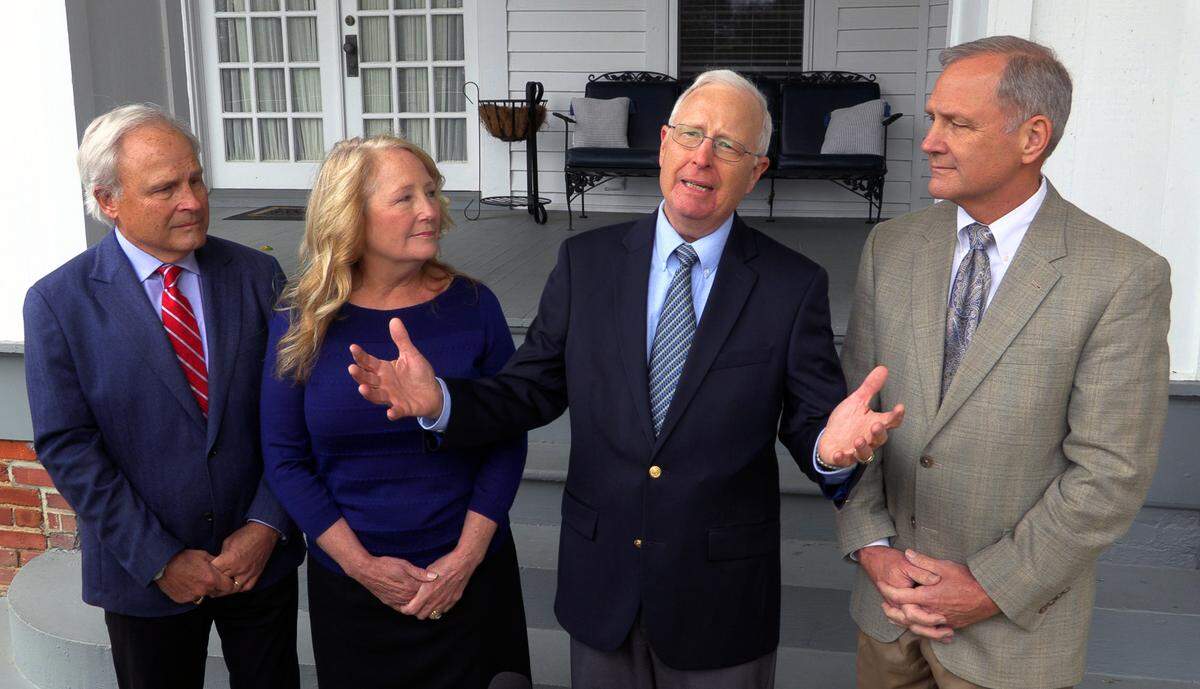
Outside Riverside, the former plantation home that serves as the post commander’s quarters, the children said their parents would have liked the renaming’s focus on Army families, a shared legacy. A combined honor is what the children lobbied for, as the Naming Commission sifted through 87 finalists out of 34,000 submissions it got for Benning in 2021.
The Moores knew good soldiers need strong families, for the sacrifice is mutual, the children said.
A scene from the movie reflects Julie Moore’s commitment: The Army during Vietnam sent taxi drivers with telegrams to notify wives their husbands had died in battle.
She got Western Union to tell her who would get the notices, and arrived after the taxis to grieve with widows and families, then attended the funerals. Complaints from her and other spouses led to the Army’s protocol for sending a uniformed officer and a chaplain to deliver the news.
In 2005, the Army established the Julia Compton Moore Award, to recognize civilian spouses of soldiers for outstanding contributions at Fort Benning.
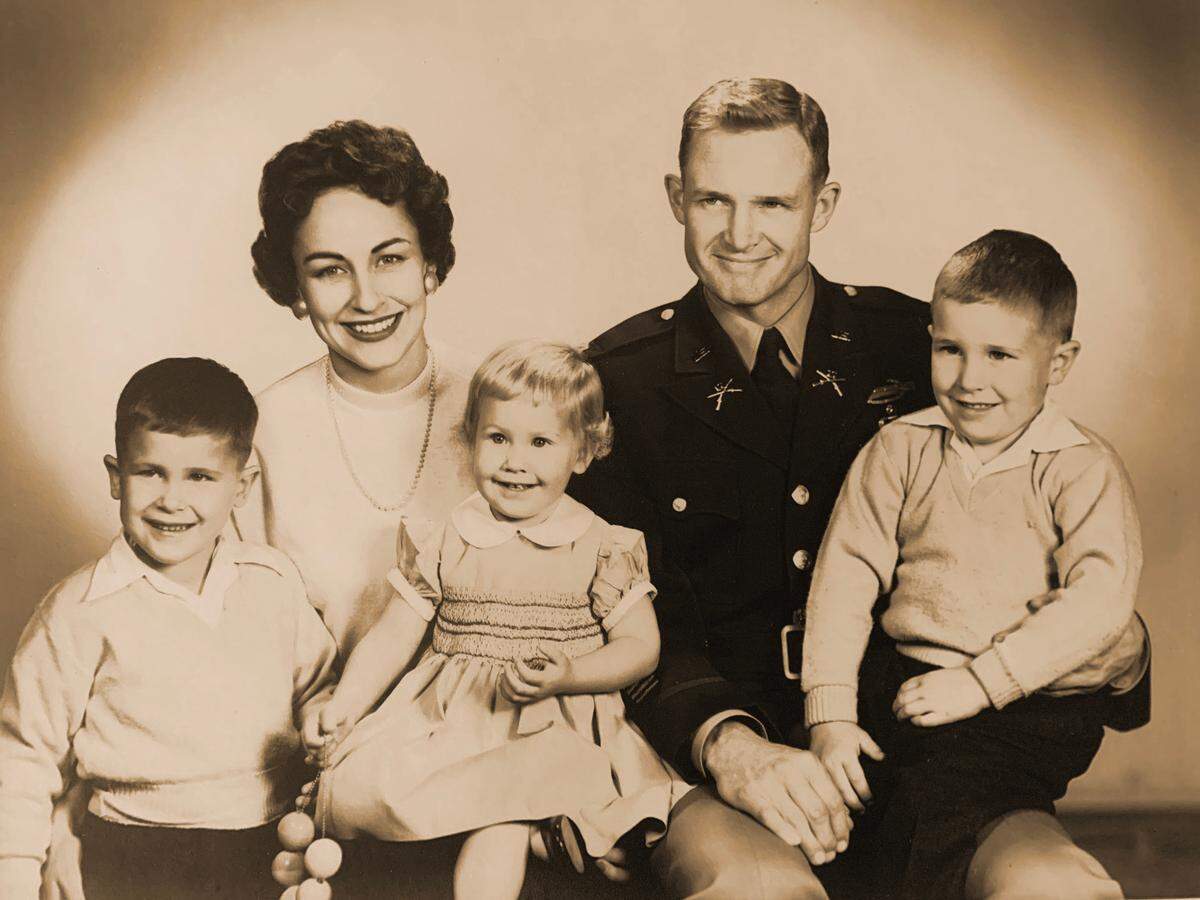
The Moores had five children, and four came to tour the post: Greg Moore, 71; Steve Moore, 70; Cecile Moore Rainey, 64; and David Moore, 62. The other sibling is Julie Moore Orlowski, 68.
In the campaign to have the post named for their mother and father, they created a website, fortmoore.com, that documents their parents’ achievements.
In Hal Moore’s 32 years of service, before he retired in August 1977, the family moved 28 times, across two countries, said Cecile Moore Rainey.
Standing outside Riverside, during the children’s Feb. 17 visit to Benning, Steve Moore said that transience is expected, for Army families.
“That represents what the military families you see in all these houses around here live with every day of their military life. And even more so, when you look back at the last 20 years of war, and all the deployments that their spouses will go on. Boy, that sacrifice just hits me right in the heart,” he said. “It is just so magnificent that you have families that will support the nation by supporting the soldier, by just being that normal family as much as possible.”
That’s the core of the image the post to be known as Fort Moore hopes to convey, to the soldiers to come, its commander said.
“I think it gives them something to inspire them to serve,” he said. “I think when young people show up here, we’re going to tell them that story. They’re just two great people to celebrate, but also will inspire people.”
Benning will put together movie clips and fact sheets to tell that story, the general added.
“It’s important that the community does understand the Moores. I mean, a lot do, from the movie, but I think there are opportunities to educate a whole bunch of young people. They might inspire a call to service also, when they realize what great folks this installation’s named after.”
This story was originally published February 27, 2023 at 5:00 AM.