
From goatee to general’s stars, departing Fort Benning commander’s career takes him to D.C.
Gary Brito was a young college man with a goatee, when he decided to try ROTC.
He didn’t grow up dreaming he’d be a soldier, so back at Penn State Altoona, where he majored in urban planning, he had no hint that decades later, he’d be an Army lieutenant general en route to Washington, D.C.
The now former Fort Benning commander, who arrived at the post’s centennial and leaves amid changes wrought by pandemic and political controversy, has been promoted to what’s called the “G-1” deputy chief of staff, the officer serving essentially as the head of personnel for the Secretary of the Army.
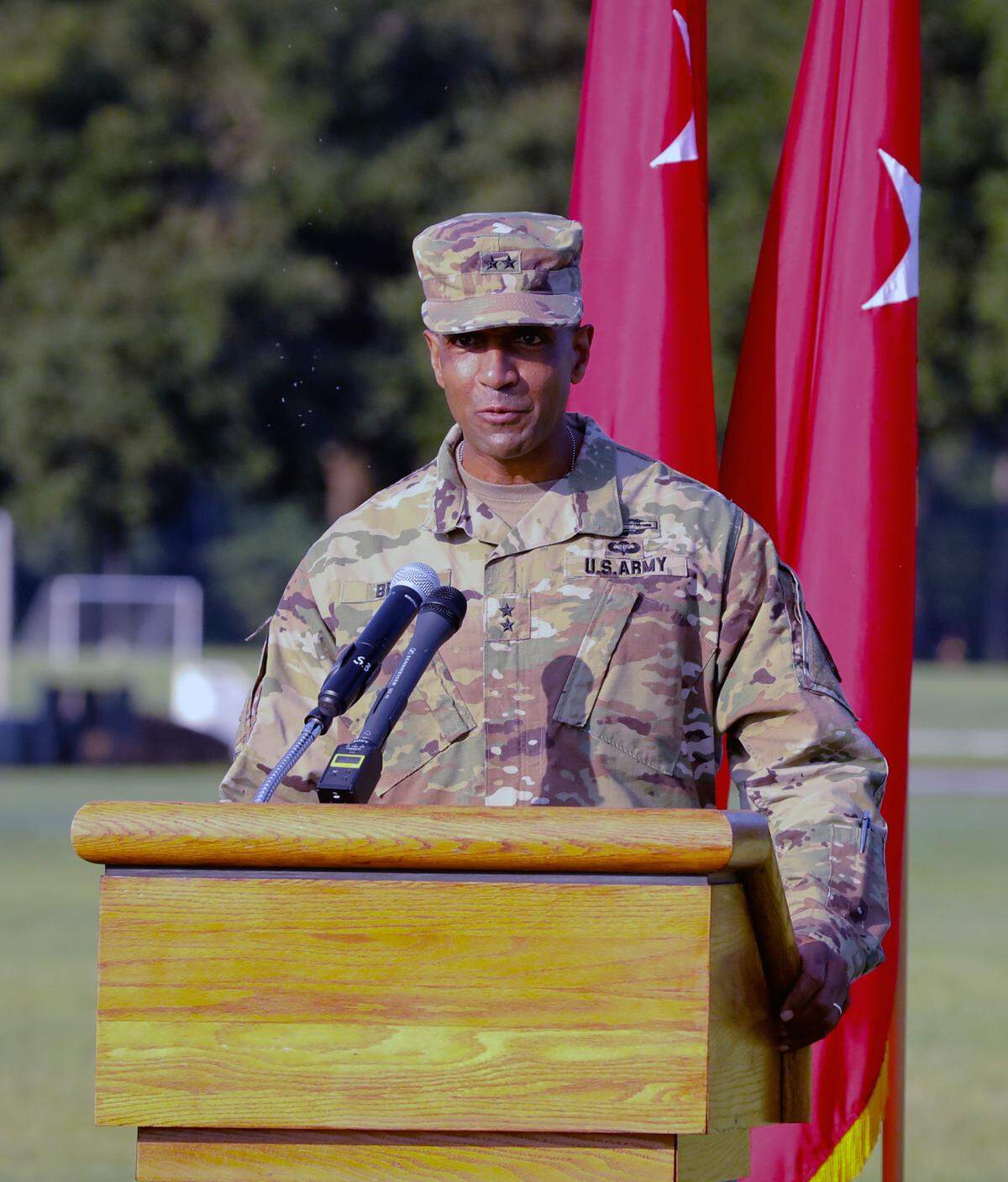
“I’m headed to my first Pentagon assignment to be the Department of the Army G-1, in civilian terms essentially anything that deals with people, human resource management, all the systems that support all of the 1.1 million-plus people of the Army, will fall in my rucksack,” he said Thursday in an interview with the Ledger-Enquirer.
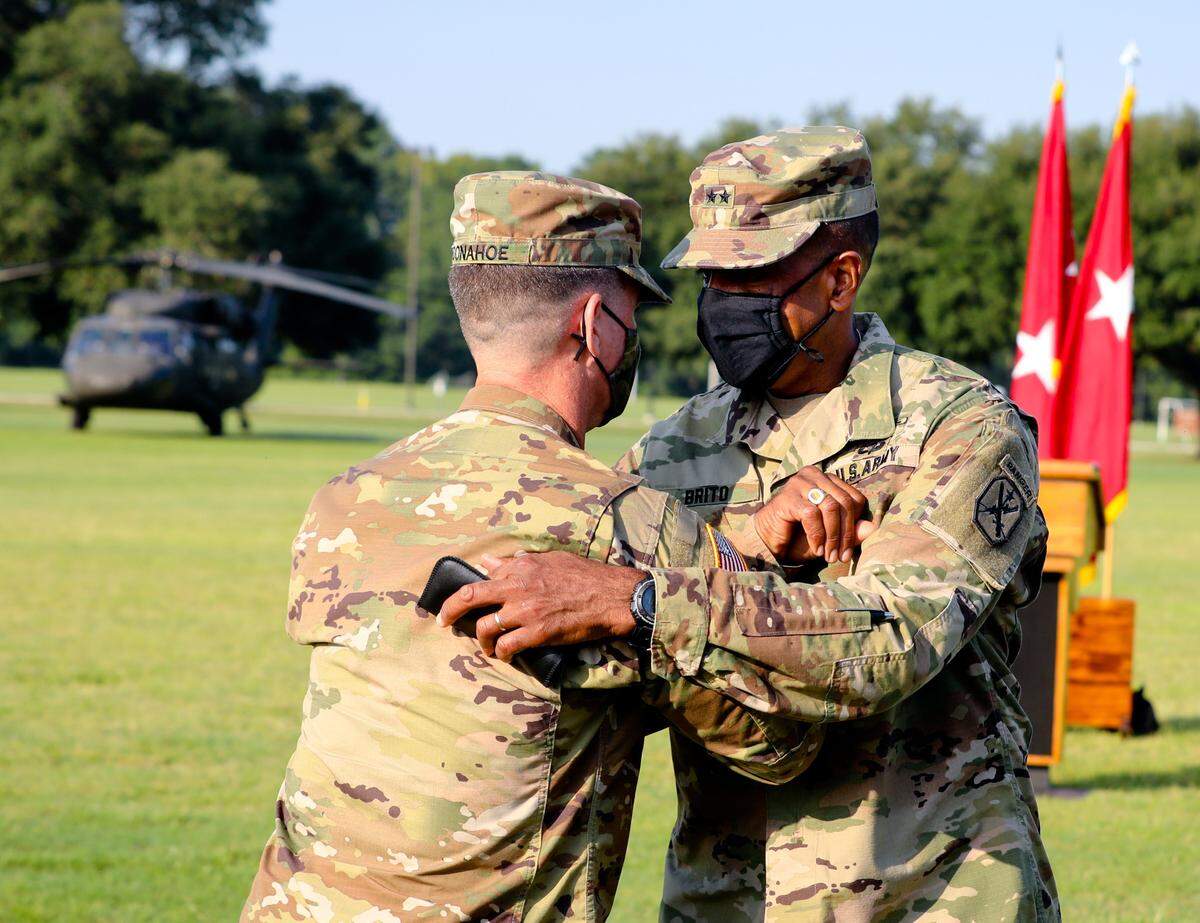
In a change of commend ceremony Friday, Maj. Gen. Patrick Donahoe took over at Benning, having just served as deputy commanding general over operations for the Eighth Army in the Republic of Korea.
Like Brito, Donahoe has a history with Benning, too. Most Army officers do, at the post that annually trains around 60,000 soldiers in basic and advanced courses, supplying about a third of the branch’s overall fighting force.
Looking back
Brito is 56 now, many years and deployments distant from the college student who thought he’d sample the Reserve Officers Training Course.
“I was very much from a blue-collar family — you know, a lot of love, not a lot of money — and I went to the first school that accepted me, which happened to be Penn State University,” he recalled.
“Believe it or not, I knew very little if anything about Army ROTC. I walked by an information booth, picked up a pamphlet, said ‘I’ll give it a try.’ I had a beard and goatee at the time, as much as you can have at 20 or 21 years old.”
The graduate of Barnstable High School in Hyannis, Massachusetts, took to the Army life immediately. “I liked the challenge. I liked the outdoor stuff,” he said. “I said, ‘I’ll just give it four years, and see if I like it,’ and four years became 10, and 10 became 20, and I still like it. I still love it, and get inspired every day.”
In 1987, Fort Benning first became one of the many places he would call home, and it now stands apart from others, because of its significance in his life.
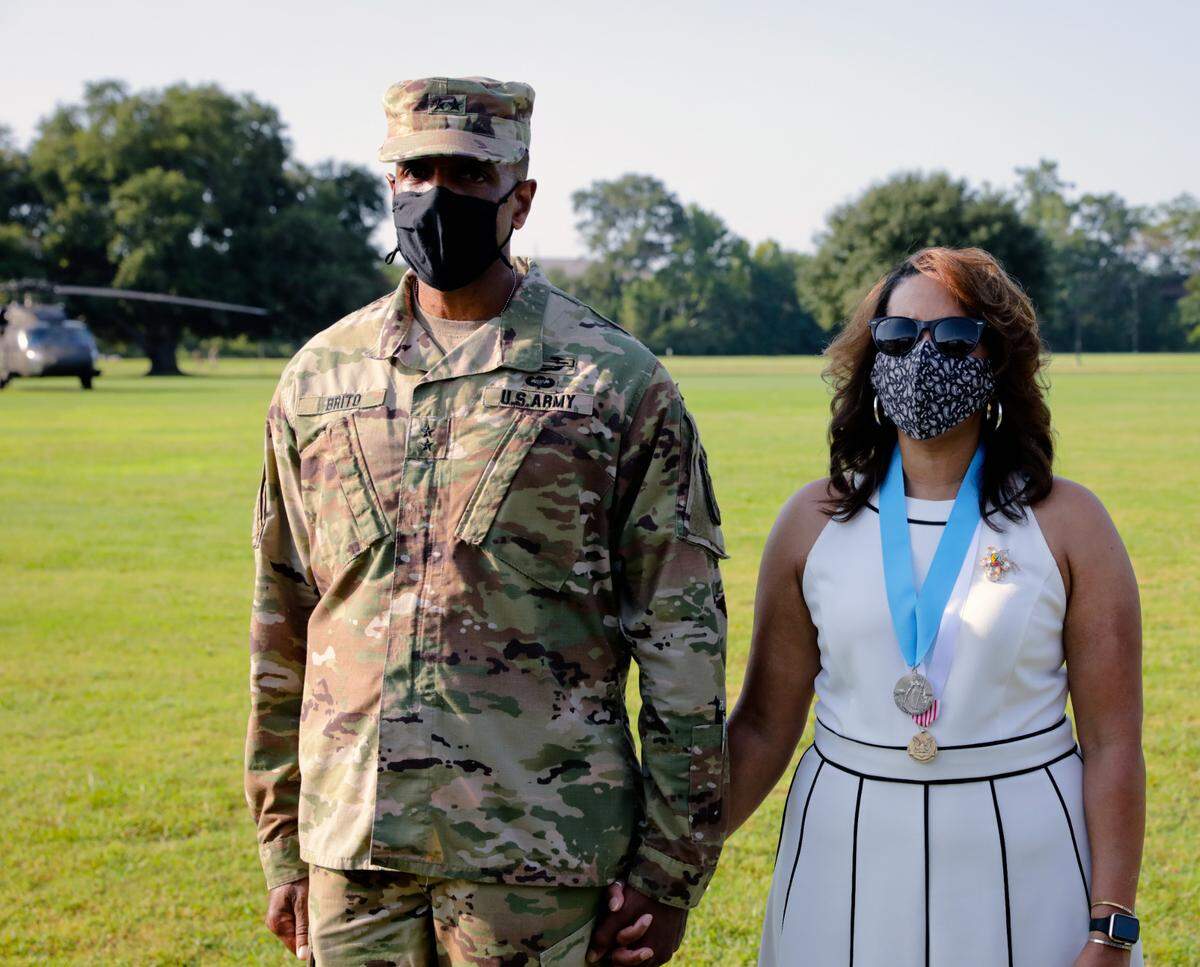
“I came here a single lieutenant. I just started off my training, and as soon as the basic course was over, I got married to my girlfriend Michelle, and we’ve been married ever since,” he said. “So, 33 years in uniform, 33 years married.”
Their oldest son Matthew lives in Texas. Their younger son Patrick is an Army captain, currently in school at Benning. He was born at the post’s old Martin Army Hospital, on Brito’s second assignment here.
Asked about his best memories, Brito mentions the post’s centennial, marked in October 2018, just months after he assumed command the previous March, on his third Benning assignment.
“That was a very fond memory, and historic — knowing the impact of the city, from Camp Benning to now, and all of the training that has taken place here, the evolution that has taken place here, from the First Cav air mobile unit, to Airborne school, Ranger School beginning up, and the impact that the installation and the institution gave for maneuver warfare for the United States Army, post-World War I and World War II and all the others ever since,” he said.
As he departs Saturday for the nation’s capital, he leaves a place much different than when he arrived.
Different world
The COVID-19 pandemic has forced changes in how the post operates, and protests against racial injustice have prompted Congress to reconsider whether Benning and other Southern posts still should be named for Confederate generals.
Brito was Benning’s first African-American commander.
Regarding race relations within the Army, he said soldiers come from all states and U.S. territories, with wide-ranging backgrounds, and whatever issues or biases they faced at home come with them.
“So if there are racial problems at home in society, it’s fair to assume that they may transcend into the military as well,” Brito said. “We’re not immune from things happening in the country.”
But the oaths and commitments soldiers make to the service carry specific principles and expectations, among them “providing dignity and respect for all, despite their color, religion, creed or what have you,” he said.
The Army can address racism by showing it offers equal opportunity and fair treatment to all, from “the kid that may be joining from the streets of New York City to the young lady that may be joining from the blue hills of Kentucky,” he said, adding, “We actually owe that, in my opinion, to the moms and dads that allowed those children to join.”
Established in 1918, Camp Benning faced a deadly flu that spread across the world, killing an estimated 50 million. A hundred years later, Brito happened to be the Benning commander when the next flu pandemic struck, leaving recruits vulnerable to a new, insidious infection.
The post briefly stopped taking new recruits, as it shifted protocols to deal with the danger. But the training continued, under guidelines recommended by the Centers for Disease Control.
“We’ve had to make some adjustments, on how we can continue to train to standard, and yet mitigate this threat of COVID-19,” Brito said, crediting the “innovative thinking” of his staff.
Social distancing became standard procedure when soldiers gathered in ranks or lined up for courses. Recruits arriving on post were quarantined in groups to isolate them from other units, and classroom instruction was shifted to the beginning of their training, while they were being screened and monitored.
Drill sergeants and regular soldiers offered suggestions for mitigating the threat, Brito said. One precaution was having those here for Airborne training remain on post, rather than living in town and driving back and forth.
“Now we’re requiring those soldiers of all ranks to stay in the barracks on post, to minimize potential spread going out the gate and back inside the gate,” he said.
Looking ahead
As Brito goes out the gate on his way to Washington, he hopes to ensure the Army remains a career choice that offers others the open-ended opportunities he had, as a young man who decided to try ROTC.
“We have great technology. We have great education, but the people, everywhere from the private on up to the general, are what make the Army heartbeat work,” he said.
“If I had to pick a couple of goals, one is to make an organization where the people get a vote in their career paths,” he added. “Offer proper education and training, everywhere from the private who decides to join the Army, and for those officers and non-commissioned officers who continue to serve as well.”
He wants the Army to be a profession “that people want to serve in, and bring others to serve in as well,” he said. “It’s critical.”
If those people are not like him, and decide the Army life is not for them, they’ll have the training and experience for another career, he said: The service offers 150 specialties.
Anyone right out of high school has a chance “to do something and get credentials in it as well,” he said. “So, learn to be a combat engineer, get certified at it, and if you should get out after two years, you have the experience, respect, reputation, and credentials also — all of which help you, when and if you should hang up the uniform.”
This story was originally published July 17, 2020 at 3:28 PM.