
Fort Benning is named for a slave-owning secessionist. That could soon change
To soldiers old and young, Fort Benning is a place, not a tribute to the Confederacy.
As dignitaries gathered Dec. 11 at Columbus’ National Infantry Museum to dedicate a diversity exhibit in the museum’s “Benning Gallery,” no one noted the gallery, like the Army post, bears the name of Henry Louis Benning, a Confederate general from Columbus.
That fact was not foremost in the minds of those who came to honor three African-American soldiers who were pioneers in their military service. But as the ceremony proceeded here, Congress was passing legislation that would rename 10 military posts that currently honor Confederate leaders such as Benning.
President Donald Trump vetoed the measure Wednesday, with renaming the installations among his objections. He said the legislation “includes provisions that fail to respect our veterans and our military’s history,” and tries to “wash away history and to dishonor the immense progress our country has fought for in realizing our founding principles.” Whether Congress can override the veto remains unclear, though the House plans to reconvene next week to consider that.
The $450 billion National Defense Authorization Act would have an eight-member commission with a $2 million budget study renaming the posts and report back to Congress in October 2021, with a final plan in place by October 2022.
So the Army post here that trains thousands of soldiers for service each year eventually could be named for someone other than Benning, who absent this honor might have faded into the shadows of history.
Who is Henry Louis Benning?
Benning was not just a general, who won acclaim most prominently for his division’s defense of the stone bridge at the Battle of Antietam, fending off federal assaults with heavy casualties. He was an early, passionate defender of slavery and of a state’s right to secede to protect it, a so-called “fire-eater.”
He did not advocate for slavery and secession only in Georgia, but in a convention of slaveholding states in Tennessee in 1850 and at Virginia’s secession convention in 1861.
Like most Southern men of his status, he was a slaveowner himself. Tax records in 1863 showed he owned 89 slaves and 3,265 acres of land.
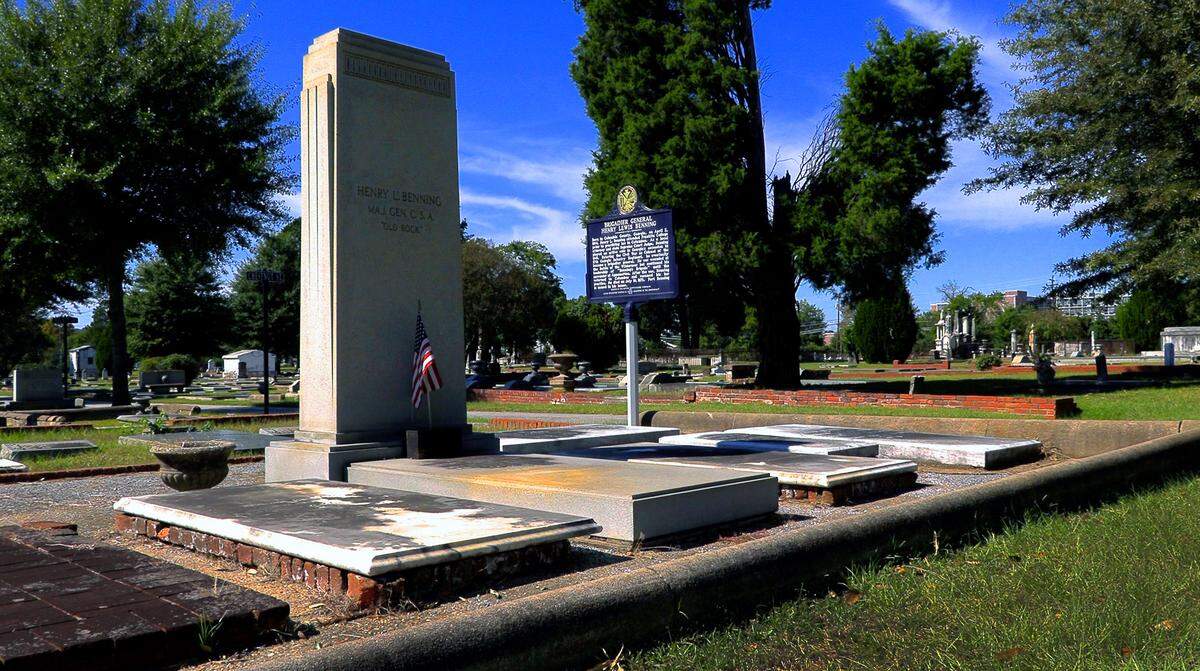
Benning also was an ambitious but mostly unsuccessful politician, serving briefly as solicitor here and as a state Supreme Court justice, but otherwise losing elections. He dreamed of securing high office in an independent South, with slavery a vital part of its economy.
But with the South’s cause lost, the former general who had hoped to lead a country came home to be a lawyer, who in 1875 died of a stroke walking to the courthouse square.
In 1918, as a pandemic ravaged the world amid World War I, city leaders in Columbus lobbied for an Army training post, and asked that it be named for Henry Benning.
So civic leaders in Columbus, not military leaders in Washington, D.C., wanted the post named for a Confederate. Now a commission established through Congress may decide on renaming it.
Should the name be changed?
Asked about the matter Dec. 11 at the National Infantry Museum, Lt. Gen. Gary Brito, who until he was promoted last year served as Fort Benning’s first Black commander, politely declined to give a preference.
“I’m glad to see that our Army senior leadership, our military senior leadership is looking at it,” said Brito, who was the guest speaker at the exhibit dedication. “But to be quite candid with you, sir, I think it’s appropriate that I not get ahead of the military senior leadership at this time, so I prefer not to give another comment.”
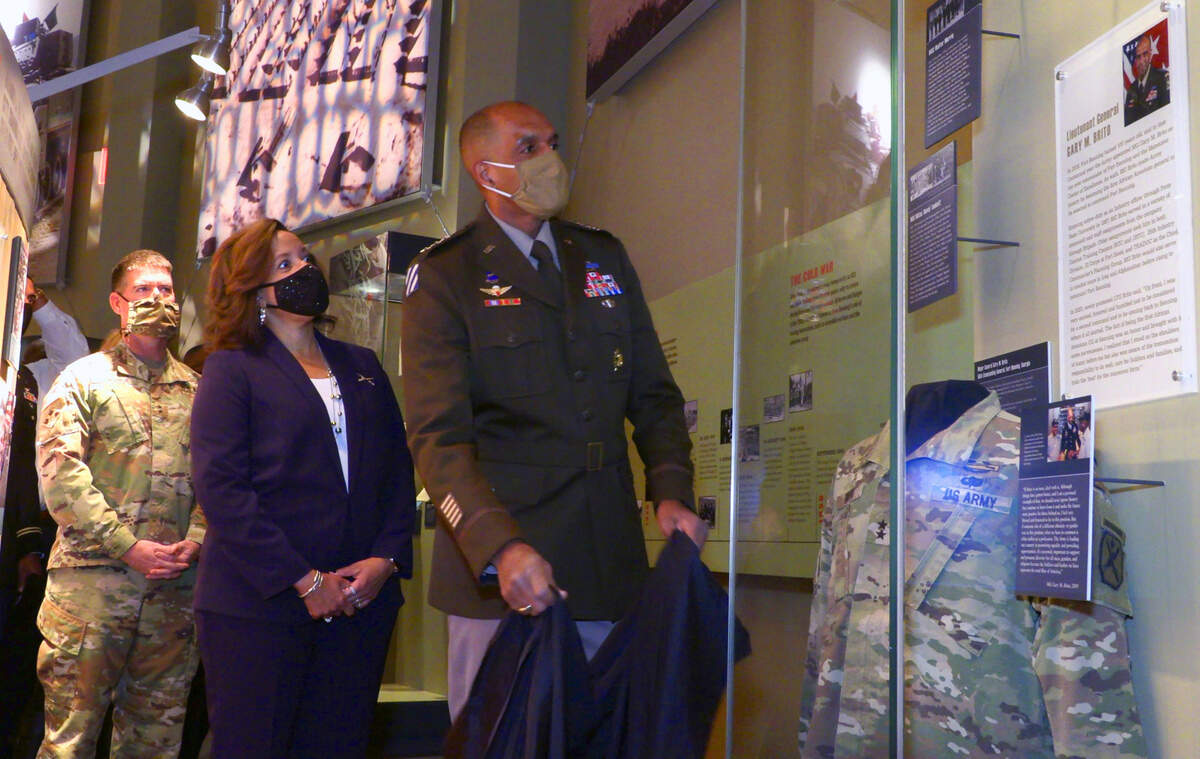
He was not the only dignitary there who deferred.
State Sen. Ed Harbison also declined. “We go through these phases every now and then,” he said, adding, “People want to go back and correct the past.” Though he took no position himself, he said renaming the post now won’t change the name in many people’s minds.
“To a lot of people, it will always be Fort Benning,” he said.
John House, one of Columbus’ two citywide council representatives, took a similar position.
“It’s such an emotional issue,” he said. “I’m letting the Army handle that one. I have friends who would love to see the name changed, because of who it’s named for; other friends who are adamant that it shouldn’t. … To the guys who went through here 30 years ago, it will always be Fort Benning.”
Some other local leaders had more definitive views.
Also attending the dedication was state Rep. Carolyn Hugley, who noted that much like Confederate monuments erected around the South about the same time, Benning was named in tribute to a Confederate commander decades after the Civil War, during the Jim Crow era of racial segregation.
“Our local community has an affinity for Fort Benning,” she acknowledged, but the Army is not the segregated institution it was back then.
“The military is one of the most diverse entities in our country,” she said, and the post now draws people of varying ethnicities from all over the country to train there.
“They should be able to do that at a facility that’s not named for a Confederate general,” she said, later adding, “It is what it is. We can’t rewrite history. We can only respond to it.”
State Sen. Randy Robertson saw it differently.
“I would be one of the folks who says no,” he said, when asked whether the post should be renamed.
He said he has never heard Benning defined as anyone but a military leader who served one side of the Civil War, as opposed to ex-Confederates such as Nathan Bedford Forrest, who later helped form the Ku Klux Klan.
“We always ask, ‘What’s the benefit,’ you know? How does this make our city, state or country better? … I just think we need to march forward and keep taking care of our country today,” he said.
Muscogee School Board member Cathy Williams represents a district that borders Fort Benning. She was an “Army brat” who grew up there in her teens, and later an Army wife who spent 20 years on post, where her children were born at Martin Army Hospital.
Like Rep. Hugley, she thought the name should be changed.
When the Armor School came to Fort Benning, and the post was rebranded “the Maneuver Center for Excellence,” she thought she’d never get over that, she said.
But she did, eventually: “It was progress, and it was the right thing to do for that community.”
Rename the post for someone other than Henry Benning, and eventually people will get used to that, too: “Any time a society can move forward, and remove stigma from the past, it should do it,” she said.
This story was originally published December 23, 2020 at 9:00 AM.