
Multiple felonies. A new murder charge. How did he keep getting out of jail?
A murder and meth-trafficking suspect who was free on bond in two separate Columbus shootings is back in jail after he hit a police officer with his car and caused a head-on collision while fleeing a traffic stop, authorities said.
Quardarrius Ramond Strong, 25, had been freed on his own recognizance in the 2019 homicide of Ronnie Brooks Jr., and had paid bonds on a slew of other felony charges stemming from a related drug arrest, and from a 2018 shooting in which bystanders were wounded.
Released from jail, he continued working as a sergeant in a Fort Benning tank crew, according to court records and Fort Benning officials.
Now he’s back in the Muscogee County Jail, where he’s held without bond on charges of assaulting a police officer and other offenses related to a Jan. 22 chase that ended with a crash at 10th Avenue and 13th Street.
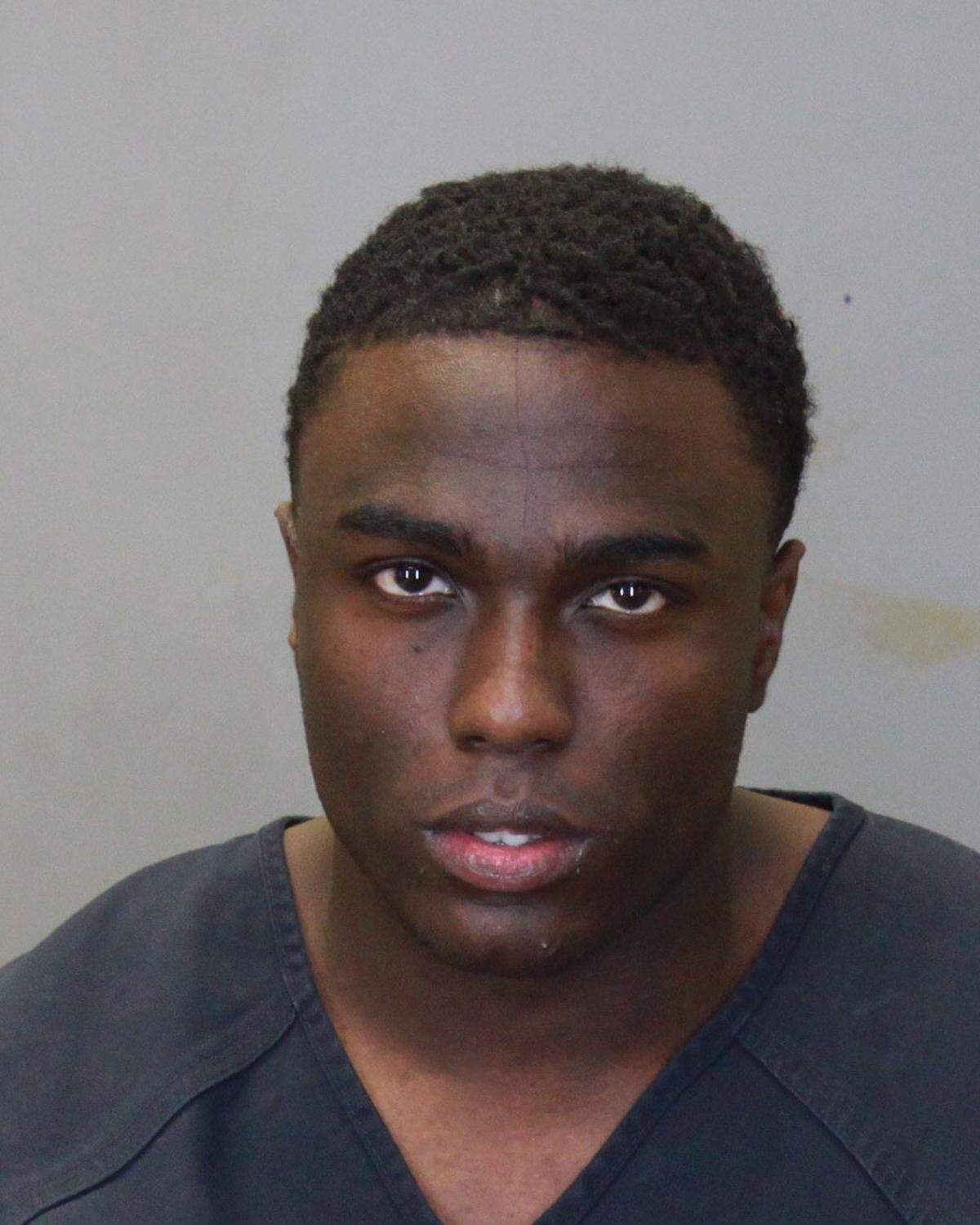
Strong’s case is raising questions about the practice of releasing suspects on their own recognizance, which requires them to pay no cash bond, only to sign some documents. It’s commonly referred to as an “OR bond.”
“There’s a time and a place for OR bonds,” Columbus Police Chief Ricky Boren said Friday. He did not think Strong’s case matched.
Just hours before Strong’s car chase and crash, coincidentally, Boren held a news conference at the Columbus Public Safety Center, announcing the multi-agency Metro Narcotics Task force would be repurposed to focus more intently on guns and gangs.
Boren said then that area law enforcement agencies are concerned about suspects getting out of jail on low bonds, and upon conviction being sentenced to little prison time or to probation. He asked for maximum penalties and high bonds for those involved in drug, gang and gun crimes.
“We want the bad guys in our community to know that if you’re a convicted felon in Columbus, Georgia, and you possess a firearm and you’re involved in drug activity, you’re going to jail,” Boren said at the press conference.
On Friday, he said Strong’s case illustrates what he was talking about: “We have documented an association with gang members,” he said of Strong.
One of the passengers in Strong’s car the night he crashed was a convicted felon illegally in possession of a firearm, and police found two more guns in the vehicle, he said.
“That makes it unsafe for citizens in our community as well as police officers,” Boren said.
The homicide
Strong’s defense attorneys, law partners William Kendrick and Mark Shelnutt, believe his OR bond was reasonable, because of his tenuous connection to the homicide he’s charged in.
Strong was implicated in the Feb. 8, 2019, fatal shooting of 26-year-old Ronnie Brooks Jr. after he drove the wounded Brooks to Piedmont Columbus Regional, where investigators were summoned to the emergency room around 4 p.m.
Brooks died in the hospital on Feb. 15.
Kendrick said Thursday that police have alleged Brooks’ shooting was related to a drug operation involving Strong and Kevon Carter, 27. Court records show both have been charged with dealing in methamphetamine.
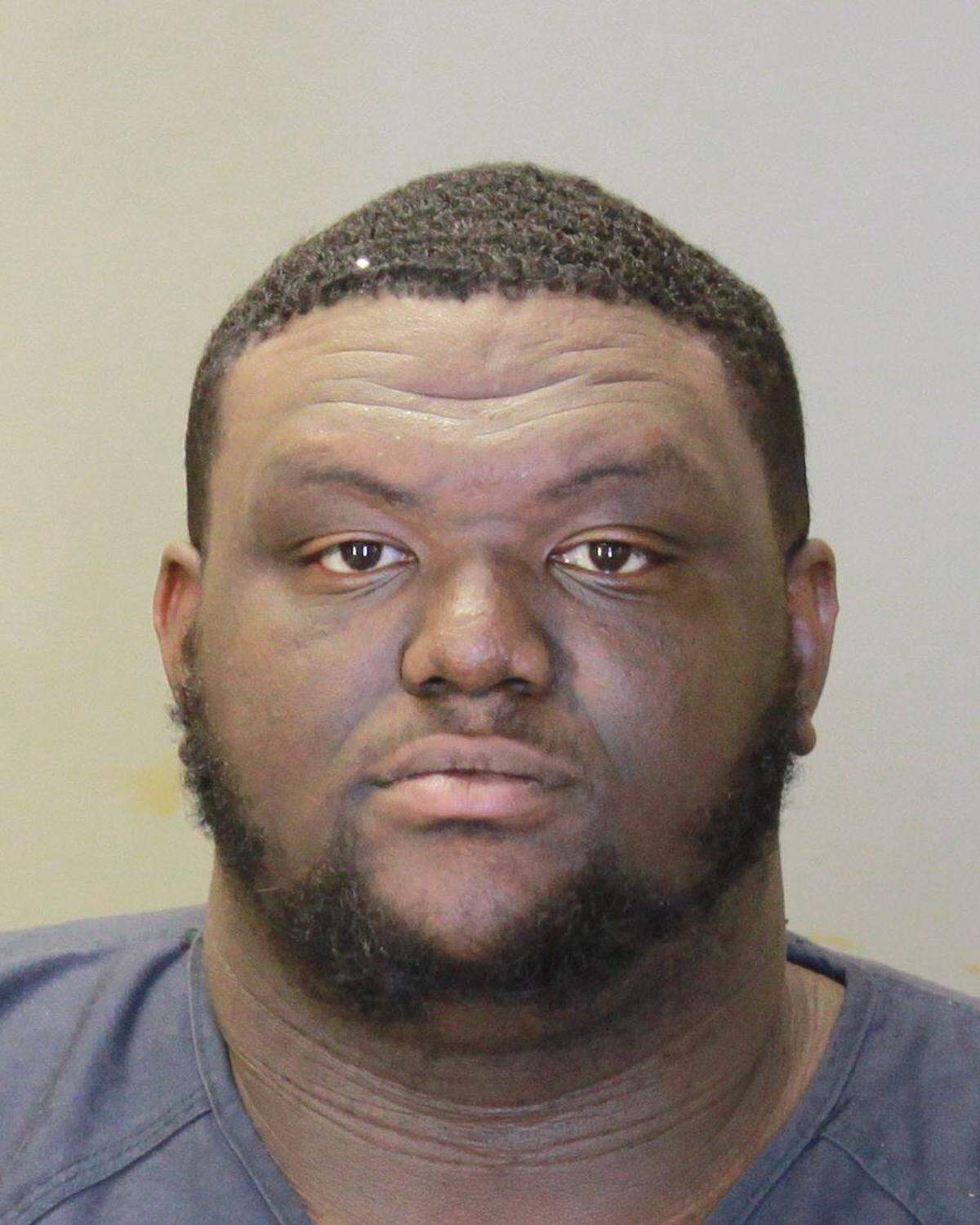
Kendrick gave this account of Strong’s connection to Brooks’ shooting:
Strong owned Parkchester Drive property that Carter was renting, and that’s where police believe Carter was dealing meth. Carter and Brooks allegedly had a dispute during a drug transaction, and that’s what provoked the shooting, Kendrick said.
Carter fled the residence and called Strong, telling him Brooks was back at the house bleeding. Strong rushed there to get Brooks and drive him to the hospital, where Strong stayed to talk to police, his attorney said.
The police investigation led to Strong’s arrest on charges of trafficking in methamphetamine, using a gun to commit a crime, obstructing police, having a drug-related object and theft by receiving a stolen gun. He was booked into the jail on Feb. 15, the same day Brooks died.
The following Feb. 25, police charged Carter with murder in Brooks’ death. Carter, who faces the same drug charges as Strong, already was in jail, and detectives served the murder warrant there.
Having lived a week after the shooting, Brooks had time to tell people what happened. He identified Carter as the gunman who shot him, but not Strong, authorities said.
On March 21, 2019, Strong paid the bonds on his drug charges and was released, but he remained free only 12 days before police also charged him with murder in Brooks’ shooting.
Kendrick argued the drug and murder charges were not justified, because Strong only rented the property to Carter, and had nothing to do with Carter’s alleged drug dealing or with Brooks’ shooting.
The attorney said police are pursuing a case of felony murder against Strong, meaning they believe Strong caused Brooks’ death by committing other felonies, in this case drug trafficking, making Strong a party to the alleged crimes involving Carter.
Detectives would not comment on Kendrick’s account.
When Strong was arrested for murder, his bonds in the drug case were revoked, so they had to be reset by a Superior Court judge.
In the months that followed, his attorneys repeatedly asked Judge Ron Mullins to reduce the bonds on Strong’s murder and trafficking charges. The bond for trafficking was set at $40,000 when Kendrick moved to have it reduced on May 15, 2019. The following June 7, Mullins cut it to $15,000.
Strong had a $75,000 bond on his murder charge, but Mullins later reduced that to $50,000.
And then, on July 5, 2019, the judge allowed Strong to be freed on his own recognizance, on the murder charge. Assistant District Attorney George Lipscomb agreed to the OR bond, though Lipscomb this past Jan. 8 moved to have it revoked, after police told him Strong had resumed his suspicious activities.
The attorneys and the judge thought Strong would be confined to Fort Benning, were he released, but a Fort Benning spokesman said the post had no justification to do that.
Strong had been released on bond before, in a shooting, and his charges in that case still were pending.
Setting bonds
Under Georgia law, suspects are entitled to a bond if they have not been indicted in 90 days, and that rarely happens in murder cases.
“The paramount consideration under Georgia law is to secure a defendant’s return to court,” Judge Gil McBride said Friday, commenting on the process in general, and not on Strong’s pending prosecution.
McBride is the chief judge of the six-county Chattahoochee Judicial Circuit that’s based in Columbus.
A judge has to consider whether the person charged is a “flight risk,” likely to flee the court’s jurisdiction if released from custody.
“There are other factors, four of them that have to be weighed by the court,” he added:
- Whether the suspect is likely to endanger others while free.
- Whether the suspect’s likely to intimidate witnesses in the case.
- Whether the suspect may tamper with evidence that police have not secured.
- Whether the suspect may commit more crimes while free.
Another consideration is whether the prosecutor in the case consents to the bond, McBride said: “Where there is a consent to a bond from the district attorney’s office, I think that most judges are going to give great deference to that.”
Another factor is the defendant’s finances, and whether the bond is reasonable. Those accused of a crime are presumed innocent, under the law, and not to be punished because they are poor, without a conviction .
“What’s reasonable for one person may not be a reasonable bond for another person,” McBride said.
2018 shooting
On May 5, 2018, four people were wounded when a gun battle erupted around 7:30 p.m. in the 4900 block of Sentry Street, off St. Mary’s Road in the Wickham Heights neighborhood.
Among the victims was a woman who had been holding a baby when she was shot through the legs. Also wounded in the gunfight was Strong, who was sitting in his car when he was shot through the cheek, Kendrick said.
He said Strong had fired in self-defense, when others shot at him first, and he was not the shooter who wounded the woman with the child. But witnesses later identified him as one of the gunmen, and he was arrested 18 days later.
Then 24, Strong was charged with four counts each of aggravated assault and second-degree criminal damage to property, the latter based on bullets striking homes and cars. He also was accused of using a gun to commit a felony.
Booked into the jail on May 23, Strong was released on bond the next day.
Kendrick argued Strong’s charges were unwarranted in that case, too: Strong was only defending himself, yet he was blamed for a gunfight that others started.
Kendrick and Shelnutt said they don’t believe authorities have a solid case against their client in either shooting, and Strong would be free today, if not for the police chase and car crash.
The chase
After the prosecutor filed a motion to revoke Strong’s bond and return him to jail, a hearing was set for Jan. 31 in Mullins’ court.
But Strong got arrested again before then.
According to police, an officer on Jan. 22 had pulled Strong over near the Ashley Station apartments off Talbotton Road around 7:45 p.m. when Strong fled, striking an officer and speeding 80 to 90 mph as he raced down 10th Avenue with police in pursuit.
Trying to turn west onto 13th Street, he swung too wide and veered into the eastbound lanes, his 2013 BMW slamming head-on into a 2007 Buick LaCrosse driven by a 52-year-old Phenix City woman, investigators said. Both cars were wrecked.
Strong and two passengers in his BMW got out and ran, but were quickly captured, officers said.
During a preliminary hearing Wednesday in Columbus Recorder’s Court, Strong faced charges of aggravated assault on a police officer, felony police obstruction, using a gun to commit a crime, and fleeing from police, plus reckless driving and other traffic offenses such as making an improper turn and failing to maintain his lane.
Represented by Shelnutt, Strong pleaded not guilty and waived the hearing.
With Strong again facing felony charges, despite their efforts to keep him out of jail, Shelnutt and Kendrick were frustrated that their client got into trouble again, and police were frustrated a murder suspect they repeatedly had jailed was back out on the street.
Now Strong’s attorneys have a new criminal case to contend with, and a client who this time is unlikely to walk free anytime soon.
Because Strong’s currently being held without bond, he will have to go back to Superior Court to ask a judge to set one for him, again, despite his repeated run-ins with the law.
“It will take the paperwork a while to get over to Superior Court,” Shelnutt said Wednesday of Strong’s new charges, speaking to reporters outside Recorder’s Court. “We’ll file all the discovery motions and try to get the evidence, the dash-cams and the body-cams. At that point we’ll get a real full understanding of what happened, and go from there.”
Meanwhile Kevon Carter, Strong’s codefendant in the murder case, has remained in the Muscogee County Jail since his arrest.
According to court records, his bonds last were reduced on Oct. 23, but still total $256,000 on charges of murder, trafficking meth, using a gun to commit a crime and other counts.
His defense attorney, Mike Garner, filed a motion Jan. 29 asking Mullins to reduce those bonds, so his client can get out of jail.
This story was originally published February 10, 2020 at 6:00 AM.