
Where do most Columbus homicides occur? A new pattern may be emerging
When Rasheeda Ali got the call at 2 a.m. last October, she immediately got dressed and drove from her Farr Road home to Calhoun Drive in Benning Hills, where her 14-year-old grandson had been shot.
She came upon a scene of despair.
“I noticed the people were so broken,” the 75-year-old grandmother recalled. “One of his cousins was laying out in the street, just broken, crying, screaming. I didn’t know why she was carrying on like that.”
Eventually she asked a police officer whether grandson Jaleel Ali had died. “Yes,” the officer said.
“I wasn’t ready for that answer,” she remembered, “so my knees buckled, and they had to help me up off the ground.”
The teen was Columbus’ second shooting death last year on Calhoun Drive. He died just days after his older brother, 16, was shot off North Lumpkin Road, near Kendrick Avenue. He survived.
Rasheeda Ali used to live in the neighborhood where her grandson was killed. Now she lives in a Farr Road apartment complex, across the street from a market where a man was gunned down Dec. 7.
She has never lived in fear of crime, she said: “I did not feel unsafe at all.” She believes the troublemakers come from elsewhere, as evidenced by a fatal shooting outside her apartments on Christmas Day 2019, she said: “He didn’t live there. He had come there, and the people looking for him found out he was there.”
The Muscogee County School District is building a new football stadium on Cusseta Road, just blocks from her home, she noted, and she believes the students and families who come there for games will be in no danger: “I can’t believe that’s going to be unsafe,” she said.
A new pattern
Columbus long has had homicides on its southern rim, along the Fort Benning border, where Rasheeda Ali lives and where her grandsons were shot. That pattern persisted, in 2021: At least 13 stretched from the Oakland Park neighborhood to the Benning Hills area, roughly following Victory Drive.
But lately, a different pattern has begun to emerge, just to the north and east: a string of killings that roughly track the Buena Vista Road corridor east to west, and then follow Floyd Road north to Macon Road.
In 2021, ten were along Buena Vista Road, and nine tracked Floyd Road.
Among those tracking Buena Vista, three were on the the road itself, and others were nearby, on Sweetwater Drive, Curry Street, Mehaffey Street, Bayberry Drive, Dogwood Drive, Goodson Drive and Carmel Drive.
Along Floyd Road, two homicides were reported on Lamore Street last year, two outside a Family Dollar on Floyd Road, two at Carver Park on Hunter Road, and others on Eton Drive, Mahan Drive, Bismark Drive, Avalon Avenue and Luna Drive.
Eleven formed a spotty pattern along Macon Road through midtown, on Midtown Loop, Samson Avenue, Knight Drive, Schaul Street, Colorado Street, 20th Street, 16th Avenue and 14th Avenue. And a cluster of five was to the city’s northwest, around Luther Wilson Homes, where most were in the public housing complex.
This pattern is reflected in other research. Columbus’ Cure Violence initiative identified its focus areas by ZIP codes, and cited 31903, 31904, 31906 and 31907.
When the death toll stood at 63, in November, District 4 Columbus Councilor Toyia Tucker sought a tally of homicides by council district, after the two shootings last year at Carver Park. That data showed:
- 15 were in District 7.
- 13 were in District 1.
- 12 were in District 3.
- 12 were in District 4.
- 6 were in District 8.
- 3 were in District 5.
- 2 were in District 2.
- None were in District 6.
Council District 6 is the Muscogee County panhandle, paralleling its northern border along the J.R. Allen Parkway.
Keeping track
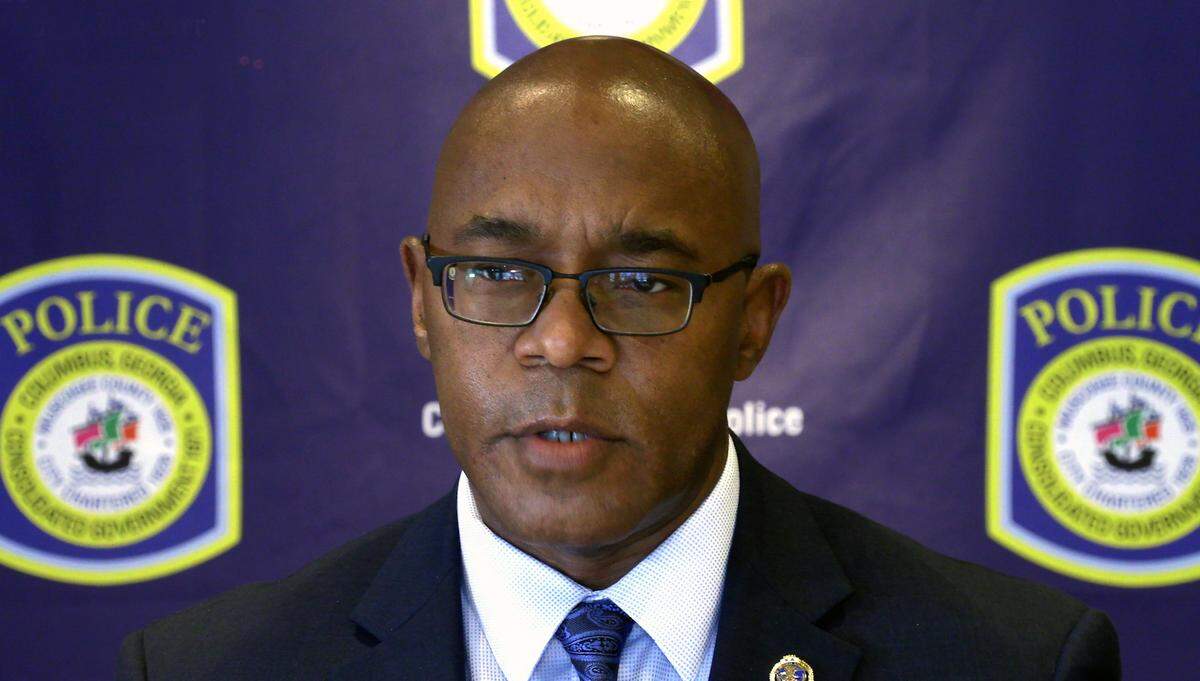
Columbus Police Chief Freddie Blackmon said his officers are aware of the geographic track of violence.
The city’s first homicide of 2022 was on Del Ray Drive, off Floyd Road, where authorities suspect a 71-year-old woman was hit by stray bullets Jan. 16 while driving through her neighborhood.
That’s the same Floyd Road area where a 12-year-old boy riding in his mother’s car fatally was wounded by a stray bullet on Aug. 13, at Luna Drive and Armenda Drive.
“We’re definitely keeping an eye on that area, as well as several other areas that we will monitor based on what we’ve seen trending over the past year,” the police chief said. “We definitely want to make an impact in those areas, and assure our citizens that we are patrolling those areas, and we hear their concerns, and we’re concerned as well.”
Muscogee County Sheriff Greg Countryman said he believes neighborhood crime is an indicator of other, more deep-seated issues such as poverty and mental illness, which would follow the same track as violent crime, were they similarly mapped.
When asked about high crime areas, the sheriff ticked off a list of streets, including Cusseta Road, Buena Vista Road, Amber Drive, South Lumpkin Road, North Lumpkin Road, and Victory Drive.
“Those are still hot areas,” Countryman said, “but we have to look at the mental health issue. We have to look at the poverty issue. We have to look at, are there opportunities that could be out there.”
He did not want to cast everyone in those neighborhoods as a criminal. Most are not, he said. But a persistent crime pattern can perpetuate itself, pushing young professionals to leave to find a better future.
“They used to want to live here, when they would graduate: find a job here, work here, raise a family here,” the sheriff said. “That’s not the same thing now. A lot of the younger people that I come into contact with, when they graduate from school, they’re ready to go, and they’re ready to go because of the things that they see.”
Like Countryman, Blackmon said Columbus needs more than law enforcement to tackle its crime problems. It needs law enforcement, educators, churches, community leaders and parents working together.
And it needs people to cooperate with police, to call 911 when they hear someone illegally firing a gun, and to report what they know if they have information on an assault.
He encouraged witnesses to contact police anonymously at 706-653-3188, if they don’t want to identify themselves, or to call detectives at 706-653-3400.
Police will concentrate on areas where crime is increasing, he said: “We will go to what we identify as high crime or hot spot areas, and those areas we develop through our analysis and our intelligence reports.”
But they need the public’s help, he added:
“It’s not just a law enforcement approach that’s needed to cause crime to be reduced,” he said. “It’s an ‘all hands on deck’ approach.”
This story was originally published February 2, 2022 at 6:00 AM.