Columbus mayoral candidate Mark LaJoye — what he says about top issues in election
Editor’s note: This is one of the Ledger-Enquirer’s profiles of candidates in the Columbus mayoral election. Early voting for the 2026 local nonpartisan election, which coincides with the Georgia primary, begins April 27, and election day is May 19.
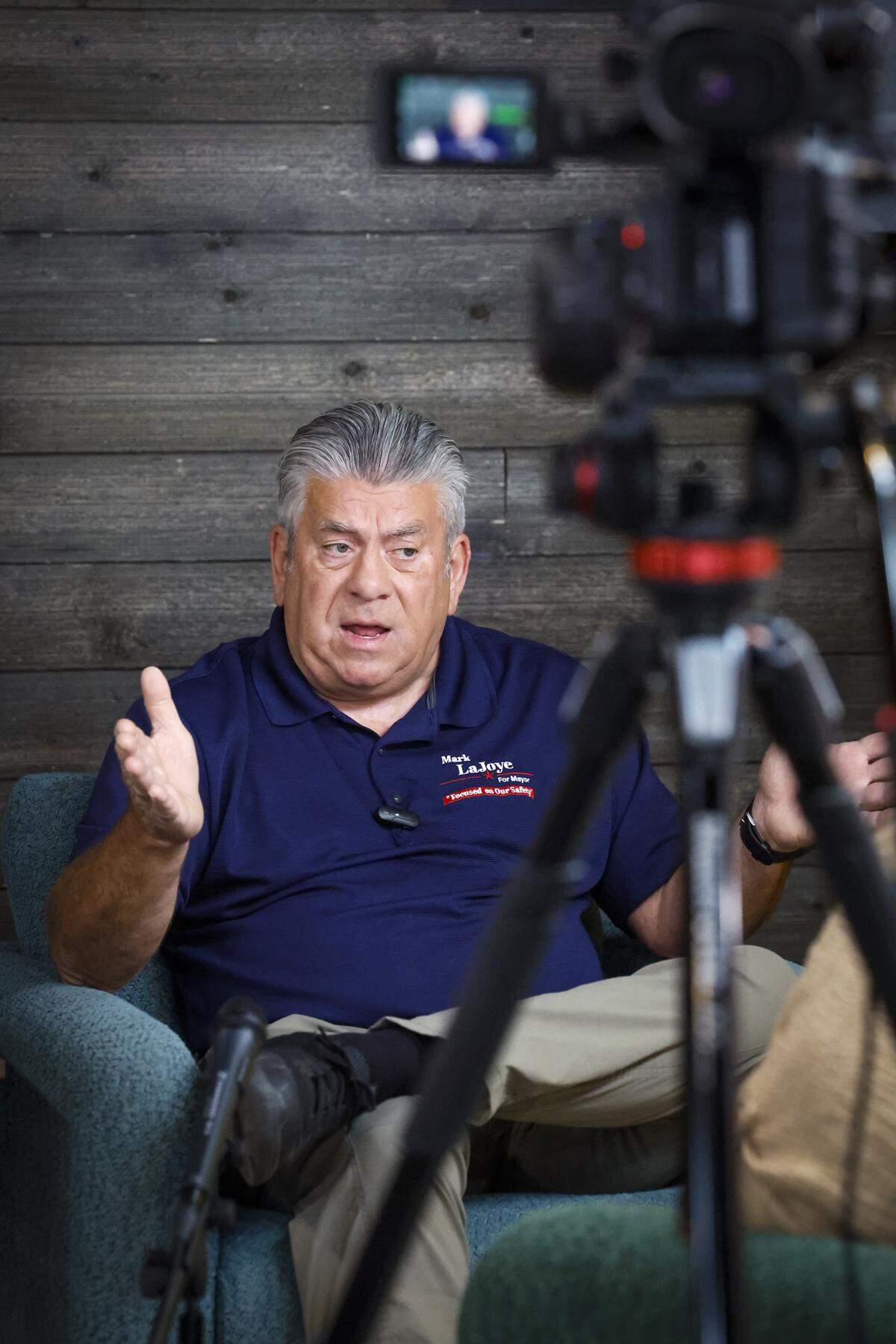
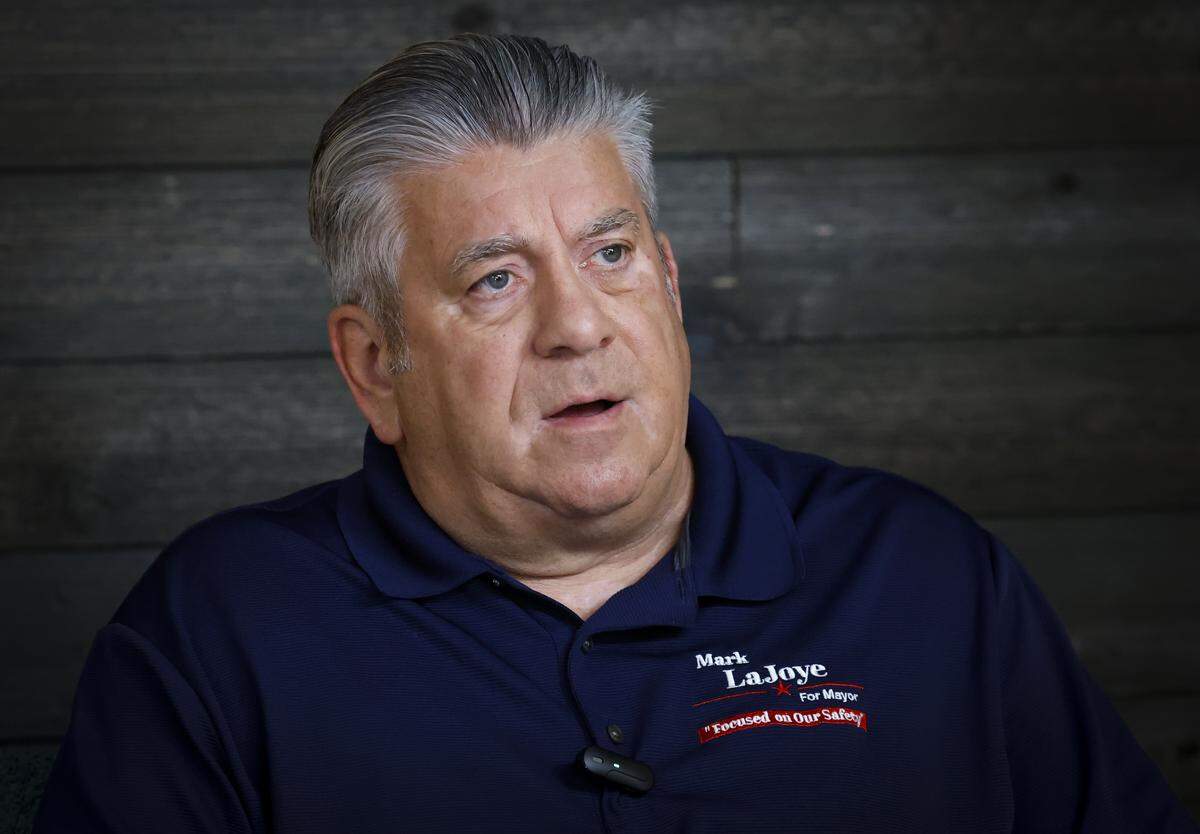
Mayoral candidate Mark LaJoye has over 40 years of experience in the military and 14 years of experience working for the Columbus Police Department.
LaJoye, who is originally from Michigan, came to Columbus to work as an instructor at Fort Benning. He and his wife enjoyed living in Columbus, LaJoye said, so they decided to stay.
Living in the South has other advantages too.
“I don’t like shoveling snow,” LaJoye said. “So, Columbus, Georgia, provided us that aspect of my life that I didn’t want to do over and over again.”
LaJoye said he takes pride in being bold and striving for leadership. He has run to be Muscogee County sheriff and lost five times. Now, he is running in the 2026 election to be mayor of Columbus, comparing himself to Abraham Lincoln, who lost elections for the Illinois state legislature, a Congressional nomination, the U.S. Senate and nomination for vice president.
“We don’t criticize Lincoln,” LaJoye said. “So, why are you criticizing me? The bottom line is I want people to know that the reason I keep coming back is that I see the challenges and nothing is getting done.”
The Ledger-Enquirer sat down with LaJoye to discuss some of his top policy issues and initiatives he would propose if elected mayor.
Public safety in Columbus
Columbus Police Chief Stoney Mathis has done well in his role, LaJoye said, and he wants to expand and build on that after Mathis leaves.
Mayor Skip Henderson appointed Mathis as interim chief in May 2023, and the Columbus Council approved him as permanent chief in October 2023. Mathis said last year he plans to leave CPD by the end of 2026.
LaJoye said he would conduct meetings and collaborate with whoever the new police chief is and the outgoing police chief.
“I’m a hands-on guy,” he said. “I don’t sit in an ivory tower somewhere behind a desk. That’s not who I am.”
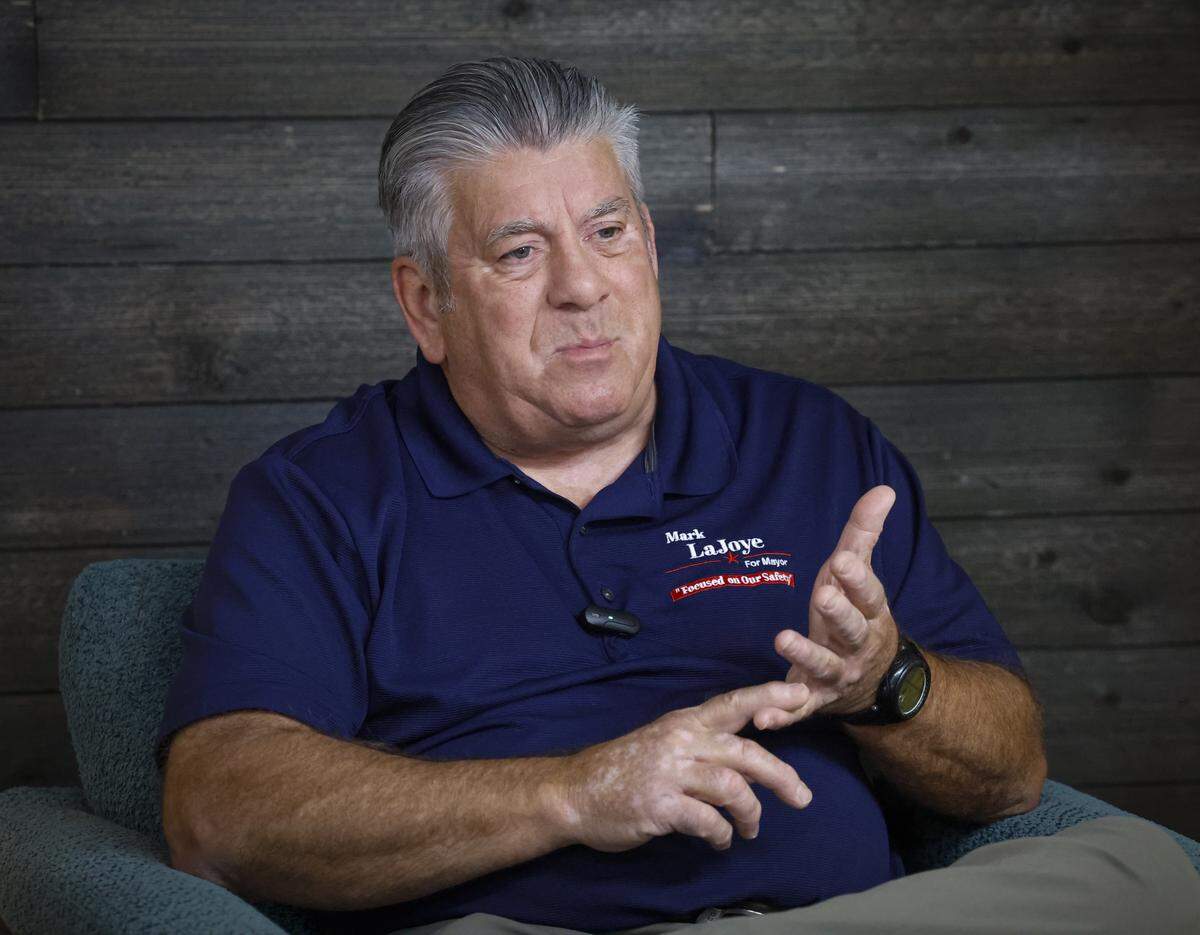
LaJoye said he also would encourage police officers to engage more with the community. This could mean a requirement that officers meet with the public during each shift, he said.
“Get out of your car, walk into the convenience store and meet with five people,” LaJoye said. “Go out downtown if you’ve got lulls in your calls.”
Police officers being among the people helps to build trust in the community, he said.
“Some people feel intimidated by law enforcement,” LaJoye said.
Addressing gang violence
If elected mayor, LaJoye said, he hopes to create a crime suppression task force. It would comprise different entities, he said, including community policing, and it would focus on gang violence.
“We have a reputation,” LaJoye said. “They want to call Columbus, ‘Killumbus.’ We want to get away from that reputation and bring it back to what Columbus is all about.”
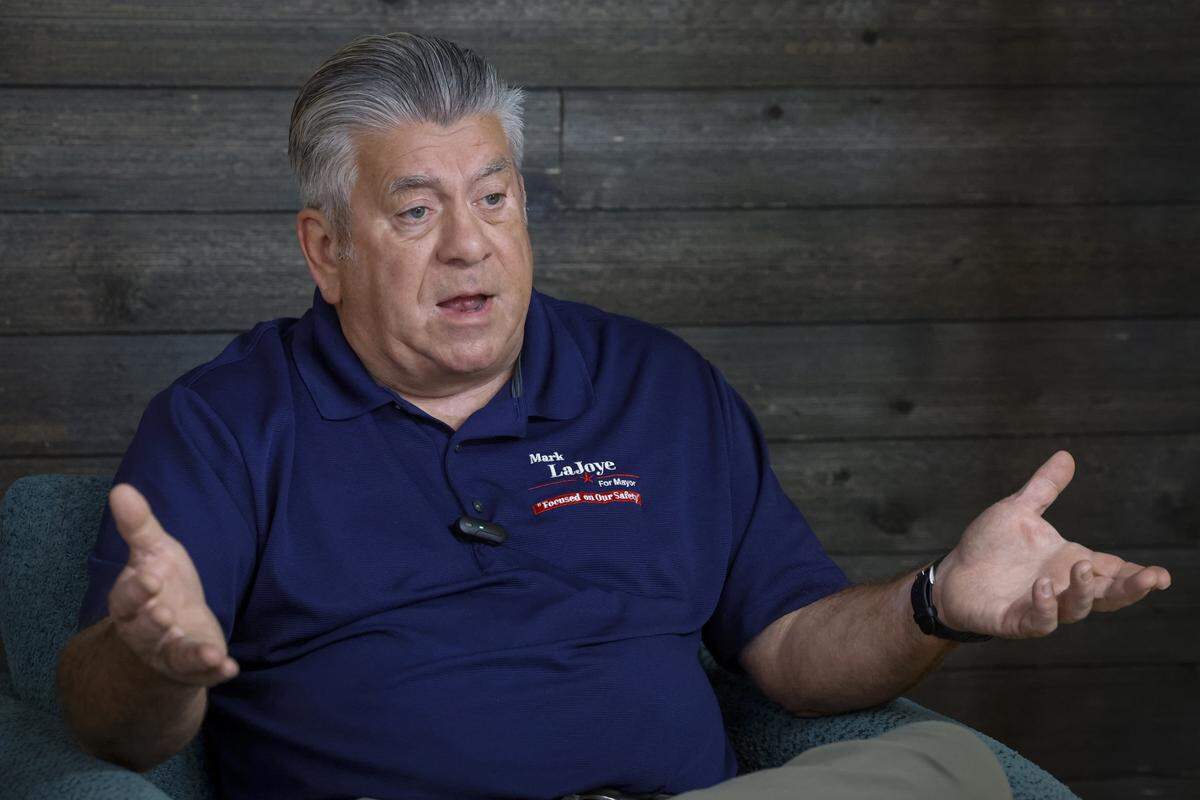
This task force would have representatives from six surrounding counties, LaJoye said.
“I want the buy-in from the other (counties) because they’ve got the same problem that we’ve got,” he said.
Those agents would be deputized in Columbus, LaJoye said, and include members from Phenix City.
“I think it’s important because we’re a sister city here,” he said, “and we need to get them involved in that.”
Managing a tight city budget
The problem with the city’s budget is too much spending, LaJoye said.
“We pay the highest sales tax out of anywhere in the state of Georgia,” he said.
The total sales tax is 9% in Columbus (4% goes to the state, the rest local) — tied for highest in Georgia, as of last April, according to the Georgia Department of Revenue.
Property tax in Columbus also is high, LaJoye said, despite it being on a freeze. Muscogee County is ranked by World Population Review as having the 60th-highest median property tax bill ($1,526) among Georgia’s 159 counties this year, slightly above the statewide median of $1,529..
“We give the city council, the mayor and the city manager too much money,” he said. “We’re giving everybody too much money, and they’re just wildly spending it like it’s their checkbook. That’s not right.”
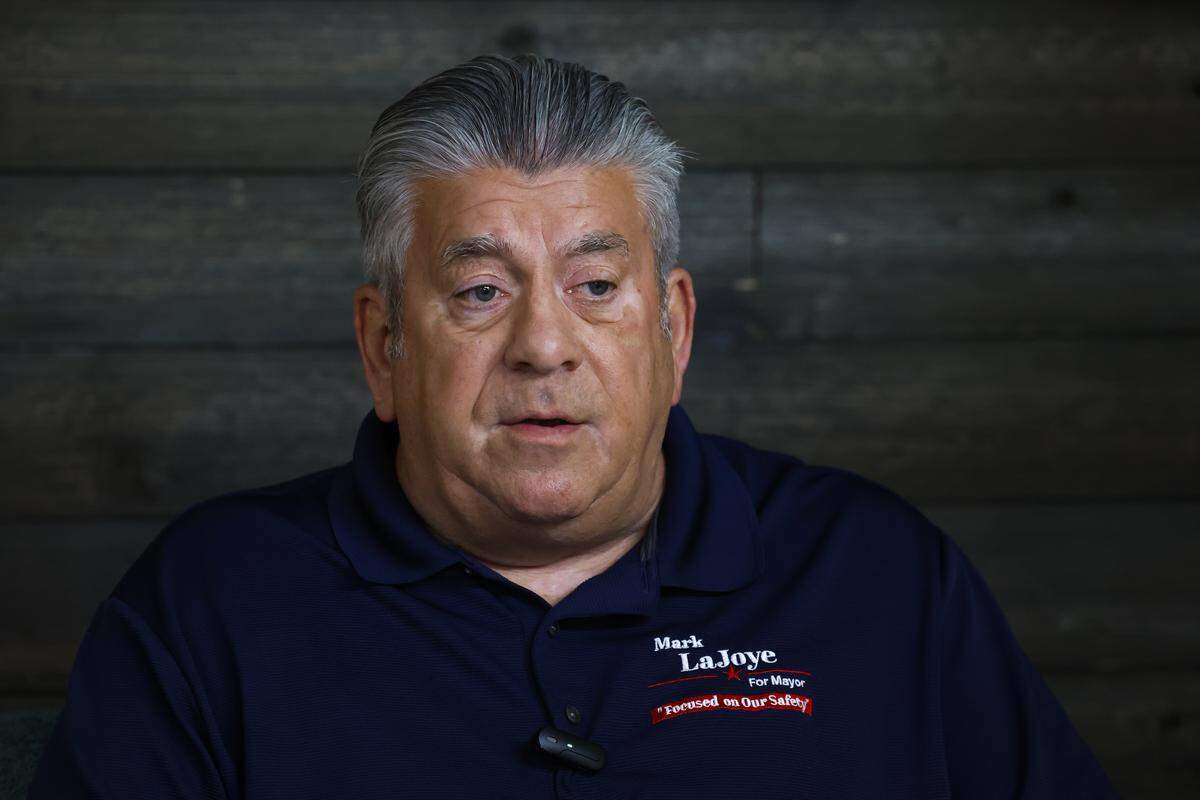
Elected officials must be better stewards of the taxpayers’ money, LaJoye said. He criticized the Columbus Council’s 2024 approval of selling $50 million in bonds to renovate the city’s baseball stadium from what was then Golden Park into what is now Synovus Park for the Atlanta Braves Class AA minor league affiliate to move from Mississippi to Columbus.
LaJoye said the taxpayers should have had a say in how that money was spent.
“I’ll work closely with whatever legislation comes down from the state,” he said, “and we’ll do whatever we’ve got to do at that time.”
During the 2026 legislative session, the Georgia General Assembly has been debating bills that would eliminate or significantly cut property taxes.
Small businesses pay most of the taxes in Columbus, LaJoye said.
“It’s crazy the taxes that small businesses have to pay,” he said. “So, along those lines, we’re talking about bringing in medium to large corporations to balance out that tax because I really don’t want to lay the burden on small businesses.”
Bigger businesses can bridge the gap and provide good-paying jobs for Columbus, LaJoye said.
“We’re losing our young folks,” he said. “We’re either losing them to jail or prison because we have such a significant gang problem.”
Concerns about proposed data center Project Ruby
LaJoye said he opposes the proposed Columbus data center, Project Ruby, because of too many unanswered questions.
“I know they’ve held town hall meetings all around Columbus trying to tell us the benefits of it and what it’s going to do,” he said. “There’s a lot of environmental impact that I’m not in favor of.”
LaJoye wants more information about what the data center would provide for Columbus. Other corporations have come to Columbus promising a large number of jobs, he said, but ultimately bring a fraction of the promised number.
“There’s too many people who are not in approval of it,” he said about Project Ruby.
Creating more economic opportunity
LaJoye sees a big push for unmanned aerial vehicles (drones) and other automation at Fort Benning. If elected mayor, LaJoye said, he would partner with Fort Benning to provide training on these technologies for students in Columbus.
“This is the future,” he said. “Autonomous systems are the future. They’re not going away, and AI is not going away.”
LaJoye said he also wants to recruit large corporations to Columbus and provide jobs in these fields.
“If we do that, then the youth will stay here,” he said. “Atlanta gets the lion’s share of employees and things like that. That’s because there’s nothing here. They’re leaving. So, why won’t we create a good environment for them to go work and get educated?”
Columbus is doing a good job at this, LaJoye said, but not a great job. More collaboration could help, he said.
LaJoye said he would work other countries, like South Korea, and the Better Business Bureau to bring more businesses to Columbus. This will help provide more training and employment opportunities in Muscogee County, LaJoye said.
“But the future is right there in AI,” he said. “We need to embrace that and do it the right way.”
Infrastructure improvements
His goal for infrastructure would be to “just clean our city back up,” LaJoye said.
The car parts, bed springs and other debris along road sides should be removed, he said.
“People need to take pride in their environment where we live and everything,” LaJoye said.
LaJoye said he also would focus on getting potholes filled and making the city more accessible for people with disabilities. He mentioned a woman who struggled to navigate construction around the Columbus Government Center.
“I want to expand on making sure that disabled folks have a lot of access to at least our government center,” he said.
LaJoye said he would ensure taxpayers have their concerns heard and are called back when they reach out to the city for help.
“They’re the one who are paying our wages,” he said. “We need to collaborate with them and make sure that we answer their questions. If they don’t, I’m going to establish a hotline for the mayor.”
This hotline would go directly to his office, LaJoye said, so he can find the answers for residents.
LaJoye said he has “great plans” for Columbus.
“I think it’s important that you know, as candidates, we work for you,” he said. “We’re working for the taxpayer.”