
‘It takes all of us.’ Homicide spike leaves Columbus families, officials looking for solutions
Explain death to a 3-year-old.
That task fell to Amit Patel’s family after the Columbus businessman was gunned down Dec. 6 outside a Synovus bank branch on Buena Vista Road, where his killers took the money he was to deposit from his service station’s weekend revenue.
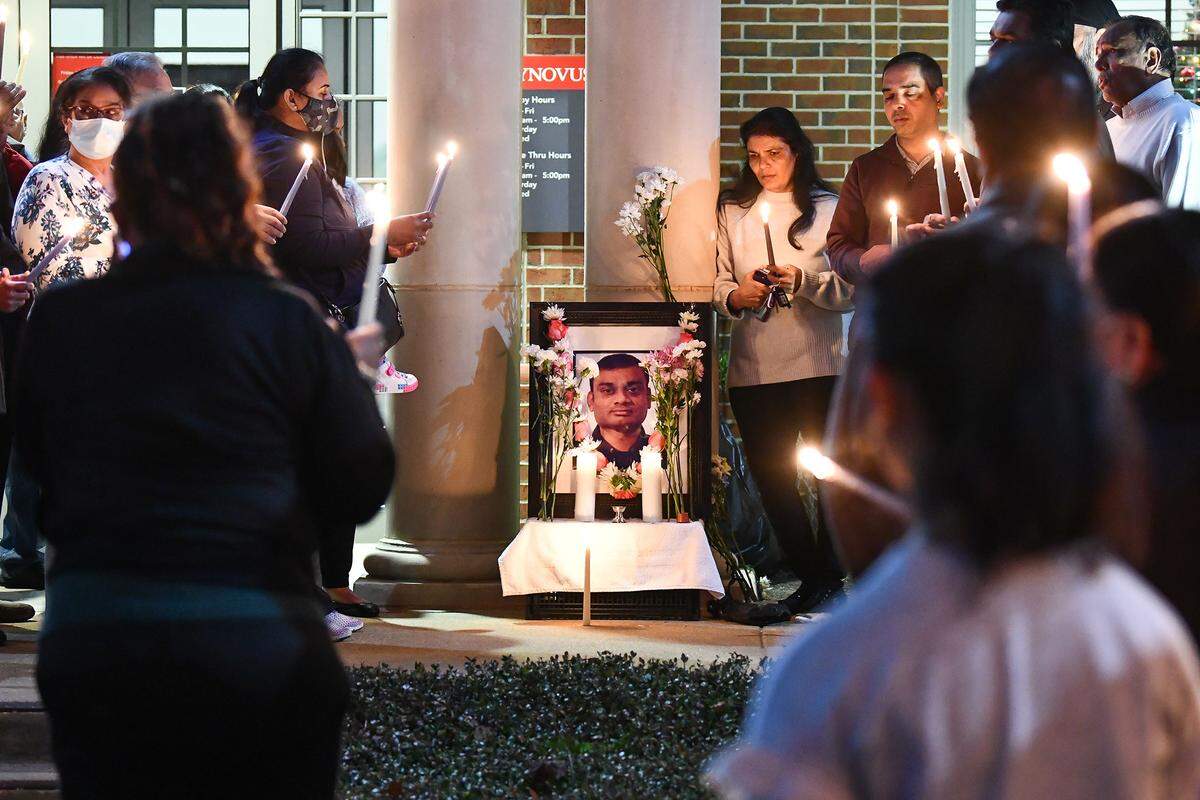
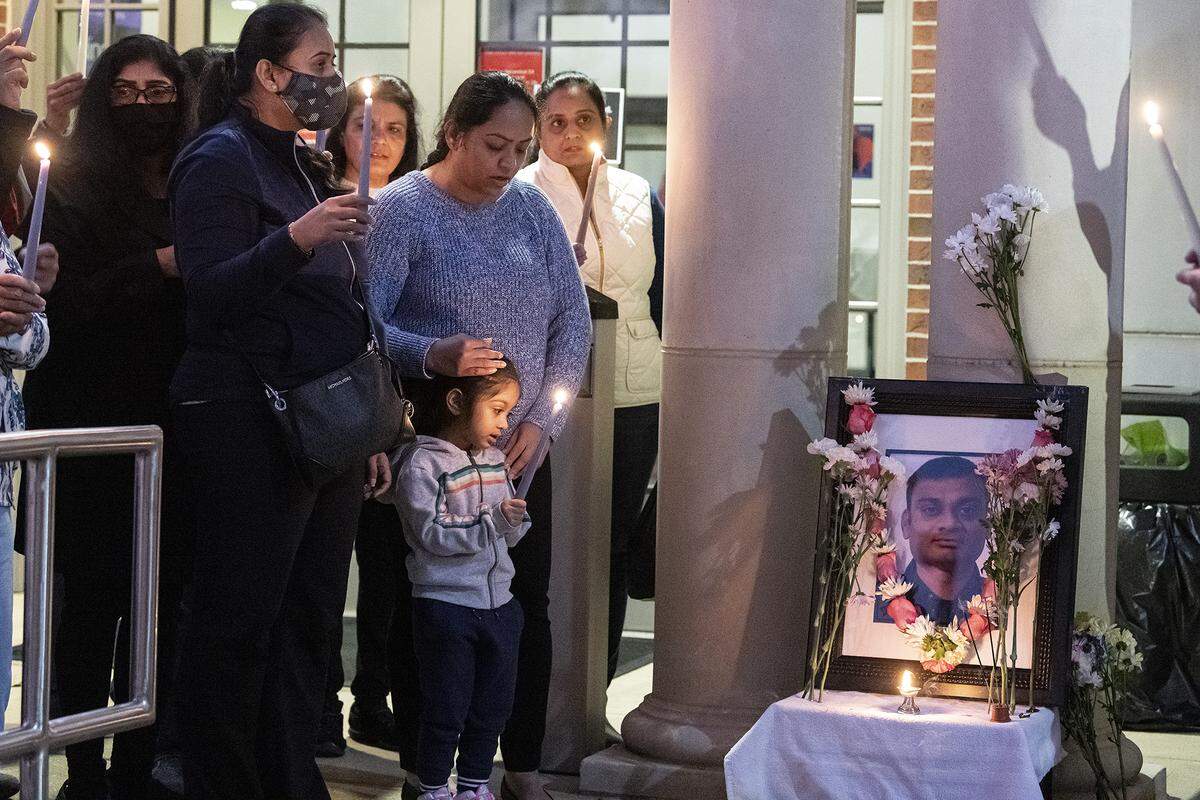
His 3-year-old daughter didn’t understand the father she talked to daily on FaceTime was gone, so he could not speak to her from a framed photograph that looked so much like a video call.
At a memorial service a week later, Vinny Patel, Amit Patel’s partner in the Pyramid Food Mart just a mile from the bank, spoke of the little girl’s confusion.
“He always talked with his daughter.... She called him on FaceTime: ‘Daddy, I’m here at home. When are you coming back home?’ And he’d say, ‘OK, I’ll be back home, and we’ll do whatever we need to have done.’”
She tried talking to a framed photo of her father, thinking it was the same:
“As a matter of fact, his picture, a small picture at home, the daughter was thinking ... she’s still talking to him on FaceTime, so, ‘Daddy, talk to me! Daddy, talk to me!’”
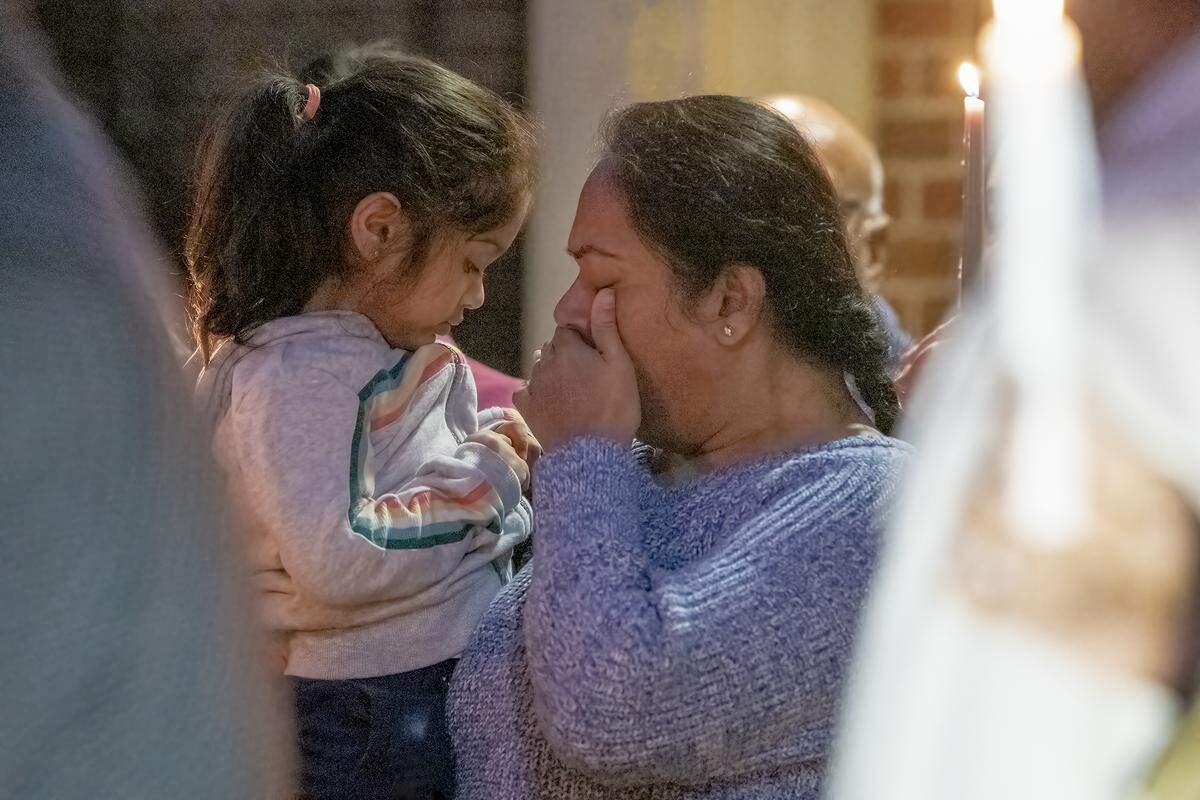
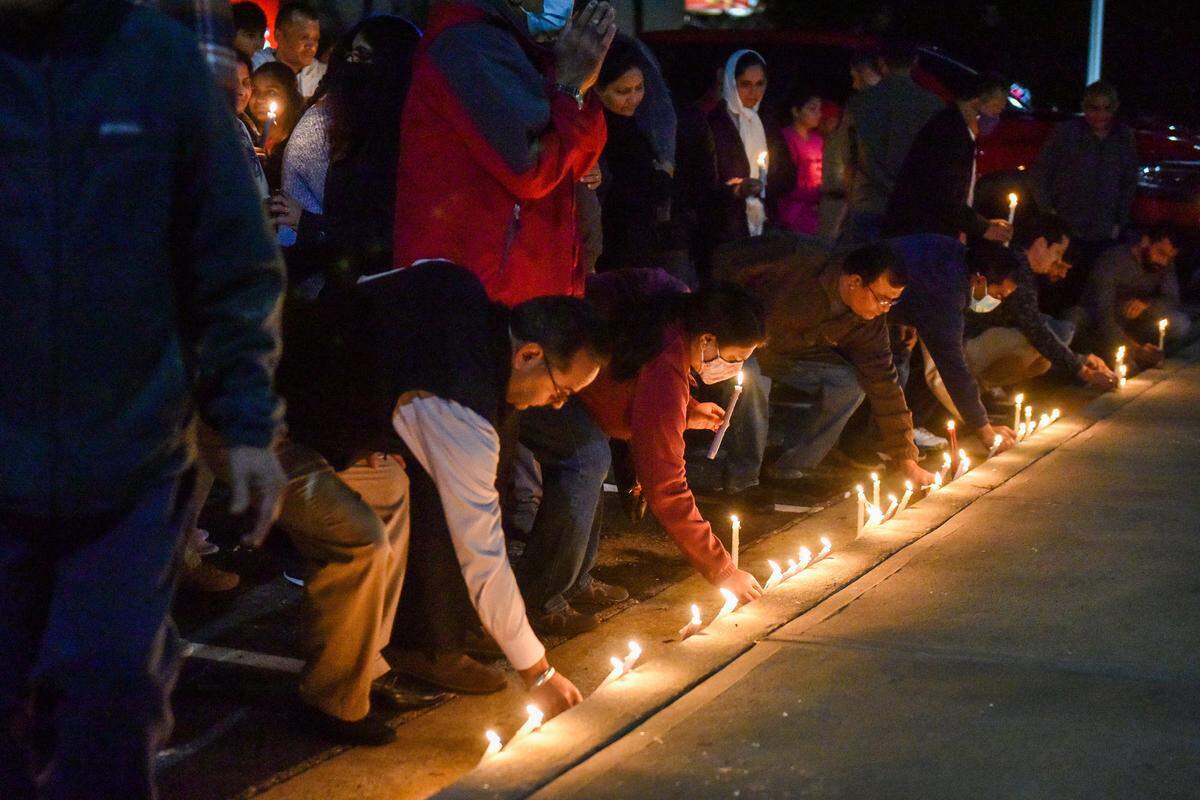
The candlelight service was outside the bank building where Patel was killed, which also houses the East Columbus Police Precinct. Mourners lit candles and sang prayers promising to care for his wife and little girl. A GoFundMe page was set up to help them.
With 70 homicides in 2021, this became a pattern, in Columbus: A violent death, a memorial, a way to help the family.
The loss hits the families hardest, and they never forget, said Rasheeda Ali, whose 14-year-old grandson was among last year’s dead.
But for others, it’s just passing news, she said: “The friends may feel it for a week or two, and especially last year in Columbus, move on, and then the next thing we know, somebody else has gotten killed.”
The rate of killings has spurred Columbus to initiate its own version of the national Cure Violence program that treats violent crime like an epidemic. It has driven residents to form their own grassroots groups to address youth links to gun violence, drugs and gangs. And it has turned short-staffed local law enforcement to using more technology such as street cameras to collect evidence.
Left in the wake of this wave of homicides are the families who lost loved ones, and the investigators charged to account for every violent death.
A deadly pace
Buddy Bryan is in the news so often now he sometimes needn’t tell people his title, when he comes knocking in the middle of the night.
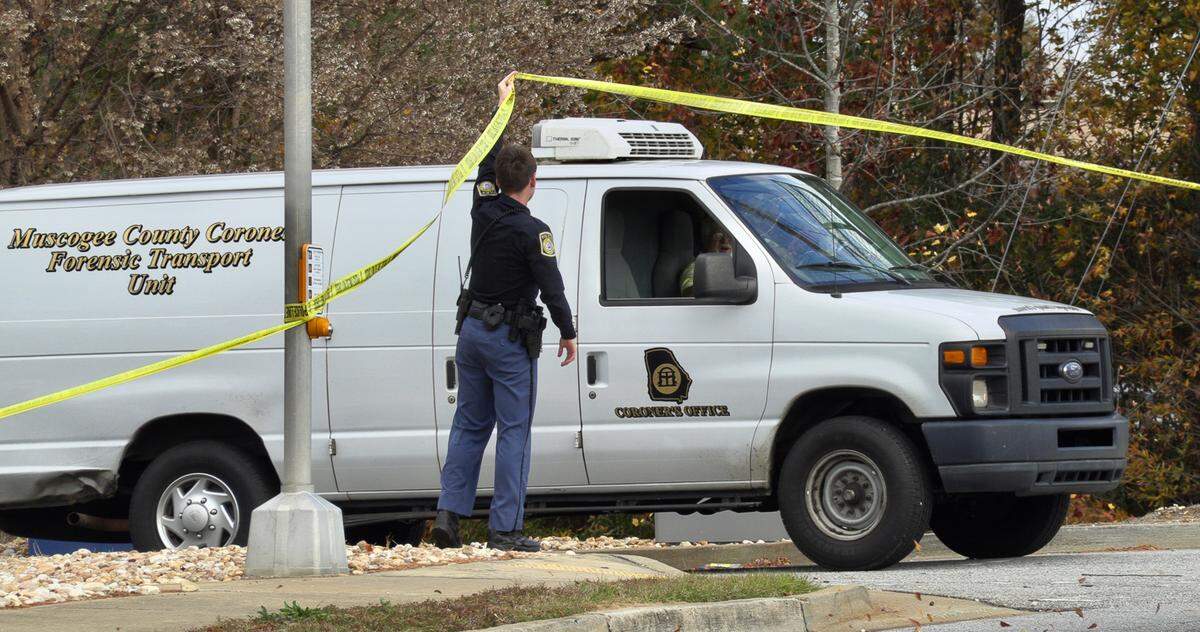
“Sometimes I feel like the grim reaper,” the coroner said. “I have knocked on doors and somebody would say, ‘Who’s there?’ I’d say, ‘It’s Buddy Bryan.’ I don’t even have to say ‘the Muscogee County coroner.’ They know when they hear my name that there’s a death involved.”
Some families anticipated his visit, because they knew their children were into a dangerous lifestyle, he said: “They just sometimes sort of kind of expect it.”
He has visited the same house more than once, he said: first for a son, and within a year or two, for a brother.
He and his deputies came to expect busy days in 2021, as the pace of killings picked up. When Bryan took office in 2013, Columbus had 26 homicides, an average of one every two weeks.
“Now sometimes we’ll have two or three a weekend,” he said. “We just go to bed expecting to be called out.”
Bryan insists on notifying families in person, if possible.
“That’s one of the things I try to drill into my deputies: No matter what time of day or night it is, you go knock on the door. If you can’t tell them personally, face to face, give them a call, and be direct, and be sympathetic and be caring, but make sure they understand the circumstances,” he said.
‘A different dimension’
According to homicide tallies the Ledger-Enquirer tracks, the frequency since Bryan took office has increased, but 70 was an obvious spike. Columbus had 23 homicides in 2014 and 22 in 2015. It had 28 the next year, about one every two weeks, comparable to previous tallies.
Then the total grew, as the pace picked up:
- 2017: 44, one every eight days.
- 2018: 34, one every 10 days.
- 2019: 41, one every nine days.
- 2020: 46, one every eight days.
- 2021: 70, one every five days.
Muscogee County Sheriff Greg Countryman said it’s a new level of violence.
“It’s different than us entering into a new year. We’re into a different dimension,” said the sheriff, who started in law enforcement here in 1990.
Like Countryman, Columbus Police Chief Freddie Blackmon is a Columbus native. He began his career here in 1986. Both men grew up on the south side of town, where most of last year’s homicides occurred.
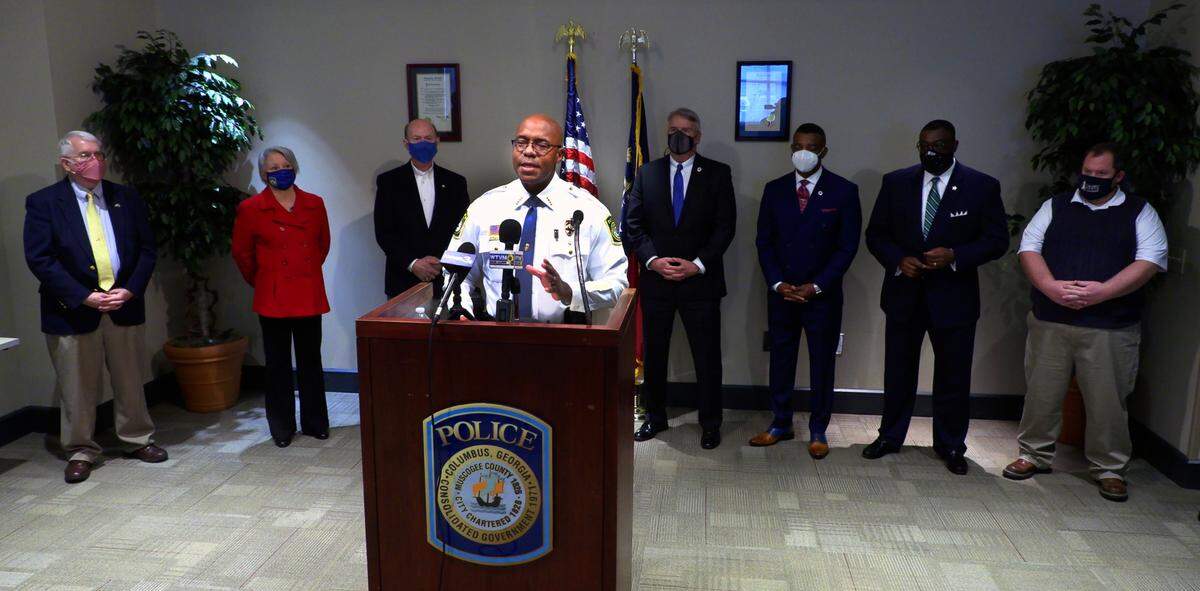
“We saw violent crimes trending more in 2021 than ever before. It was record-breaking, not just for Columbus, but across the United States. We saw record-breaking numbers of murders occur,” Blackmon said.
Compared to similar urban areas, Columbus in 2021 had fewer homicides than Montgomery, Alabama, which had 76, but more than twice as many as Augusta, Georgia, at 33, and it outpaced Macon, which had 54.
But as violent crimes have increased, others have declined, Blackmon said. The offenses police call “Part I” crimes include murder, manslaughter, sex crimes, robbery, aggravated assault, burglary, motor vehicle theft, larceny and arson.
Columbus had 8,400 of those in 2019, and as the numbers climbed back to pre-pandemic levels after a significant dip caused by COVID-19 lockdowns in 2020, they still were falling, with 8,100 reported last year, the chief said.
But murder and aggravated assault continued to rise. Blackmon said some of that is related to gang violence, but a significant portion, up to 10 cases last year, is related to domestic violence.
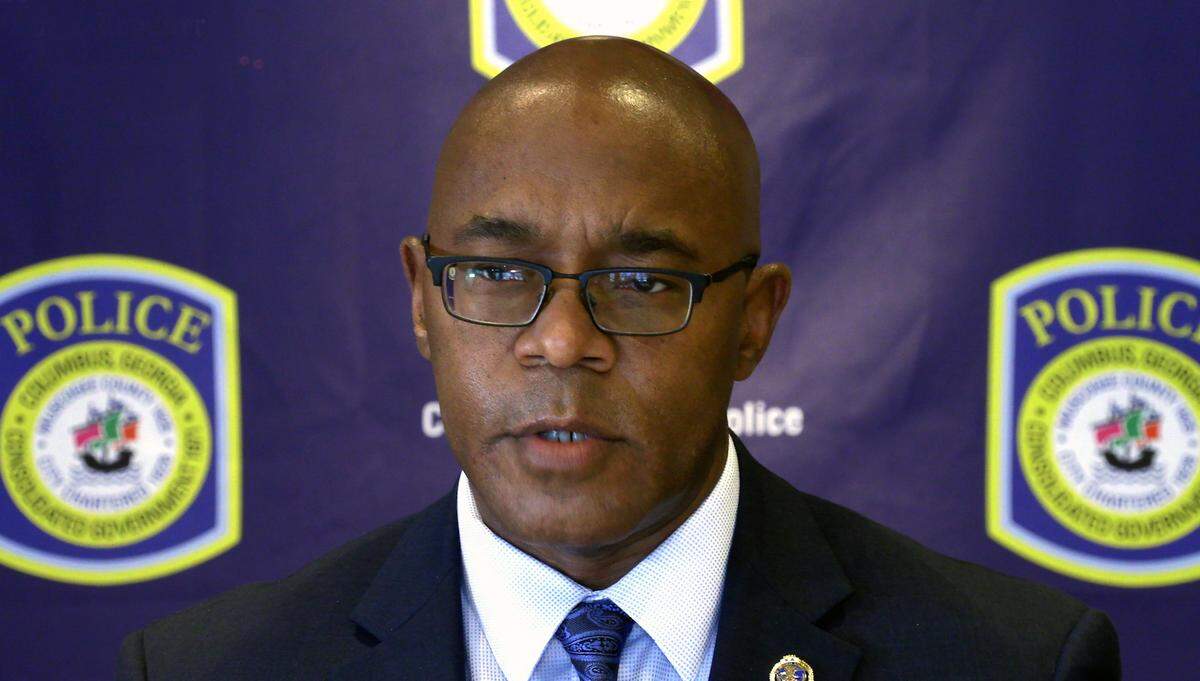
Like Amit Patel’s homicide, almost all the homicides are shootings.
“We’re still investigating that case,” Blackmon said of Patel. “I attended that funeral, so I’ve been able to speak to the family and friends. I just want everyone to know that we’re still working that case very, very steadily.”
Sheriff Countryman said the rise in gun violence over time is evident, and it’s an increased threat to law enforcement as well.
“The intensity of the crime is a lot more elevated now, than it was then,” he said, referring to the 1990s, when he started his career. “We didn’t have people shooting back at us.”
Countryman’s office runs the county jail, where around 120 murder suspects now are being held. The facility has a capacity of 1,069, and authorities can’t afford to crowd it, particularly during COVID.
“If we go over capacity, and we’re in COVID outbreak, we can’t man people in the jail, so that means that we have to close up our doors and divert them to other jails, because the court system is not moving at all,” he said.
When he sees teens held for murder in jail, they look like ordinary kids, he said, and he feels like young men given no guidance at home have been left for him to handle.
“This did not just happen in 2021. These are things that were already impregnated. And it gave birth years ago,” he said.
Young men and guns
Rasheeda Ali’s 14-year-old grandson was gunned down in Columbus’ Benning Hills neighborhood on Oct. 24, just 12 days after his older brother, 16, was wounded in the abdomen in a shooting off North Lumpkin Road, said the grandmother, 75.
Jaleel Ali’s homicide remains unsolved, and his big brother won’t divulge details of his earlier assault, she said: “The only thing I can say about that is he’s not talking about what happened, why it happened.”
She is alarmed by the surge in violence among Columbus’ young, and by the changes she sees in boys between the ages of 10 and 13.
“Our children in our community are being robbed of their childhood. That’s what I’ve really learned,” she said during an interview with the Ledger-Enquirer. “You see a kid at 10 or 11, he’s a cute little kid. You see him at 12 or 13, and he’s an arrogant, aggressive little boy.”
The statistics show most Columbus homicide victims are male, most are shot, and most are young. Here are the numbers from the past year.
By gender, almost all are male:
- Male: 62 or 89%.
- Female: 8 or 11 %.
By cause of death, almost all are shot:
- Gunshot wound: 63 or 90%.
- Stabbed: 3 or 4%.
- Beaten: 3 or 4%.
- Child neglect: 1 or 2%.
By age, most relatively are young:
- 16 or younger: 8 or 11%.
- 17 to 35: 44 or 63%.
- 36 to 60: 16 or 23%.
- 61 or older: 2 or 3%.
The Ledger-Enquirer last March analyzed 234 homicides since 2015, including 19 that had occurred between Jan. 1 and March 7, 2021. Before the record year added 51 more, the overall percentages showed:
- Gender: 86% male; 14% female.
- Cause of death: 83% shot; 8% stabbed; 6% beaten; 3% other causes,
- Age: 6% 16 or younger; 66% 17 to 35; 23% 36 to 60; 5% 61 or older.
The Ledger-Enquirer does not track victims by race.
Gangs, guns and murder
A DJ for PMB Broadcasting, Ali has seen YouTube videos of teen boys in gangs, brandishing weapons and cash, bragging about their exploits, and threatening violence, she said. They wear no masks and fear no consequences.
And they scare adults, something she said was unheard of when she was a child growing up in the 1950s and ‘60s in Columbus’ old Booker T. Washington housing project downtown.
“I never saw that when I was a child: Nobody’s old granddaddy ever showed fear of a teenager,” she said. “But that’s not happening now because these little boys have become monsters, and will kill anybody.”
She believes things started changing when crack cocaine hit the streets in the 1980s, and continued in the 1990s as gangs moved in.
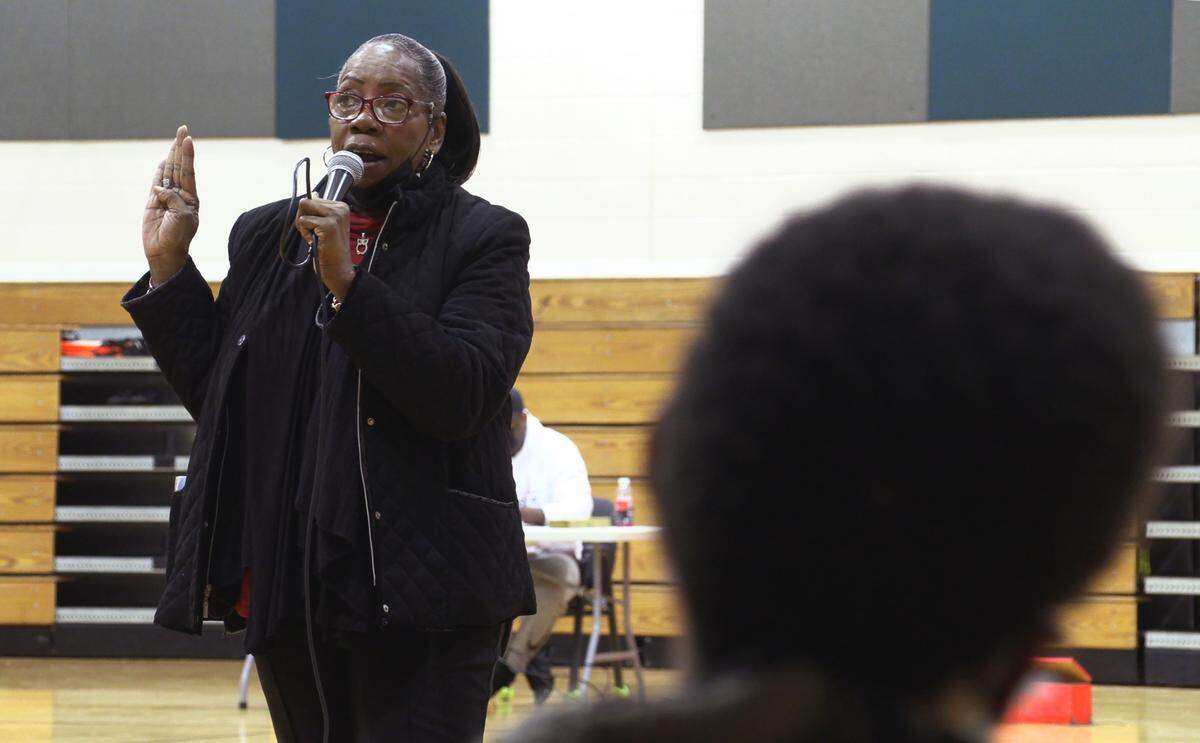
Like Ali, Countryman worries some well-armed teens expect a short, dangerous life, and not much else.
“They become part of a society that’s just out there floating,” the sheriff said. “They don’t have parental guidance. ... Maybe nobody is in the house to raise them, and they’re in a situation where they don’t see any hope, and they become hopeless. ... That’s where that gang culture can come in, and they become a family.”
Some armed teens with drug cash can start running their households, paying the bills and telling the parents what to do, he said.
He said he has a task force that watches the YouTube videos local gangs post, checking for wanted suspects or convicted felons illegally brandishing guns. He wants to ask Columbus Council to fund 15 officers to converge on neighborhoods where residents live in fear.
“I want us to get to a point where elderly people can sit on their porch and not worry about a young man telling them to go back in the house, and ... selling drugs off of their front porch,” he said.
Blackmon said his department’s intelligence unit also is tracking gangs, and using new technology in that effort, including cameras for street surveillance. Columbus Council recently approved the installation of additional cameras in some areas, but police already are using what they have, he said.
Police used traffic cameras to help identify a suspect in the death of 12-year-old Cortez Richardson, hit by a stray bullet Aug. 13 while riding in his mother’s car. Detectives said the shot came from a running gun battle between two cars after a drug-related dispute.
Blackmon said combating youth violence requires more than a law enforcement approach: It takes churches, schools, parents and neighbors working together, as well as health-based approaches such as the Cure Violence initiative Columbus now underway, which treats violence like an epidemic.
“We just can’t hang our hat on one component,” he said. “It takes all of us in Columbus to contribute toward reducing crime.”
Grannies on Guard
After her grandson’s death, Rasheeda Ali formed a grassroots group to fight the rise in youth violence. She calls it “Grannies on Guard.”
The idea is that her generation can fill the parental gaps others have left. A friend suggested it to her the day after Jaleel died, she said.
It is among several groups formed here to try to curtail the rise in youth crime. Others include Shawna Love’s Boyz 2 Men Development, and Ronzell Buckner’s Turn Around Columbus.
Among the advice Rasheeda Ali offers other grandparents is to understand social media, so that they can see what their grandchildren are posting, and ask them about abrupt changes in behavior.
The effort gives her faith that she can make her grandson’s life mean more than a place on the online Gun Violence Memorial, where she asks friends to light a virtual candle for him.
“My thinking is Jaleel’s death was not in vain. It was for a reason,” she said, adding: “Hopefully out of all of that, some kids will be saved. I don’t know whose kids. It doesn’t matter as long as they’re saved.”
This story was originally published February 1, 2022 at 6:00 AM.